
Idea 1
The Power to Bounce Back: Building Resilience at Work
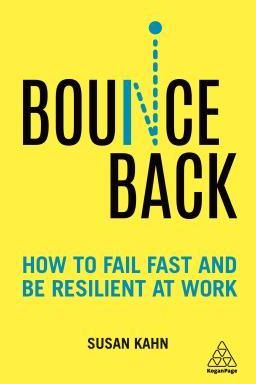
How do you react when life or work doesn’t go to plan? Do you crumble under pressure, or find a way to recover and grow stronger? In Bounce Back: How to Fail Fast and Be Resilient at Work, Dr. Susan Kahn argues that resilience is not a fixed trait but a learnable practice—a flexible, adaptive capacity that allows you to respond creatively to setbacks, disruption, and failure. She contends that resilience isn’t denial or blind optimism; it’s the ability to bend without breaking, to bounce back and move forward transformed by what you’ve learned.
Drawing from neuroscience, psychoanalysis, Stoic philosophy, and positive psychology, Kahn offers a holistic framework for thriving amid workplace adversity. She shows that resilience lies at the intersection of mind, body, and purpose—how we think, how we manage our emotions, and how we connect our work to something meaningful. You’ll discover how failure can be a teacher, how our brains and bodies rebuild after stress, why our unconscious habits affect our reactions, and how meaningful purpose centers us in turbulent times.
Why Resilience Matters
Whether you’re an entrepreneur pitching new ideas, a manager handling constant change, or a professional navigating rejection, resilience is essential to survive and thrive. Workplaces now demand flexibility, emotional intelligence, and adaptability—qualities that can be cultivated through reflection, failure, and discipline. In a world defined by volatility, uncertainty, complexity, and ambiguity (VUCA), Kahn’s message is clear: you can’t eliminate setbacks, but you can transform how you respond to them.
The Journey Toward Resilience
Kahn structures her exploration as a journey through the major challenges of professional life. She begins with “Fail Fast,” showing how embracing failure early helps you learn quickly and innovate courageously. She then brings in “Brain and Body,” proving that resilience is physical as much as emotional—your ability to recover is shaped by sleep, exercise, and mindful practices that rebuild neural pathways. In “Below the Surface,” she examines unconscious forces—our defense mechanisms and psychological blind spots—that shape how we deal with setbacks. “Change, Disruption, and Loss” invites us to face inevitable endings and organizational shifts with Stoic calm and psychoanalytic insight. Later, “Leadership,” “Conflict,” and “Purpose” apply these principles to leading others, handling workplace relationships, and finding meaning that sustains resilience even when the external world shakes.
A Philosophy of Self-Compassion and Growth
Most importantly, Kahn grounds resilience in self-compassion. You don’t develop resilience by toughening up or ignoring pain; you grow it by acknowledging your vulnerabilities and learning to care for yourself and others. She blends Stoic wisdom—asking “What could be worse?”—with modern psychology to help you regulate stress and accept imperfection. Learning resilience means learning to fail mindfully, reflect with honesty, and recover with purpose.
Resilience as a Continuous Practice
Throughout Bounce Back, Kahn reminds you that resilience fluctuates. You may feel strong one week and fragile the next. That’s normal—resilience is situational, learned, and maintained through reflection, rest, and community. Her exercises, from the “Resilience Self-Assessment” to “RAS Affirmations,” help you monitor and enhance your strength. Resilience is therefore not a binary state—it’s a continuum, something to be cultivated like a muscle through mindful practice and compassionate leadership.
Ultimately, the book is a roadmap for personal transformation. Kahn’s message is hopeful but grounded: setbacks are inevitable, but failure can be reframed as feedback; losses can clarify purpose; and disruption can awaken creativity. In her words, resilience is not about bouncing back to who you were before—but bouncing forward to who you can become.