
Idea 1
The Science of Success: Why Talent Is Overrated
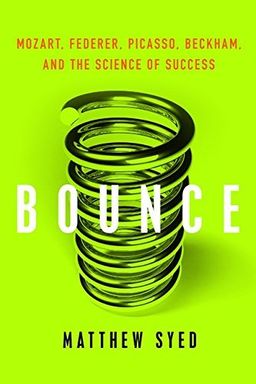
Why do some people reach extraordinary heights—writing symphonies, inventing technologies, winning gold medals—while others with similar potential never break through? In Bounce, Matthew Syed argues that what distinguishes world-class performers from the rest of us isn’t some mystical gift or genetic quirk—it’s the compounding power of purposeful practice, mindset, and belief. Talent, he insists, is one of the most destructive myths of our time, discouraging effort, excusing inequality, and disguising the true path to excellence.
Drawing on his own story as a two-time Olympian and Commonwealth champion in table tennis, Syed dismantles the romantic myth of the prodigy. He reveals how success emerges from specific environmental factors, intense and deliberate practice, and a culture that nurtures hard work. From Mozart's disciplined upbringing to Tiger Woods' relentless training, the examples expose the hidden scaffolding behind great achievement.
Opportunity, Practice, and the False Idol of Talent
Syed begins with a humbling reflection on his own career. His rise to Britain’s number one in table tennis wasn’t the result of innate genius—it was the product of unique opportunity. A table in the garage, a gifted coach at his school, a 24-hour club nearby, and a community of players to spar with all combined to create thousands of hours of practice. His success, like that of Wayne Gretzky or Serena Williams, proves that practice and environment—not simply DNA—build extraordinary skill.
He supports this with Anders Ericsson’s famous research: an elite violinist completes around 10,000 hours of deliberate practice before mastering their craft. Mozart, Tiger Woods, and the Polgar chess sisters all followed this same pattern of early, focused, and often joyful training. Their genius wasn’t genetic—it was built hour by hour.
The Paradoxes of Performance
The book’s second section shifts from talent to the mind’s role in translating that hard-earned ability into performance. Through gripping stories—from Olympic chokes to Tiger Woods’ ice-cold steadiness—Syed explores the psychology of confidence, belief, and perception. He describes how mental rehearsals, placebos, and faith (religious or otherwise) can enhance physical results. It’s not superstition; it’s neuroscience. Belief triggers physiological and psychological processes that unleash potential locked inside us.
But belief is fragile. Even expert performers can collapse under pressure when conscious control infiltrates well-oiled routines—a phenomenon known as choking. Syed shows that under pressure, the brain’s automatic systems can be hijacked by self-consciousness, turning golf legends and Olympians into beginners again. Learning to maintain calm and redirect focus—sometimes through psychological tricks like telling yourself “it’s only a game”—can help preserve performance.
Culture, Inequality, and the Science of Human Potential
As the book broadens, Syed tackles how society misinterprets success. He questions racial myths about black athletic superiority, revealing how “genetic” explanations obscure cultural, environmental, and economic realities. From Kenyan marathoners’ high-altitude upbringing to African American youths’ disproportionate representation in sports due to limited opportunity elsewhere, he shows that what we label genetic is often social. Race, he argues, is a “biological illusion” that misreads cultural patterns as biological destiny.
He also explores moral debates around biotechnology and doping, contrasting East Germany’s tragic state experiments with modern ethical quandaries about enhancement. Could safe performance-enhancing drugs democratize sports or even improve human life? Syed challenges moral taboos, suggesting that human improvement—whether through practice or science—is both inevitable and desirable, provided it aligns with fairness and safety.
Why It Matters to You
At its core, Bounce is an invitation to reimagine your potential. You don’t need divine talent or luck, but you do need awareness of your environment, deliberate practice, and the belief that you can grow. Syed’s stories—from youth coaches to scientists and athletes—demonstrate that anyone can harness the mechanisms of success if they understand how effort, failure, and mindset intertwine.
By stripping away myths about talent and destiny, Syed offers something profoundly hopeful: a science of success rooted in practice, psychology, and human adaptability. If you’ve ever wondered why brilliance looks effortless in others—or why your own progress feels slow—this book shows you that excellence isn’t born, it’s built. And you can build it too.