
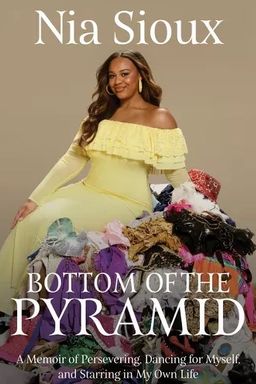
Bottom Of The Pyramid cover

Bottom Of The Pyramid

by Nia Sioux

The dancer shares how her time on the reality TV show “Dance Moms” impacted her onstage and off.

Growing Up As Performance: High School As Real Life

When did you first realize that adolescence wasn’t a holding pattern but a dress rehearsal that quietly becomes the show? In Fast Times at Ridgemont High, Cameron Crowe argues that American high school isn’t a sandbox for kids—it’s a fully functioning social economy where teens work, love, scheme, and fail with adult-sized consequences. He contends that “the only time these students acted like kids was when they were around adults,” and he proves it by embedding undercover as a 17-year-old senior for a year, capturing the ecology of status, the clatter of low-wage work, the awkwardness of sex, and the soft brutality of school rituals with a reporter’s eye and a novelist’s ear.

Through the interlocking stories of Stacy Hamilton, Linda Barrett, Brad Hamilton, Mark “The Rat” Ratner, Mike Damone, Jeff Spicoli, Mr. Hand, Coach Ramirez, and Charles Jefferson, you meet a campus where the paint is literally always green—Ridgemont’s solution for covering cracks and graffiti as fast as they appear. That relentless coat of green becomes an image for how institutions smooth over mess while teens live the rough edges underneath: abortion appointments scheduled between P.E. and biology, Friday night shifts honored like vocations, and social hierarchies as merciless as any corporate chart.

What the Book Covers—and Why It Matters

Crowe builds a social x‑ray of late-1970s California high school life by reporting on four main arenas where power and meaning are negotiated:

  • Work as identity: Fast food confers status; the Carl’s Jr. at the top of Ridgemont Drive is a literal throne room where fries are “mine” and competence equals social capital (think Pierre Bourdieu’s ‘cultural capital,’ applied to fry oil and intercom banter).
  • Sex as curriculum: Classrooms teach diagrams; lunch court teaches scripts. Stacy Hamilton learns from Linda Barrett’s “sexual overview,” not textbooks, navigating first sex with The Vet, an abortion, and the gap between theory and consequence (compare Peggy Orenstein’s Girls & Sex for a later-generation analogue).
  • Masculinity as performance: Mike Damone’s “Attitude” and five-point plan square off against The Rat’s tenderness and terror—the Led Zeppelin IV tape isn’t just music; it’s a ritual technology meant to conjure desire, and sometimes it fails hilariously.
  • Authority as theater: Mr. Hand’s three-bell cosmology and Coach Ramirez’s megaphone film studies (and movie camera) reveal that adults perform roles too—sometimes to help, sometimes to control, sometimes to protect their own reputations.

These aren’t just good stories; they’re case studies in how teens build real-world competencies—negotiating schedules, money, intimacy, rules, risk—well before diplomas certify anything. If Paul Tough later popularizes “grit” and noncognitive skills, Crowe supplies the ethnography: the mall, the fryer, the late-night call, the bus to Disneyland’s Grad Nite, the quiet ride to a clinic.

How Crowe’s Method Changes the Story

Because Crowe embeds incognito, you don’t get an adult’s filtered take; you hear the talk as it happens. Lunch court is mapped like a city plaza. A guidance counselor’s slip carries existential weight. A new disciplinarian, Lt. Flowers, treats a high school like a beat and discovers the limits of policing kids. Crowe’s portraits are often funny (the Frisbee champs’ corporate pep pitch, the “Pūʻili Balls” dance), then suddenly devastating (Louis Crowley’s family car somersaulting off El Dorado Bridge, Danny Boyd’s suicide note written in silence).

Why does this matter to you? Because this is how people really grow up—piecemeal, in jobs that don’t seem to count, in relationships no one takes seriously, in institutions that perform order while teens improvise life. If you’re a parent, teacher, manager—or simply someone still decoding your own high school DNA—Fast Times gives you the field guide to what was actually being learned: dignity, hustle, consent, friendship, failure, recovery.

Core Premise

High school isn’t a prologue; it’s life—with wages, hierarchies, rituals, risks, and rites we rarely dignify as such. When you take teens seriously, their choices—and their consequences—come into sharp relief.

In the pages ahead, you’ll see how status gets priced in fries and tuxedos, how sex scripts collide with care and consequence, how “The Attitude” holds until reality calls, how a teacher’s stoicism can be a kind of love, how a boy loses everything (and finds himself) at a 7‑Eleven at 4 A.M. Crowe’s gift is to make you care enough that, when the last bell rings, you feel the strange ache of leaving a workplace you didn’t know you worked in—and the quiet pride of having survived it.


The Ecology of Cool (Lunch Court)

Crowe maps Ridgemont’s lunch court the way an urbanist would map a plaza—and you can use the same lens on any cafeteria you’ve known. At Ridgemont, the prized real estate under the oak tree isn’t just shade; it’s the stock exchange of cool. The closer you eat to the center, the higher your market cap. And the currency isn’t varsity letters but pay stubs: where you work and what that signals.

Fast Food As Social Capital

In this ecosystem, your “franchise” is your tribe. The 7‑Eleven night crew hovers on the outskirts. Burger King and KFC sit a ring in. The Swenson’s ice cream crowd lives near midfield. At the bull’s-eye is the top-of-Ridgemont-Drive Carl’s Jr., adorned by a literal fountain and recognized by the traffic patterns that pass it—all the signals of a premium brand. Brad Hamilton, head fryer at that Carl’s, holds court beneath the oak like a benevolent shift manager turned mayor. His ventilated golf-cap buddies orbit nearby, nodding at his every line. He’s not quarterback; he’s competent. And at Ridgemont, competence is charisma.

Brad’s status comes from doing a hundred small things exactly right: knowing by color when oil needs changing, bagging to bail out his line cook, timing the beeps without looking. He’ll even hand a drive-thru Romeo his burger with a professional smile after hearing the same guy hit on Lisa over the intercom—then slickly return the insult with a shoe-rubbed patty. It’s low-wage work, elevated by craft and wit into meaning. (Compare Matthew Crawford’s Shop Class as Soulcraft: mastery at the bench confers dignity and autonomy—even when the bench is a fryer.)

Why Jobs Trump Jerseys

Why does work outrank sports at Ridgemont? Because jobs feed the engine that feeds the scene: gear, dates, gas, the car named The Cruising Vessel. The campus gossip factory knows which assistant managers are tyrants, which joints cook with char-broil (good) versus sunlamps (suspect), and which places have taped-on smiles. You didn’t just show up at lunch; you arrived trailing a whole work persona. That persona lifted your friends, too—Brad fills Carl’s with buddies, proud he’ll keep them out of “a 7‑Eleven or supermarket.” Nepotism? Sure. Also care.

Status Has A Map—and It Moves

Lunch court shows you that cool is spatial (where you sit), temporal (which shift you hold), and material (what uniform you wear). It’s also volatile. When Brad is framed for theft and erupts—“SUCK SHIT… I QUIT!”—he’s not just losing a job; he’s falling down a status staircase. Later, in a blue-and-white buccaneer outfit at Captain Kidd Fish and Chips, he’s comic opera—until he quietly drives past IBM with their catered fish, hurls off the swashbuckler hat, and begins re-writing his dignity script. One day, those outskirt kids at 7‑Eleven will be ringed by news vans because Brad Hamilton used common sense and hot coffee to face down a 4 A.M. gun.

Field Note

“Why Carl’s?” Because char-broil beats sunlamp; because location equals flow; because clean floors and a fountain telegraph care. At 17, you learn brand strategy by mopping it.

What You Can Take With You

If you manage teens, understand that shifts and stations are more than logistics; they’re identity slots. If you are one, know that doing the boring thing exquisitely can float your social boat. Power here is distributive: a friend’s schedule swap during a dinner rush can save your night; a classmate’s Carl’s hook-up can change your circle. Status looks different in each era—today it might be DoorDash or coding, not char-broil—but the lesson holds: competence + contribution = capital.

Crowe’s gift is to let you feel the texture of this marketplace without mocking it. He takes the lunch court seriously because the kids do—and that turns a picnic table into a case study in how communities value labor, gatekeep prestige, and, sometimes, make room again when someone falls. Lunch court changes, but its physics don’t. The jobs shift; the stakes don’t.


Sex Ed vs. Lived Sex

If you learned about bodies from diagrams but about sex from whispers, you already know Stacy Hamilton’s world. Ridgemont’s classrooms distribute purple mimeos, show Sonny & Cher’s anti-drug film, and send students to Mrs. Melon’s Child Development for parental consent forms. Meanwhile, the real curriculum unfolds at Swenson’s back kitchen, in late-night notes, and on the baseball dugout bench.

Scripts, Not Lessons

Stacy (15) apprentices herself to Linda Barrett (17), Ridgemont’s “retired sex expert.” Linda doesn’t trade in romance; she trades in scripts. She explains the “sexual overview,” conducts free-clinic logistics (“tell them you have sex twice a week or they’ll push a diaphragm”), and reframes initiative: “Most guys are just too insecure and too chicken to do it themselves.” Stacy tests the script with The Vet (Ron Johnson, 25), having first sex on a dugout bench beneath graffiti (“Heroin in the neck,” “Led Zeppelin”), and finds the contradictions: relief, wonder, and the discovery that nothing looks different in your room afterward—except everything does.

The school’s health films can’t reach this space. They warn about Braking Point—the split-second when a driver’s lapse leads to carnage—while Stacy’s “braking point” is whether to tell The Vet she’s 15. She writes him a Hallmark confession; he ghosts. The film’s melodramatic decapitations feel less terrifying than a mother who sniffs your clothes for marijuana or a boyfriend’s stalling.

When Consequences Arrive

Stacy’s pregnancy is where Crowe’s reportage becomes surgical. She asks Mike Damone—the Attitude guru who lost his virginity to her on a red couch in the Hamilton changing room—for a ride to the clinic. He forgets. Twice. She calls The Rat for the ride he doesn’t know he’s giving. The abortion itself is rendered clinically: stirrups, a jar filling with purplish membrane, the doctor’s brisk patter (“You’re a good patient”), Stacy’s wish that men could experience this. She shares a look with a girl entering as she exits: deer-in-headlights solidarity. It’s March 21st—her mother’s birthday. The calendar won’t let you forget.

A Quiet Ethic

Crowe doesn’t sensationalize; he witnesses. That restraint grants teens moral agency without adult sermonizing—closer to Judy Blume’s candor than to after-school specials.

Linda’s Wisdom—and Limits

Linda is generous, savvy, and, at times, reckless (teaching blow jobs with a banana at lunch; telling Stacy, “Don’t you dare tell him the truth”). Her own romance with Doug Stallworth is earnest, old-soul, and performative (wallet photos, name doodles) until it isn’t—engagement announced, attention wanders. Later, she considers Students International in Europe and wonders whether “housewife” is a trap laid by parents and fiancés alike. Where Peggy Orenstein chronicles consent culture decades later, Crowe shows an earlier generation jury‑rigging care in the absence of language. Linda’s tools are practical and sometimes tactical; they don’t always protect.

What You Can Use

If you mentor teens—or your younger self—remember: the classroom curriculum is necessary but not sufficient. Create spaces where the scripts can be named, tested, and revised: “What are you assuming he’ll do?” “What would make this safe?” Also, dignity matters: Stacy is not reduced to “the girl who had an abortion”; she’s a worker-of-the-month who keeps a crew on task and eventually says “No” to lies even when her heart wants “Yes.”

Crowe’s point isn’t that teens are ready for everything; it’s that they are already doing everything adults claim to manage for them. The choice is to witness and equip—or to look away and be surprised when the jar is already full.


The Attitude: Performing Masculinity

Mike Damone calls it The Attitude: “don’t care if she comes, stays, lays, or prays—whatever happens, your toes’ll still be tappin’.” It’s part pickup-artist, part armor, and part performance art. In Ridgemont’s economy, boys learn that being unflappable is currency. But Crowe shows you the returns and the hidden costs by pairing Damone with his opposite: Mark “The Rat” Ratner, love-struck, shy, decent, and painfully slow to act.

Five Points to Nowhere

Damone’s five-point plan—feign indifference, always call the shots, act like wherever you are is the place to be, order for both, cue Led Zeppelin IV “whenever possible”—is funny because it’s true and flimsy because it’s a house of cards. Watch him demonstrate on a life-size cardboard Deborah Harry, or recruit monorail girls at Disneyland with a hidden Jack Daniel’s. He’s magnetic until he needs to deliver. Then, in Stacy’s changing room, the Attitude collapses into a minute-and-a-half and a flight reflex.

The Rat, by contrast, is a walking vulnerable nerve: plotting A.S.B. counter moments to brush Stacy’s hand, rehearsing locker small talk, sitting in his room measuring himself against Dr. Canby’s “average penis size” with a tape measure and ordering the absurd Exer-Gro Plus (a rubber dickhead that falls down his pant leg at Safeway). You wince and root for him because he cares. He fails because he can’t risk caring out loud.

Two Cruxes: The Wallet and The Couch

Two set pieces expose the lie of The Attitude. First, at the Charthouse, The Rat forgets his wallet. He stays cool, phones Damone, and Damone saunters in to “return” the wallet he “found.” It’s a perfect Attitude assist that saves face and ruins the vibe; the night ends with a puking kid at Phantasm and a stolen tape deck. Second, on Stacy’s red couch, Damone has his Attitude coronation and immediately abdicates—sex, then guilt, then ghosting. When Stacy puts his hand on her belly and says “I’m pregnant,” he improvises the coward’s catechism: “You wanted it more than me.” He forgets the clinic ride. Twice. He becomes a busboy at her Swenson’s, in peppermint shirt and bow tie, answering when she barks, “Damone, clean 19!”

Lesson Underneath the Swagger

The Attitude can open a door; character decides whether you deserve to be inside. Boys learn this either in private humiliation—or in public, with a peppermint bow tie.

What Redefines “Man Enough”

In Crowe’s world, “man enough” isn’t who scores; it’s who absorbs consequences without making someone else pay. That’s why The Rat’s most admirable move isn’t seduction—it’s driving Stacy to “the flea market” downtown and never asking what she’s buying. And it’s why Damone’s best scene is contrition with The Rat at an after-prom Jacuzzi when they reset their friendship with insulted tenderness. (See also Jason Reynolds’s later YA work, where boys discover that tenderness is courage.)

The Attitude is a survival kit; it’s not a life. If you’re tempted to over-index on swagger, Damone is your cautionary tale. If you under-index on action, The Rat is your nudge: ask, risk, don’t wait for a perfect song. The children of The Attitude become adults when they decide the script they’re done performing.


The Adults’ Theater of Control

Adults at Ridgemont don’t just enforce rules; they perform them. Mr. Hand, Coach Ramirez, Vice-Principal Connors, and Lt. Flowers are each a one-man show about order—stoic teacher, motivational coach, PA-carrying bureaucrat, and street cop in a school. Their styles teach teens what power looks like and what it often fails to do.

Mr. Hand’s Clock and Creed

U.S. History teacher Arnold Hand is an island of standards. He lives by the “three bell system,” weekly quizzes, no eating, and the insistence that you “do your business on your time.” He opens the year by tearing up Jeff Spicoli’s red add card, then writes “I DON’T KNOW” on the board when Spicoli can’t explain his lateness. Hand plays the hard man so that something solid exists to push against. The year ends with the book’s softest scene: he ambushes Spicoli at home on Ditch Night to “square accounts” (eight hours of detention, paid back as a surprise teach-in on U.S. foreign policy). When Spicoli worries about graduating, Hand half-smiles: “You’ll probably squeak by.” It’s the closest he can come to love.

Coach Ramirez’s Movie Camera

Coach Ramirez is pep-as-policy. He fights for $1,895 in gear, wins a movie camera, and choreographs practice with a megaphone and portable amp (“WORK WITH ME WORK WITH ME!”). He cajoles Charles Jefferson back from his Mustang welded to Ridgemont’s flagpole. The homecoming win he engineers—calling Jefferson’s number at the five-yard line instead of taking the field goal—is pure Hollywood, until the real story intrudes: Jefferson later breaks into Radio Shack with “two dudes,” goes to juvie, and loses his scholarship. Ramirez’s theater can summon pride; it can’t fix a life in free fall.

Lt. Flowers’s Gun

The new disciplinarian arrives like Nat King Cole with a badge. He closes fence holes, writes 75 student parking tickets, and treats lunch court like a beat. When he jams a pistol through Spicoli’s car window after seeing bong smoke, he learns the one rule he missed: “You can’t police adolescence like a precinct.” He’s fired after a lawsuit. Control, performed as force, becomes fragility.

What This Tells You About Institutions

Institutions paint everything green at Ridgemont, literally. That’s not cynicism; it’s triage. Paint buys time. So do pep rallies, Spirit Bunnies renamed “Commissioners of Spirit,” dance chaperones with flashlights, Grad Nite dress codes (ties on at all times), and ten-minute morality plays like the Bob Savage class-ring salesman who lost his legs racing on prom night. These are pageants of order designed to manage chaos. Sometimes they work (rings ordered, tears shed, kids go to college). Sometimes they backfire (Arthur Chubb, the Ridgemont photographer, gets cuffed instead of Lincoln’s vandal Steven Miko; the cafeteria fills with Hendrix tribute hopefuls on April Fool’s Day).

Takeaway

Rules are theater. The best productions teach, protect, and leave room for mercy. The worst mistake posture for justice and confuse fear with respect.

If you design systems for teens, you can make Mr. Hand’s wager: consistency + accountability + earned grace. You can also admit limits: you won’t out‑argue grief (Louis Crowley), out‑muscle despair (Danny Boyd), or out‑coach a life where a city bus becomes a weapon because a scholarship kid can’t take another stop. Hand’s half-smile at midnight tells you the truth: the best adults hold a line and keep a door open.


Work, Dignity, and the Brad Arc

Brad Hamilton’s storyline is a crash course in how teenagers build adult dignity through work, even when the world calls their jobs small. You feel his pride at Carl’s Jr., his humiliation at Jack-in-the-Box, his absurdity at Captain Kidd (blue-and-white buccaneer suit, plastic sword), and his ferocious steadiness at 7‑Eleven at 4 A.M. His “cruise year” becomes a boot camp.

From Peak Fryer to Frame Job

At Carl’s, Brad is a craftsman. He’s got the fryer like a Stradivarius, a girlfriend (Lisa) on the intercom, a crew he trained, and a lunch-court throne. Then an irate customer (I.C.) writes his name down—“Brad Hamilton”—to complain that fries taste like metal. His assistant manager, Dennis Taylor, stage-manages a missing-$125 stunt and corners Brad with a “voluntary” polygraph. Brad erupts: “Then you can SUCK SHIT because I QUIT!” You hear more than rage; you hear the felt injustice of seeing your competence discounted. It’s a first adult loss: you can be great—and be gone.

Fired For Following The Sign

At Jack-in-the-Box’s morning shift, the 100% Guaranteed Breakfast promise collides with a hungry businessman and a rigid new manager. Brad tries to refund, balks at doing it his way, gets provoked (“Do they teach you the meaning of guarantee here?”), vents, and is fired on the spot. If you’ve ever been young and right but “insubordinate,” you know this punch in the gut. (See Studs Terkel’s Working—work is pride, and also insult.)

Deciding What You’ll No Longer Wear

At Captain Kidd Fish and Chips, being asked to “show some pride” and deliver to IBM in a swashbuckler hat becomes Brad’s breaking point. He takes the gig, eats a few fries, tastes one fish stick, tosses it out the window, throws off the hat and sword, and sails past the IBM exit. Some clothes you simply won’t wear anymore. You get to choose when.

The 4 A.M. Test

Then comes the all-night 7‑Eleven. It’s lonely. He drinks coffee he used to hate. At 4 A.M., a masked man spray-paints the camera, points a .45, and barks at Brad to open the hidden safe behind the donut case. The phone rings. The robber sneers “Mr. High School.” Brad feels something deeper than fear—anger laced with respect for himself: “Get off my CASE!” He pours the fresh coffee on the gunman’s hand, catches the dropping .45, and calmly calls the police. The kid in the outskirts seat has done a grown man’s job with a kid’s tool and a craftsman’s timing.

Why Brad Matters

Dignity isn’t granted by a corner office; it’s practiced behind a counter. Brad’s arc argues that small jobs are laboratories for judgment, courage, and boundaries.

The payoff isn’t just news vans and a lunch-court return; it’s the late-night call from Dennis Taylor, who offers the old fryer back. Brad declines—with a line that feels like a life upgrade: he’s already taken a district supervisor job with 7‑Eleven. Sometimes vindication is not going back where you were right; it’s going forward where you’ll be seen.

If you’re in your first jobs, here’s your rubric: Do the thing well. Refuse to be humiliated. Make your own uniform choices. When the 4 A.M. test comes, you’ll be ready—because you were paying attention when the oil turned color.


Rituals, Spectacle, and Hollow Peaks

Ridgemont runs on pageantry: TOLO spirit week, the Talent Show, Homecoming coronations, Prom, and Disneyland’s Grad Nite. These rituals promise transformation; they deliver mixed returns—some joy, some cringe, some eggs hurled at a limo windshield.

All Hail TOLO (Totally Outrageous)

A.S.B. President Kenneth Quan decrees TOLO week with themed dress days (Tourist, Li’l Abner, Hollywood, Red-and-Yellow, Punk-or-Disco). Even the cynics cave and show up in spikes and chains. A planned pie-smash for Mr. Hand devolves into a whipped-cream melee the janitors refuse to mop. It’s fun until it’s sticky—and then it’s someone else’s problem. Institutions surf teen energy; they don’t always clean up after it.

Talent Show: Sponsored Sincerity

Gregg Adams and David Leach emcee a night of earnestness and ads (“We got these tuxes at REGIS FORMALWEAR!”). A baton twirler drops her baton three times to Spicoli’s handheld beeps. Paul Norris sings “The World” a cappella until he breaks: “KISS MY ASS!” It’s a perfect teenage artifact—fervent, awkward, occasionally transcendent (the “Landslide” cover), and relentlessly interrupted by commerce. (Compare to Friday Night Lights’s blend of spectacle and ache.)

Homecoming’s Good Story—and Bad

Ridgemont wins because Charles Jefferson runs through two Lincoln tacklers for a fourth-quarter touchdown, fueled by rage over his Mustang welded to the flagpole (“LINCOLN SURF NAZIS” spray-painted on the side). The newly crowned king and queen, Quan and Cindy Carr, get pelted with eggs by Lincoln fans and thrown from their limo when the driver floors it. Lt. Flowers arrests the wrong yearbook photographer. Triumph and humiliation, two sides of the same pep rally.

Prom and the Mist-Blue Newport II

Prom is a catalog: tuxes (Black/Brown Regency, Camel Camelot, Yellow Seville, and the outrageous Mist‑Blue Newport II), cork walls covered in silver hearts, Principal Gray’s greeting line. Steve Shasta arrives in Mist-Blue with Laurie Beckman, mouths off mid-evening about girls and celibacy, and heads for the Point. Many couples break up the week before (“Hello, Richard. It’s Brenda…”), then still go. It’s a ritual designed to fix something the ritual can’t touch. The morning after is the real event: Brad’s after‑prom party, Wisk-foamed jacuzzi, stolen glances, rum passed in the bubbles, and a sunrise that never appears.

Grad Nite: Adult Rules in Kid Clothes

Disneyland’s Grad Nite requires suits and gowns, polices entrances, and imagines that dress codes prevent chaos. Teens adapt: a chaperone pass turns a tequila pint into a free pass; Damone swims Tom Sawyer’s moat to retrieve his hidden Jack Daniel’s; Juvenile Security briefly detains him until he fakes a seizure and bolts. The Voice narrates order while a million tiny rebellions multiply in lines, bathrooms, and Monorail compartments where girls from Flagstaff sing Elvis Costello. Rituals promise climax; life happens in the margins.

What These Peaks Teach

Spectacle doesn’t change who you are; it reveals it. Hand’s mercy at midnight, Brad’s coffee at 4 A.M., Stacy’s quiet courage, Linda’s restlessness—those are the moments you remember when the band stops.

So enjoy the costumes; don’t expect absolution. If you lead schools, design rituals that make room for authenticity, not just photo ops. If you attend them, look for the unscripted moment in the hallway—that’s usually the scene that sticks.


Edges: Grief, Fallout, and Small Rescues

Fast Times is funny enough to be quoted, and serious enough to be carried. Crowe refuses to tidy the edges where loss lives. Those edges are why the jokes matter—and why the last bell hurts.

When The Paper Runs a Photo in Color

Two cars race on El Dorado Bridge. A third is edged out, flips, and plunges. The next day’s front page prints a color sequence of the car midair. Spicoli bursts into journalism class waving the paper—“Look at these bitchin’ photos”—and Louis Crowley, whose father and sister were in the car, sobs. No one speaks to Spicoli for a month. That’s the whole arc: the wild laugh, the frozen glint, the ban. It’s not a lesson; it’s a boundary you learn by hitting it.

Charles Jefferson’s Fall

Jefferson terrifies opponents and the hallways—“Bonenose Jefferson Was Here” graffiti, a belt-buckle smashed mirror, a city bus driver forced to deliver him home. He’s also the best athlete Ridgemont’s ever seen, gifted a blue Mustang that becomes both prize and curse. After the flagpole desecration draws him back in for homecoming glory, he breaks into a Radio Shack with “two dudes,” claims ignorance, and goes to juvenile detention. He loses a UCLA scholarship that looked inevitable. The school stops calling roll. It’s as if he never existed. That vanishing is a second sentence.

Danny Boyd’s Briefcase

Mrs. George walks in shaking. Danny—oversized briefcase, earnestness mistaken for pretension—has hanged himself after college rejections and long isolation. She scolds the class for being “too busy with yourselves,” orders a yearbook tribute, and for two weeks the school remembers. Ritual can’t fix grief, but witness can mark it. The green paint can’t cover this crack.

The Small Rescues

Rescue in Fast Times is rarely grand. The Rat drives Stacy downtown and never asks. Mr. Hand spends an evening off in a kid’s room so a stoner won’t flunk by one hour. Brad opens a donut case—not to give away money but to buy five seconds to choose self-respect. Linda punches a wall and carves PRICK into a Toyota because rage has to go somewhere. None of it saves the world; all of it moves it an inch.

What You Carry Out

You don’t graduate from grief; you live beside it. The trick, Crowe suggests, is to keep showing up—in the car, on the porch, at 2:11 P.M. and 7:45 P.M.—and hold each other’s lives with a bit more care than the last time.

By the time Spicoli grins at Mr. Hand—“Aloha, Mr. Hand”—and Hand almost-smiles back, you’ve seen enough to know their duel was love in a hard shell. The lunch court dissolves; the jobs shuffle; the silver hearts come down. What remains are the edges and the rescues, the mistakes and the repairs. That’s what you end up taking to work on Monday—often to a place with a fryer, a scanner, a fountain, and your own green paint.

Dig Deeper

Get personalized prompts to apply these lessons to your life and deepen your understanding.

Go Deeper

Get the Full Experience

Download Insight Books for AI-powered reflections, quizzes, and more.