
Idea 1
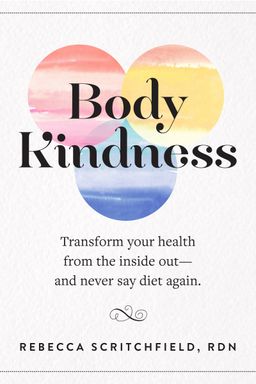
Body Kindness: Transforming Health Through Self-Compassion
What if being healthy had nothing to do with restriction and everything to do with treating yourself kindly? In Body Kindness: Transform Your Health from the Inside Out—and Never Say Diet Again, registered dietitian nutritionist Rebecca Scritchfield argues that health begins not with willpower or weight loss, but with self-compassionate decision-making. Her premise is simple but revolutionary: rather than punishing yourself into fitness or happiness, you can create lasting, joyful change by aligning your habits with love, connection, and care.
Scritchfield introduces a clear and evolving philosophy—a framework of “Body Kindness” built upon three interdependent pillars: Love, Connect, and Care. Love is about self-acceptance and respect; Connect is about tuning into your body’s needs and forming supportive relationships; and Care is about showing that love and connection through consistent, nurturing actions. These pillars support the reader through each major part of the book: what you do (habits like eating, sleep, and fitness), how you feel (emotional regulation), who you are (values and self-identity), and where you belong (relationships and community).
Breaking Free from Diet Culture
Scritchfield begins by dismantling the myth that health equals thinness. Diets, she argues, are oppressive systems masquerading as self-improvement. They fail more than 90 percent of the time and often cause long-term weight gain and emotional damage. Dieting is, as she quips, like a bad relationship: it promises love and delivers shame. In contrast, Body Kindness asks you to reject external rules—the calorie counting, the weigh-ins, the shame—and to trust your body’s wisdom again.
Scritchfield’s own story adds credibility and compassion. As a dietitian who once preached calorie restriction, she recounts the moment she realized she was perpetuating harm—not only to herself, but also to her clients. Her “awakening” came after her mother’s heart attack, when she recognized how obsessive dieting had not prevented disease but had fueled decades of mistrust toward food and body. That realization triggered her conversion from rule-based nutritionist to advocate of self-care rooted in acceptance and mental health. This evolution grounds her message in authenticity rather than ideology.
Building Upward Spirals
The concept that fuels all of Body Kindness is what Scritchfield calls “spiraling up.” Drawing inspiration from positive psychology, especially the work of Barbara Fredrickson and Sonja Lyubomirsky, she shows how even tiny positive actions create momentum toward greater well-being. Each time you respond kindly to your needs—choosing rest over guilt, self-care over restriction—you build emotional energy that encourages more good choices. Over time, this upward spiral guides your brain to prefer beneficial routines intuitively.
This framing is crucial because it shifts self-improvement from an act of self-control to an act of self-trust. You don’t need to overhaul your life with grand resolutions. Scritchfield often tells her clients, “Ask yourself the universal Body Kindness question: Is this choice helping to create a better life for me?” That single inquiry cuts through the confusion of health metrics and brings focus back to what truly matters—living meaningfully and joyfully now, not when you hit a goal weight or perfect workout routine.
Four Dimensions of Body Kindness
The book unfolds in four parts that mirror life’s core dimensions of wellness. Part One (“What You Do”) shows how to make positive choices about food, movement, and rest through curiosity instead of control. Part Two (“How You Feel”) explores emotional intelligence, mindfulness, and resilience—how to ride out hard feelings without self-sabotaging with food or self-criticism. Part Three (“Who You Are”) draws out your deeper values and identity, guiding you to set meaningful goals driven by authenticity and kindness. And Part Four (“Where You Belong”) emphasizes relationships and community as essential ingredients for health. Together, these parts demonstrate how well-being is relational, emotional, and embodied—not aesthetic.
Throughout, Scritchfield’s tone is conversational, compassionate, and occasionally irreverent. She replaces “shoulds” with “coulds,” swaps guilt trips for curiosity, and invites humor and imperfection. Instead of chasing discipline, she teaches grace. For example, she offers “Spiral Up” prompts—short reflective practices like journaling or micro-actions—to reinforce self-awareness and gratitude. These are practical meditations that make kindness a daily behavior, not an abstract virtue.
Why This Approach Matters Today
In a culture obsessed with control—from restrictive diets to quantified fitness—Body Kindness feels radically humane. Scritchfield’s approach doesn’t deny science or discipline; it just insists those things must serve our humanity, not shame it. She represents a growing movement within nutrition and psychology that emphasizes Health at Every Size (HAES) and intuitive eating principles. These traditions share a core belief: your body is not the problem. Health behaviors—sleep, social connection, nourishing food—matter far more than the number on a scale.
Ultimately, Body Kindness is a manifesto for reclaiming the joy of being alive in your body. It reminds you that wellness isn’t about achieving perfection; it’s about feeling at home in your skin. Whether through mindful eating, playful exercise, or compassionate rest, Scritchfield teaches that your body will respond not to punishment, but to kindness. The question is no longer “How can I fix my body?” but rather “How can I be good to it today?”