
Idea 1
Redefining Exercise for Health and Longevity
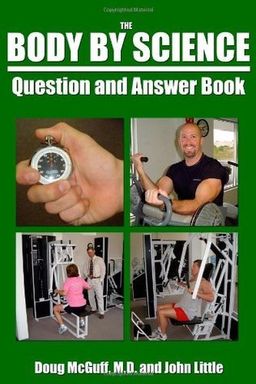
What does it really mean to be healthy? In Body by Science, Dr. Doug McGuff and John Little argue that most people confuse fitness with health. Fitness, they explain, is your capacity to perform work above resting levels; health is a dynamic balance between the body’s building (anabolic) and breaking-down (catabolic) processes. You can be fit but unhealthy if your training unnaturally tips that balance toward chronic breakdown. Their central thesis: you can gain profound physiological benefits — stronger muscles, healthier metabolism, and even molecular rejuvenation — through minimal, high-intensity strength training performed infrequently and supported by proper recovery.
Health vs. Fitness: A Needed Distinction
Health, McGuff and Little emphasize, is not simply the absence of disease but a state of internal equilibrium. Fitness, by contrast, is the product of adaptation to stress. When training becomes excessive — as in chronic endurance sports — the stress dominates, causing hormonal imbalance, tissue degradation, and impaired immunity. Ancient and modern athletes alike demonstrate this disconnect: Pheidippides, the famed Greek messenger, died immediately after his marathon run; modern marathoners often experience cardiac scarring and immune suppression. The book dismantles the myth that more activity equals better health.
The Myth of Volume: Why Intensity Wins
Drawing from McMaster University studies led by Martin Gibala, they show that short bursts of maximal effort produce the same aerobic and metabolic improvements as hours of endurance training. In one pivotal experiment, participants completing 6 to 10 minutes of weekly intense sprints doubled endurance capacity in two weeks—mirroring changes typical of long-distance training. The implication: it’s not how long you move that matters; it’s how much you demand from your muscle fibers during that time. Exercise becomes a targeted biochemical event, not an open-ended chore.
Exercise as Medicine: The Physiological “Dose”
McGuff and Little liken exercise to a drug: intensity is your concentration, volume is dose, and recovery is timing. A proper dose stimulates adaptation; too much suppresses it. Understanding the body’s motor-unit recruitment pattern helps you pinpoint that dose. In every movement, the nervous system recruits slow-twitch fibers first, then progressively larger fast-twitch fibers as fatigue mounts. To reach the deepest, most metabolically active fibers, you must take the muscle to momentary failure—the point where it can no longer produce force with good form. When paired with full recovery, that signal triggers robust strength and metabolic improvement.
Recovery: The Forgotten Half of Progress
Each workout “digs a hole” in your physiology; adaptation occurs only after the hole is filled and the body overcompensates. Go back too soon, and you undermine this cycle. The authors present evidence that a single weekly workout often produces equal or greater long-term gains than multiple weekly sessions, because intense work creates deep physiological inroads that need days to repair. As strength increases, recovery needs expand—what they call the narrow “therapeutic window.” Proper spacing and self-monitoring ensure that the exercise remains beneficial instead of damaging.
Building a Smarter Program
The book’s “Big-Five” training model—pulldown, chest press, seated row, overhead press, and leg press—hits major muscle systems efficiently. Each exercise is performed slowly, with controlled motion and one set to failure, taking about 45–90 seconds of time under load. This model provides full-body stimulation in fifteen minutes, once per week, anchored on scientific recovery principles. Machines like Nautilus or MedX are preferred for safety and consistency, though free weights can substitute if performed carefully.
Why Muscle Equals Health
The authors present muscle as your body’s metabolic “organ of longevity.” Its enzymes and mitochondria regulate insulin sensitivity, fat metabolism, and energy balance. Increased muscle mass improves cardiovascular and bone health, reduces inflammatory load, and protects against metabolic disease. In a powerful clinical story, McGuff recounts a patient with severe emphysema who regained mobility after doubling his strength through judicious resistance training. Stronger muscles reduce systemic stress because fewer motor units are required for daily actions, easing the burden on your respiratory and cardiovascular systems.
From Genes to Epigenetics: You’re Not Doomed by DNA
While genes constrain potential—myostatin limits growth, ACE types define endurance or power bias—epigenetic mechanisms show that lifestyle can modify expression. High-intensity training, natural nutrition, and recovery-friendly habits (sleep, stress control, hydration) trigger favorable gene expression patterns, some even transmissible across generations. Exercise flips molecular switches, literally rejuvenating tissue: in studies of septuagenarians, six months of strength training reversed hundreds of gene expression markers of aging toward youthful profiles.
The Takeaway Paradigm
McGuff and Little’s provocative contribution lies in redefining exercise as a precise tool for systemic health, not a mindless pursuit of calories burned. One brief, demanding session per week—performed with intelligent form and adequate recovery—can remake metabolism, reverse aging markers, and extend active lifespan. The more you respect biology’s constraints, the more sustainable your vitality becomes. This philosophy fuses science, efficiency, and realism, offering a blueprint for maximum results with minimal wear.