
Idea 1
Escape, Grit, and Becoming American
Escape, Grit, and Becoming American
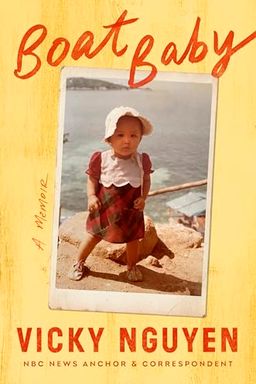
How do you transform danger, loss, and dislocation into a purposeful life? In Boat Baby, Vicky Nguyen argues that the same scrappy instincts that get you out of a war-torn homeland can become a portable playbook for building a career, raising a family, and leading with civic courage. She contends that refugee survival is not a single event but a chain of choices—logistical, ethical, and relational. To see the whole arc, you have to understand the anatomy of the escape, the architecture of her parents’ values, the economics of immigrant hustle, and the daily work of identity-making—and then carry those lessons into the newsroom, the negotiation room, and the nursery.
Across the memoir, you watch high-stakes improvisation repeat in lower-stakes but equally consequential American scenes. The sampan sprint becomes a model for reaching a hiring manager with a VHS reel; the bribes and cover stories echo in salary leverage and workplace boundaries; the island ration line foreshadows grueling one-woman-band shifts and breastfeeding marathons. Refugee tradecraft—observe, blend, bargain, and move—turns into professional method. (Note: This mirrors themes in other immigrant memoirs like A Hope More Powerful Than the Sea, where resourcefulness migrates from survival to success.)
Flight as Foundation
The book roots everything in a meticulously recalled escape from Vietnam. You ride a clandestine bus to the Mekong, slip into a sampan, and sprint to a fishing boat captained by a cousin, Captain Nguyen. Pirates board and demand “tong tong tong” (gold), teaching you how value morphs in crisis—Franklins turn useless while a gold chain buys mercy. Two days later, Pulau Bidong becomes both sanctuary and purgatory: rations, a $175 ten-by-ten patch for sleeping, a French ship where baby Vicky gets IV fluids, and, crucially, a letter to Holt International that secures sponsorship by Wannell Ware. Flight is logistics plus faith: cover stories in crowded checkpoints, gold stitched into clothes, dollars hidden in a toothpaste tube.
Parents as Architects
Huy and Liên Nguyen design the family’s trajectory. He hustles, bargains, and bets on mobility; she stabilizes, writes the pivotal sponsorship letter, and measures risk by safety. Together they turn informal-economy skills—selling penicillin on a Saigon sidewalk, dodging raids—into legitimate businesses in California: a food truck that hits National Semiconductor at the right minute, and Contemporary Design Furniture, strategically placed across from Scandinavian Designs. Their temperaments—his risk, her patience—become the inheritance that shapes Vicky’s appetite for hustle and her guardrails for prudence.
Identity as Daily Work
Belonging takes deliberate practice. Vicky adopts “Vicky” for ease at school while keeping her Vietnamese name at home, code-switches between languages, and learns that even within one’s ethnic group, authenticity is policed. Cheerleading, internships, and close friendships become counterweights to taunts and media invisibility. Later, when anti-Asian violence spikes, she uses her platform to host The Racism Virus, proving that identity can be both the lens and the subject of her journalism.
Craft, Courage, and Consequence
The newsroom chapters echo refugee tactics: rehearse, scout, and act decisively. A chance chat with Toan Lam pivots her from biology to communications; a bold move at an AAJA job fair lands her first on-air role in Orlando. She fumbles live shots, learns to shoot and edit alone, and then leads high-impact investigations—most notably exposing Sysco’s shed-stored chicken and pork via covert GoPros with colleagues like Kevin Nious and David Paredes—triggering a $19.4 million settlement and statewide changes. She also draws boundaries: confronting a photographer who touches her inappropriately, documenting, and using HR processes to secure safety (a practical, replicable script for you).
Money, Motherhood, and Negotiation
Family duty collides with financial risk when her father loses the Windsor home to day trading. Vicky responds with clear limits—no funding of shaky ventures—while supporting her mother’s independence with a used Civic and barber school tuition. She practices salary transparency and leverage—borrowing comps from a colleague’s contract and a CNN offer—to win a better NBC Bay Area deal, then weighs a New York network role against family stability with her husband Brian. Alongside, she endures miscarriages, learns the unglamorous physics of labor and breastfeeding, and mobilizes multigenerational help.
What You Take With You
You leave with a portable method: plan precisely, improvise under pressure, invest in networks, practice public courage, and set hard lines with love. The island ration line and the newsroom stakeout teach the same lesson: impact follows from unsexy repetition and ethical clarity. Survival traits can both save and sabotage you; the book shows how to refit them—through boundaries, mentorship, and data-driven negotiation—so they serve your life now. Boat Baby is not only a family chronicle; it is a manual for moving from peril to purpose, and for turning a refugee origin into a civic vocation.