
Idea 1
How Autocracy Advances Here
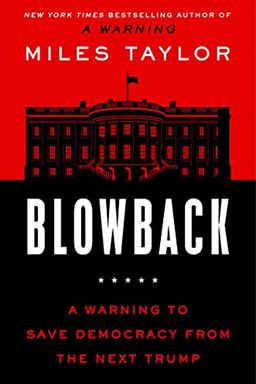
How does a modern democracy slide toward autocracy without a formal coup? In Blowback, Miles Taylor argues that the greatest danger to the American republic isn’t a single spectacular rupture; it’s a slow internal capture—of a party, the bureaucracy, law enforcement, and emergency powers—accelerated by fear, self-censorship, and the normalization of political lies. He contends that a “Next Trump” will be more disciplined, better staffed, and more intentional, exploiting lessons learned from the first term to sideline career guardrails, weaponize the justice system, and use emergency authorities in ways that tilt the playing field. But to grasp the risk, you have to see how the machinery of a complex government can be repurposed from the inside.
Taylor weaves two vantage points: the macro-level transformation of the Republican Party into a personality-driven movement, and the micro-level mechanics of how leaders and loyalists tried to bend agencies like DHS and DOJ to political ends. He complements insider episodes (Oval Office blowups over the border, the “Doomsday Book” of emergency powers, attempts to install ideologues in key slots) with a ground truth you can feel: the personal cost of dissent and whistleblowing in a climate of doxxing, intimidation, and threats.
A party becomes a movement
The narrative opens with the GOP’s drift from a coalition of factions into a MAGA-dominated machine. Early attempts by Paul Ryan, Kevin McCarthy, and others to “inoculate” the nominee with a “Better Way” agenda gave way to “Make Trump Better”—a euphemism for surviving his momentum. What followed was a purge of dissenters (Representative Denver Riggleman’s “You’re done” moment with Mark Meadows; Liz Cheney’s security threats; Anthony Gonzalez’s exit to protect his family) and a flood of conspiracies embraced by the base (QAnon, “great replacement,” the Big Lie). That capture didn’t stay in Washington; it extended to state and local nodes—think Arizona’s Cyber Ninjas audit and the doxxing of Maricopa County supervisor Bill Gates—where control over primaries, audits, and certification reshaped the electoral scaffolding.
The fragile “adults in the room” theory
Taylor introduces the “Axis of Adults”—John Kelly, Jim Mattis, and other deputies—who could occasionally restrain chaos (e.g., DHS’s Global Aviation Security Plan after ISIS plots, coordinated messaging after a London attack). But they were temporary speed bumps, not brakes. The president fired or marginalized advisors (e.g., Jim Comey), shared sensitive intelligence inappropriately, and increasingly replaced resisters with loyalists. The lesson for you: relying on character over structure is a brittle strategy (compare Cass Sunstein’s warnings about “lawful presidentialism” being twisted when norms collapse).
Hollowing the state, weaponizing the law
The book documents procedural hacks that matter: “Schedule F” to purge civil-service protections, acting officials to bypass Senate consent, and political pressure on scientists (NOAA’s “Sharpiegate”). DOJ and the FBI faced delegitimization campaigns (“Fascist Bureau of Investigation”), while proposals to appoint pliant special counsels signaled how legal tools could be repurposed for partisan ends. Courts were not spared; judges got doxxed and vilified (the “Nutty Ninth”), chilling independence.
Emergency powers and the sword turned inward
Taylor pulls back the curtain on presidential emergency action documents (PEADs)—a “Doomsday Book” of draft orders to detain people, curtail media, or shut down networks. Insiders like Mark Harvey guarded access, fearing misuse if ideologues (e.g., Christina Bobb) reached the NSC. Meanwhile, militarized fixes—Predator drones for migrants (Stephen Miller’s provocative ask; Admiral Paul Zukunft’s legal pushback), casual talk of invoking the Insurrection Act, and Erik Prince’s privatized force proposals—revealed a readiness to treat the military and contractors as domestic policy tools.
Border mania as a governing method
Inside DHS, a single-issue obsession with the border crowded out broader missions (cyber, fentanyl, disasters). You watch operational breakdowns: orders to “bus and dump” migrants, to close ports for leverage, to repaint the wall “matte black,” and to recode “apprehended” as “captured.” Legal staff flagged limits; loyalists enforced loyalty with purges (Kirstjen Nielsen’s ouster). The insistence on political spectacle over policy reality drained morale and competence—an omen for future governance by grievance.
The cost of truth and how to fix it
The book is also a case study in whistleblowing’s price: Taylor describes surveillance-detection (“Time. Distance. Direction.”) on an Asheville tail, doxxing, death threats, and sleeping with a pistol. Anonymity protected his early warnings (the New York Times op-ed, A Warning), but it paradoxically fueled attacks about a “deep state.” He argues that democratic repair requires structural changes (ranked-choice voting, nonpartisan primaries, independent redistricting, civil-service protections, emergency-powers limits) and cultural shifts to make dissent cheaper (networks like REPAIR and Republican Voters Against Trump). The stakes show up in violence metrics—from the Wolverine Watchmen’s plot against Governor Gretchen Whitmer to soaring threats against officials—where rhetoric and lies prime kinetic action.
Core claim
“The truth is the final, foundational guardrail”—but only if you reduce the cost of telling it and harden institutions that resist capture.
In short, you see a coherent playbook: capture the party, punish dissent, bend the bureaucracy, blur legal lines, centralize emergency levers, and intimidate critics. You also get a blueprint for resilience: electoral competition reforms, institutional insulation, and a civic culture that rewards rather than ruins truth-tellers.