
Idea 1
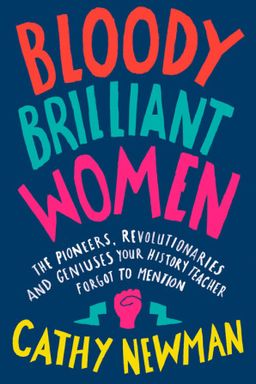
Bloody Brilliant Women and the Making of Modern Britain
What if you rewrote Britain’s modern history through the lives and labours of its women? In Bloody Brilliant Women, Cathy Newman argues that women’s influence has never been marginal—it has merely been made invisible or fragmented in traditional narratives. Her central claim is that 1918, the year some women won the vote, marks a portal rather than a pinnacle. It opens a century-long story of political, professional, and cultural transformation built on centuries of contested agency.
From Anglo‑Saxon leaders to Enlightenment limits
Newman begins by undoing the idea that women’s rise is a straight upward line. In Anglo‑Saxon England, women like Aethelflaed and Hilda of Whitby ruled, governed estates, and advised kings. After the Norman Conquest, those rights were eroded by feudal and religious law, and by cultural myths of female frailty. Yet even in medieval decline, women adapted—trading independently and writing spiritual autobiographies (like Margery Kempe’s) that inserted female voices into historical record. This long view reveals that empowerment waxes and wanes with law, religion, and economics, never simply progressing.
Industrial Britain and the politics of labour
Fast-forward to the nineteenth century, when women become visible in industrial cities as workers—and reformers. Ada Nield Chew’s letters expose the brutal mechanics of poverty wages; Annie Besant’s matchgirls strike shows how publicity and solidarity can force change. Activists such as Mary MacArthur and Emma Paterson build unions for women, while inspectors like May Abraham document unsafe conditions that feed the first modern labour laws. Newman’s message: feminism often advances not through seminars but through factory floors and newspaper columns.
Suffrage and wartime transformation
When the suffrage campaign erupts, Newman portrays two worlds—the tactical patience of constitutional reformers like Millicent Garrett Fawcett and the audacity of militants led by Emmeline Pankhurst. Hunger strikes, the Cat and Mouse Act, and Emily Davison’s fatal protest at Epsom racecourse expose the political desperation of women denied voice. World War I shifts the terms of debate: women running munitions factories, field hospitals, and transport make citizenship impossible to ignore. The 1918 Representation of the People Act doesn’t finish the job—it begins a recalibration of power.
Beyond the ballot box: professions, reproduction, and political reform
Newman traces how post‑1918 gains collide with entrenched norms. The Sex Disqualification (Removal) Act opens professions but is followed by marriage bars and invisible ceilings. Women become doctors, barristers, and academics, but structures lag. They also redefine private life: Marie Stopes normalises contraception while others—Dora Russell, Stella Browne—link sex education with political freedom. Figures like Eleanor Rathbone translate domestic experience into state policy, imagining family allowances long before universal welfare.
From welfare to culture: redesigning modern Britain
Post‑World War II reforms—child benefits, the NHS, and expanded education—change daily life but also entrench assumptions about women as dependents. Reformers like Barbara Castle and Ellen Wilkinson challenge those biases. Cultural shifts follow: the Festival of Britain in 1951 celebrates women designers and artists such as Jane Drew, Lucienne Day, and Barbara Hepworth shaping modern spaces. Newman reads domestic design as politics—cupboard heights, Formica surfaces, and textile patterns as statements of equality and modernity.
Migration, race, and intersectional activism
Post‑war migration introduces new dimensions of belonging. Women like Claudia Jones and Pearl Prescod transform cultural resistance into political power through journalism and carnivals. Their activism prefigures intersectional feminism, showing that race, class, and gender intertwine. Newman places them alongside Jayaben Desai of Grunwick, whose strike connects gendered work with racial justice, expanding the idea of who counts as a 'Bloody Brilliant Woman.'
Science, technology, and the digital frontier
Franklin’s X‑rays, Bell Burnell’s pulsars, Beatrice Shilling’s carburettors, and Dina St Johnston’s software firm reveal how women shape modern scientific worlds yet often lose credit. Newman sees this as the new frontier of recognition—the need to rewrite achievement beyond male gatekeeping. By the digital age, entrepreneurs like Anita Roddick and Martha Lane Fox inhabit new spaces, while online activism (#MeToo, Everyday Sexism) translates decades of struggle into digital voice.
The enduring question
Across a millennium, Newman’s synthesis asks you to redefine power. It isn’t merely about votes or high office—it is education, creative output, social reform and persistence. By collecting stories from Aethelflaed to Jayaben Desai, she proves that Britain’s progress is inseparable from women’s contributions. (Note: this approach resonates with scholars like Mary Beard and Amanda Vickery, who also reframe history as collective female agency rather than isolated heroines.) Newman’s final insight is personal as well as historical: history only changes when you decide whose stories matter.