
Idea 1
The Trust Revolution
You already trust banks to move money, governments to record births and deeds, and big platforms to authenticate your identity. The Tapscotts argue that blockchain redefines that foundation entirely. They call it the Trust Protocol—a distributed system that delivers trust through code, cryptography, and consensus, rather than through institutional intermediaries. In their view, this isn’t just a new financial technology; it’s a new social infrastructure for the digital age.
From Institutional to Distributed Trust
Satoshi Nakamoto’s 2008 white paper introduced a system that solved the double-spend problem using a network of miners who verify transactions and agree on a single history of value exchange. Each block of transactions is linked cryptographically to the previous one, making tampering computationally prohibitive. The ledger doesn’t depend on any one person—you and I can interact securely without ever meeting, because the protocol enforces honesty.
Bitcoin’s proof-of-work model intentionally makes verification easy but creation expensive, aligning incentives so participants behave predictably. Ethereum generalized that model into a world computer that runs smart contracts—programs that execute terms automatically. Both systems embody the same core shift: trust becomes an emergent property of math and consensus, not morality or authority.
Why This Matters
For citizens, blockchain represents freedom from gatekeepers. Your account can’t be frozen, and your transaction history is permanent and transparent. For governments, it offers real-time auditability. And for businesses, it removes costly reconciliation processes, replacing them with automated, shared records.
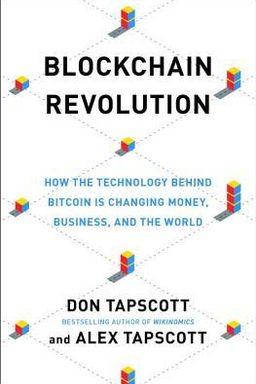
(In Blockchain Revolution, the authors emphasize this shift as comparable to the internet’s impact on information. Where the internet made copying easy, the blockchain makes authenticity verifiable.)
New Economies of Value
This new trust layer supports not just digital currency but programmable economic systems. Tokens can represent identity, property, or carbon credits. Supply chains can record provenance on-chain. Artists can embed usage rights directly in their media. The essential change is architectural: instead of centralized databases, we get shared global ledgers where rules and outcomes are visible to all.
Core Insight
Blockchain replaces institutional trust with protocol trust—a verifiable, math-based consensus that secures value, identity, and ownership across borders.
You don’t get this trust for free—energy use, governance battles, and scaling barriers all complicate the story. But in the same way TCP/IP made information flow globally, the Trust Protocol could make verified transactions global. The Tapscotts challenge you to imagine not just a new financial system, but a networked society whose trust runs on code.