
Idea 1
The Power and Peril of Thinking Without Thinking
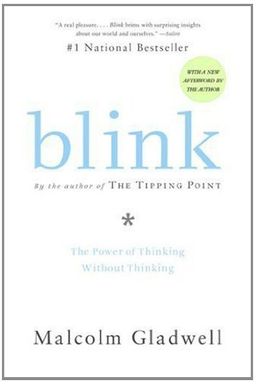
How many times have you felt something was right—or wrong—within seconds, even before you could explain why? In Blink: The Power of Thinking Without Thinking, Malcolm Gladwell explores the mysterious power of our snap judgments—the seemingly instantaneous decisions we make in the blink of an eye. He argues that you already possess a powerful inner computer, the adaptive unconscious, that can process far more information than your rational mind can handle. This silent intelligence, honed through experience, allows you to size up situations, people, and objects in moments. But it can also mislead you when clouded by bias, fear, or over-analysis.
Gladwell, a master storyteller known for The Tipping Point, unpacks how quick thinking can both save lives and destroy them. He leads you from an art museum that was fooled by a perfect fake statue to an army general who won a billion-dollar war game through instincts alone. The book reveals that the first few seconds of a decision are not mere reflex—they’re distilled expertise. Yet, when those lightning-fast judgments go awry, the results can be tragic, as seen in the police shooting of Amadou Diallo or in flawed business decisions shaped by unconscious prejudice.
Why Snap Judgments Matter
Gladwell begins with the story of the Getty Museum’s kouros, a Greek statue that science had authenticated through months of tests. But when art historians like Thomas Hoving and Evelyn Harrison glanced at it, they felt an instant, bodily repulsion—"something’s not right." Their intuition turned out to be correct: the statue was a fake. That gut-level reaction represents what Gladwell calls thin-slicing—the mind’s ability to find patterns in narrow experiences. Your unconscious can make sense of huge complexities—like recognizing a face, judging sincerity, or predicting marital stability—based on tiny slices of information.
Yet, even though thin-slicing is often astonishingly accurate, it can fail dramatically when biases intrude. The same rapid cognition that lets a museum curator spot a fake also leads a police officer to mistake an innocent man for a threat. Blink’s dual message is that instincts are both powerful and fragile. The challenge is to learn when to trust them—and when to pause, reflect, and check our blind spots.
The Book’s Journey Through Human Intuition
Gladwell structures Blink around several case studies that reveal how rapid thinking works and why it fails:
- Art and authenticity: The Getty Museum’s costly mistake shows how over-analysis can obscure intuitive truth.
- Love and relationships: Psychologist John Gottman can predict divorce with 90% accuracy after watching a couple talk for just a few minutes—by thin-slicing emotional patterns.
- War games and leadership: Marine General Paul Van Riper defeats the U.S. military’s elaborate simulation by relying on intuition, showing that spontaneity, when structured, can outperform strategy.
- First impressions gone wrong: The shooting of Amadou Diallo and hiring biases in business demonstrate how cultural prejudices warp quick thinking.
- Marketing and perception: From Coke’s disastrous “New Coke” to the Aeron chair’s success, Gladwell shows that what we think we prefer isn’t always what we actually like.
Across these narratives, Gladwell blends psychology, neuroscience, and storytelling to show that the mind is like a speed reader of experience. Thin-slicing works because your brain has accumulated patterns through years of exposure—just as a jazz musician improvises flawlessly after years of practice. But when those experiences encode stereotypes or when reflection disrupts intuitive flow, disaster can follow. This paradox lies at the heart of Blink: we are brilliant at instinct, until we aren’t.
Why These Ideas Matter
In a fast, information-saturated world, our biases and overthinking can drown out instinct, yet instant reactions are how we navigate complexity every day—on dates, in boardrooms, or at the dinner table. The science of Blink teaches you to recognize the moments when less thinking leads to better choices. Gladwell’s aim is not to glorify intuition but to show how to educate your gut. Through practice and reflection, you can train that hidden part of your brain to make clearer, fairer, faster judgments.
Key Insight
“We live in a world that assumes the quality of a decision is directly related to the time and effort that went into making it. Sometimes haste does not make waste.”
Blink challenges that assumption—and invites you to see that in the heat of the moment, when information is overwhelming, your first instinct might just be the best one, if you know when and how to listen to it.