
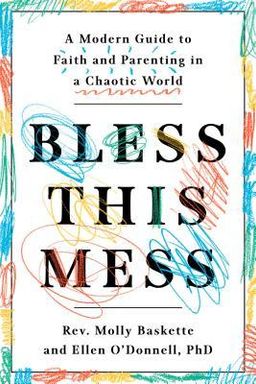
Bless This Mess cover

Bless This Mess

by Rev Molly Baskette and Ellen O’Donnell, PhD

Bless This Mess offers a fresh perspective on raising Christian children with progressive values in a chaotic world. The authors blend spiritual wisdom with child psychology to guide parents in nurturing independent, empathetic, and socially conscious children. Discover practical advice on aligning moral reasoning with faith, empowering autonomy, and fostering a love for justice.

Faithful Parenting in a Messy World

How can you raise kind, resilient, spiritually grounded kids when life—and sometimes faith—feels messy? In Bless This Mess, Reverend Molly Phinney Baskette and psychologist Ellen O’Donnell argue that parenting is both a spiritual practice and a psychological journey. They contend that you don’t have to choose between being a scientific, secular parent or a faith-filled Christian. Instead, you can unite the wisdom of modern psychology with the compassionate, inclusive teachings of Jesus to raise children who are emotionally healthy and spiritually alive.

What makes this book stand out is its blend of progressive Christian theology and empirical psychological science. Baskette, a pastor, and O’Donnell, a clinical child psychologist at MassGeneral Hospital, discovered that their parenting challenges mirrored those of many modern families—overwhelmed by fear, pressure, and disconnection. So they created a guide that weaves together biblical wisdom and developmental research, offering tangible ways to make faith manifest in everyday family life without rigid religious dogma.

Parenting as a Spiritual Practice

The book opens by reframing parenting itself as a sacred act: a partnership with God in shaping souls. Children are not projects to perfect or control—they are unique beings entrusted to our care, part of “Life’s longing for itself,” as Kahlil Gibran reminds us in the book’s preface. Baskette and O’Donnell acknowledge that parenting exposes our vulnerabilities, fears, and flaws. Yet those struggles are precisely what make it holy. As they say, “God doesn’t need to bless what’s already working. God blesses our mess.”

This process demands humility and faith that every challenge—tantrum, rebellion, worry—is a chance to grow spiritually. Instead of striving for perfection, they invite you to practice “good-enough parenting.” This means extending grace both to your children and yourself, trusting that mistakes are part of God’s plan for transformation. (Psychologically, this aligns with D. W. Winnicott’s idea of “the good enough parent” who doesn’t shield children from frustration but models resilience and repair.)

Bridging Psychology and Progressive Christianity

The authors argue that the polarized worlds of religion and science have much to offer each other. Traditional Christian parenting often leans on authoritarian, fear-based strategies, while secular advice can overlook the moral and spiritual dimensions of childrearing. Baskette and O'Donnell fuse the two by grounding spiritual insights in psychological evidence. For instance, they draw on Richard Ryan and Edward Deci’s Self-Determination Theory—which identifies autonomy, competence, and relatedness as humans’ core needs—and match it to Jesus’s way of nurturing independence, purpose, and community.

The result is what they call the Holy Trinity of Parenting: autonomy support (allowing children choice and agency), structure (providing clear boundaries), and involvement (being emotionally present). These three pillars create an environment where children feel secure enough to explore and grow in both faith and character. When parents model compassion, curiosity, and forgiveness, they embody the Way of Jesus—an active love rooted in empathy, not obedience.

Themes That Transform Everyday Life

Throughout Bless This Mess, the authors tackle key aspects of family life—from conflict and materialism to sexuality and diversity—with both research-based practical advice and deep spiritual reflection. They explore how to fight and forgive, how to talk about money and generosity, and how to make faith tangible in modern routines like meals, vacations, and even bedtime. Every “mess” becomes a lesson in divine love, whether it’s a sibling brawl or a hard conversation about race.

By teaching empathy, gratitude, and service, parents help children develop both moral reasoning and a sense of belonging in God’s “Kin-dom”—a term Baskette uses to replace “Kingdom,” emphasizing equality, community, and love across difference. Families are invited to enact kindness as daily ritual, not only through prayer but also through acts of service to neighbors and strangers. In this way, faith becomes lived experience rather than abstract doctrine.

Why This Matters in a Chaotic World

In an age of social anxiety, political polarization, and digital distraction, Baskette and O’Donnell remind us that children need more than achievement—they need meaning. Spirituality, when rooted in openness and compassion, provides this anchor. It helps kids develop gratitude, moral courage, and hope when the world feels unstable. The authors also emphasize community, urging families to connect through service, diversity, and inclusive faith communities that celebrate all kinds of people and families.

Core Message

Parenting isn’t about molding perfect children—it’s about becoming more whole yourself. By integrating psychology’s insights into human growth with Jesus’s teachings on love and grace, you can transform family chaos into spiritual connection. The “mess” isn’t something to clean up; it’s the ground where blessings grow.


The Holy Trinity of Parenting

Baskette and O’Donnell offer one of their most powerful frameworks in Chapter 2: the Holy Trinity of Parenting. It’s not a theological metaphor—it’s an evidence-based model drawn from developmental psychology. They show how autonomy, structure, and involvement combine to nurture children’s emotional intelligence and spiritual growth.

Autonomy Support: Helping Kids Feel Agency

Autonomy support means allowing your children to make choices that reflect who they are. When you encourage self-determination, you are teaching responsibility, not rebellion. This echoes both psychological studies and Christian faith. Jesus constantly invited followers to make their own choices—“Follow me” wasn’t a command; it was a call to freedom and faith.

In practice, autonomy support could mean letting your child choose their extracurriculars or take responsibility for solving conflicts. One mother in the book gives her ten-year-old control over household chores, along with a small allowance divided into “Save, Spend, and Share.” This fosters independence, gratitude, and compassion. (Psychologist Wendy Grolnick’s research cited in the book shows that autonomy-supportive parenting builds internal motivation, not fear of punishment.)

Structure: Boundaries as Blessing

Structure is the second pillar. It’s not authoritarian discipline—it’s providing clarity and stability. Clear expectations show kids that boundaries are not limitations but signs of love. Baskette wryly updates the old proverb “Spare the rod and spoil the child” into “Spare the rod and spark the child.” She argues that discipline is actually about teaching, not punishing, just as Proverbs 22:6 urges parents to “train up a child in their own way.”

Structure gives children safety while offering room to experiment. In one family story, a teenager knew the consequences of misuse of her phone—not arbitrary punishment but loss of privilege as logical consequence. The goal is helping kids internalize ethics, echoing James’s warning that “faith without works is dead.” Spiritual learning must be lived.

Involvement: Loving Presence Without Control

The third element, involvement, unites psychological warmth and spiritual grace. It means showing up for your kids—not as helicopter parents, but as steady presences who reflect God’s unconditional love. Involvement might look like consistent family meals, bedtime prayers, or shared service projects. Baskette recalls tucking in her son Rafe after a rough teenager argument as an act of reconnection, a parallel to divine forgiveness.

When autonomy and structure are balanced through involvement, families thrive. It’s not control or chaos—it’s co-creation. God models this kind of parenthood throughout the Bible: setting limits (structure), granting freedom (autonomy), and remaining faithfully loving (involvement). Parenting then becomes a spiritual reflection of divine relationship—firm yet flexible, guiding yet generous.


Conflict and Forgiveness

Conflict is inevitable in family life—but it’s also the soil where empathy and forgiveness bloom. In Chapter 4, Baskette and O’Donnell show how to turn household arguments into spiritual practice. Drawing on Jesus’s “third way” from Walter Wink’s theology, they teach parents to come alongside—not at—their children during emotional battles.

Understanding Healthy Conflict

Children need conflict to learn independence, yet parents are wired to protect. This natural tension mirrors psychology’s struggle between attachment and autonomy. Brawls over homework or bedtime echo the biblical tension between obedience and free will. The authors remind parents that even Jesus rebelled—skipping out on his family to debate rabbis at twelve—and still learned from his mother’s persistence.

The “Third Way” of Nonviolent Parenting

The “third way” rejects both domination and passivity. Instead of punishment or permissiveness, it invites problem-solving and empathy. For instance, one mom sat beside her tantruming four-year-old, calmly naming his feelings rather than demanding silence. The posture of sitting next to rather than standing over transforms control into connection. (In Parenting Without Power Struggles, Susan Stiffelman similarly advocates becoming the “calm captain” rather than the dictator.)

Forgiveness as Grace in Action

Conflict becomes holy when forgiveness follows. Baskette references Jesus’s radical command to forgive “seventy-seven times,” reminding parents that forgiveness is not weakness—it’s restoration. When Rafe confessed to mocking a peer, his mother turned the moment into a prayer of repentance instead of shame. Forgiveness models God’s love, turning wrongdoing into growth. The authors call this “spiritual practice, not spiritual perfect”—a commitment to reset rather than condemn.


Teaching Goodness and Empathy

Every parent wants to raise a “good” child—but what does goodness mean in practice? In Chapter 3, Baskette and O’Donnell redefine morality as empathy in action rather than blind compliance. They contrast moral development theories from Piaget and Kohlberg with Jesus’s model of compassion and invite families to teach kindness through conversation and storytelling.

Beyond Good Guys and Bad Guys

Children’s early black-and-white thinking—dividing the world into heroes and villains—is natural. But left unchallenged, it breeds judgment. Using stories like the Good Samaritan and family examples of playground conflicts, the authors help parents move children toward nuanced thinking: understanding that everyone has good and bad mixed together. This mirrors Paul Tillich’s idea that sin is “separation from God, self, and others,” not inherent evil.

Scaffolding Empathy Through Stories

They urge parents to use moral dilemmas from daily life and the news as catalysts for dialogue. If your child sees someone being teased, ask not only what’s wrong but what the bully might be feeling. This kind of “scaffolding,” drawn from Lev Vygotsky’s theory, moves kids from fear of punishment toward understanding motives and compassion. (In NurtureShock, Po Bronson’s findings echo this: moral reasoning develops through guided conversation, not lectures.)

Practicing Kindness in Daily Life

When children see parents model kindness—thanking servers, forgiving mistakes—they internalize goodness as relational behavior, not rule-following. Baskette’s daughter Carmen once prayed for a man who cut her mother off in traffic, turning irritation into empathy. Such acts of perspective-taking, reinforced through stories and rituals, cultivate moral character deeply aligned with Christ’s teachings of love for enemies.


Money, Generosity, and Simplicity

In Chapter 5, the authors tackle one of parenting’s touchiest subjects: money. They argue that financial life is a deeply spiritual matter, shaping what families value and how they love. Instead of guilt or materialism, they propose generosity and simplicity as antidotes to scarcity thinking.

Talking Honestly About Money

Children quickly notice privilege and inequality, so silence breeds confusion. Baskette teaches her son that wealth is relative—“We are richer than 99% of the world”—and challenges the myth of personal scarcity. Transparency, not secrecy, helps kids distinguish between need and want. O’Donnell tells her kids that “privacy is different from secrecy,” reminding parents that shame around finances distances families from honesty and generosity.

The Spiritual Power of Generosity

Biblical teaching affirms that “where your treasure is, there will your heart be also.” The authors reinterpret tithing as spiritual practice: giving enough that it challenges comfort and builds joy. Research they cite from The Paradox of Generosity confirms what scripture promises—giving brings happiness. Families who tithe or share financially become less anxious and more grateful, mirroring Jesus’s life of radical giving.

Modeling Simplicity and Time

The book suggests trading possessions for experiences: cooking together, volunteering, resting. Time becomes the new currency of love. The authors remind you that your kids want presence, not presents. Sabbath rest, they argue later, is the ultimate reset on materialism—choosing serenity over possession.


Service, Community, and the Kin-dom of God

Chapter 6 centers on Jesus’s call to service. Baskette and O’Donnell show that helping others isn’t an extracurricular—it’s the core of spiritual life. They urge families to practice kindness beyond comfort zones, teaching children to see humans in their full diversity as members of one “Kin-dom of God.”

Kindness as Family Practice

Most parents say they want kind children, but kids think we want them happy. The authors cite Harvard researcher Richard Weissbourd’s Making Caring Common project to show this disconnect. To fix it, parents must model asking not only “How do you feel?” but “How do your actions make others feel?” This shifts kindness from sentiment to responsibility.

Action Over Affection

The book offers concrete “low-bar, high-impact” service ideas—packing protein bars for neighbors in need, tending a food pantry, singing carols at homeless encampments. Families who do these small acts experience dopamine boosts and deep joy, but Baskette emphasizes the deeper reason: service corrects hypocrisy and teaches justice.

Beyond Tolerance to Embrace

In one of the most powerful sections, O’Donnell critiques “color-blind” parenting, arguing that kids must talk explicitly about race, class, and privilege. True Christianity, she explains, embraces difference as divine, describing the “Kin-dom” as horizontal rather than hierarchical. In churches where drag queens sing under the cross, children learn that diversity is sacred—not something to fear but to love.


Sabbath and Rest

Modern families are busy, but the authors insist that rest is sacred. Chapter 7 reframes Sabbath not as restriction but liberation—a divine permission to stop. Drawing on Jewish Shabbat and Christian tradition, Baskette and O’Donnell offer ways to create holy pauses in daily life.

Stop and Breathe

Quoting Rabbi Abraham Joshua Heschel’s The Sabbath, Baskette says, “Shabbat means stop.” In a consumerist culture that glorifies exhaustion, Sabbath becomes an act of rebellion. She reminds parents: even God rested. Lighting a Friday candle, sharing humble food, or refusing email for a day teaches families that worth isn’t tied to productivity.

Play as Prayer

Psychologist Stuart Brown’s research shows that play heals trauma and fosters empathy; Baskette calls it “an echo of God’s creativity.” When parents play—digging in sand, telling jokes—they model joy as spiritual discipline. Prayer itself becomes playful through tools like Lamott’s “Help, Thanks, Wow.” Rest makes faith tangible: laughter as liturgy.

Being in Community

Church, they argue, is still worth the effort. Not as obligation, but as shared humanity. A healthy congregation offers casseroles in crises and companionship in loneliness. In this, faith reclaims its communal core—being neighbors who bless, feed, and sing together. Even atheist families, they note, benefit from “participatory transcendence.” Sabbath, then, is where faith meets rest and play, healing family burnout in body and soul.


Bodies, Sex, and Honest Talk

Chapter 8 may be the boldest: the authors argue that Christianity is inherently body-positive. “God loved bodies so much She decided to get one,” Baskette writes. From sex education to body image, parents are invited to reject shame and embrace curiosity and consent as sacred virtues.

Sexuality Without Shame

Abstinence-only teachings, they note, don’t work—they produce more risk, not purity. Instead, teach multiple choices: abstinence, delay, moderation, protection. “Just say no” becomes “Just know yourself.” Sex, masturbation, and pleasure are presented not as sins but as gifts within responsible love. Jesus said nothing about premarital or same-sex sex, Baskette reminds readers, emphasizing relational ethics over rules.

Body Acceptance and Identity

From preschoolers naming their body parts accurately to teens exploring gender identity, open conversation builds trust. O’Donnell describes letting her sons wear sparkly nail polish and shop in any clothing section, modeling inclusion. Parents must affirm: “God made your body good—exactly as it is.” This affirmation protects against shame and teaches holy self-respect.

Drugs, Alcohol, and Discernment

They apply the same honesty to substances. Wine with dinner teaches moderation better than fear. Instead of contracts to never drink, parents should have ongoing conversations about choices and consequences. Addiction isn’t moral failure—it’s a disease requiring compassion. The goal, as with sex, is discernment: seeing our bodies as sacred and making choices that honor them.


Worry and Resilience

In the final chapters, Baskette and O’Donnell confront fear, illness, addiction, and death—the realities every parent dreads. They propose “brave parenting”: not eliminating worry but transforming it through faith. Jesus said, “Don’t worry about tomorrow,” and this book helps you live that truth.

Turning Worry into Prayer

Worry is control; prayer is surrender. Baskette, a cancer survivor, shares how facing mortality taught her dependence on community and divine grace. O’Donnell, living with type 1 diabetes, explains how acceptance doesn’t mean numbness—it means courage to change what can be changed and peace with what cannot. This echoes Reinhold Niebuhr’s Serenity Prayer and modern mindfulness principles.

Learning Resilience from Difference

Stories of families with disabled, addicted, or transgender children highlight faith’s practical power. A father whose son battled addiction found solace in Al-Anon: “Everything will be all right—but I don’t get to define what ‘all right’ means.” Acceptance becomes liberation, and suffering becomes communion. These stories remind parents that every child, no matter their challenges, is beloved and whole.

Brave Parenting in Everyday Fear

Worrying well means focusing on today, not catastrophizing tomorrow. It means confronting anxiety through gradual exposure—teaching kids courage step by step. The authors also emphasize self-care: parents must heal their own fears to model peace. Ultimately, brave parenting isn’t fearless—it’s faithful: trusting that love, even amid chaos, is enough.

Dig Deeper

Get personalized prompts to apply these lessons to your life and deepen your understanding.

Go Deeper

Get the Full Experience

Download Insight Books for AI-powered reflections, quizzes, and more.