
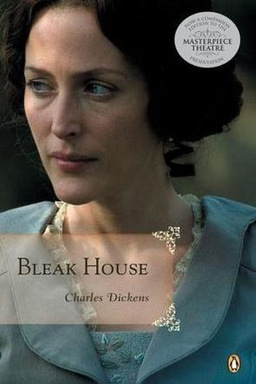
Bleak House cover

Bleak House

by Charles Dickens

Bleak House by Charles Dickens is a compelling critique of the British legal system''s inefficiencies, wrapped in a tapestry of memorable characters and complex relationships. Through the lens of a never-ending lawsuit, Dickens explores themes of justice, identity, and love, making this 19th-century novel strikingly relevant for modern readers.

Institutions, Humanity, and the Moral Architecture of Bleak House

How can a novel expose both the bureaucratic rot of an empire and the intimate heroism of ordinary people? In Bleak House, Charles Dickens constructs one of the great moral panoramas of nineteenth-century literature. The book argues that England’s legal, philanthropic, religious, and aristocratic institutions—represented through the endless lawsuit Jarndyce and Jarndyce—have become engines of paralysis. Yet in the same fog-bound world, private goodness survives through diligence, care, and human sympathy. Dickens’s dual narrative structure, alternating between Esther Summerson’s intimate memoir and a panoramic third-person narrator, lets you see both the machinery and the lives it crushes.

The novel connects every level of society—from chancery clerks and crossing-sweepers to baronets and benefactors—and turns their intersecting stories into an anatomy of institutional delay, misplaced charity, secrecy, and moral resistance. You discover a world where law consumes justice, philanthropy trumps duty, and pride disguises pain. Over the course of five hundred pages, Dickens’s moral argument unfolds through catastrophe and consolation: institutions fail, yet people rescue one another through acts of compassion.

The Machinery of Law and Its Victims

At the book’s opening, the fog in Lincoln’s Inn becomes metaphor and diagnosis. Dickens’s description of the Court of Chancery—mud, fog, dusty papers, red tape—embodies legislative and moral suffocation. The absurdly protracted case of Jarndyce and Jarndyce devours fortunes and generations. You meet Gridley, the “man from Shropshire,” who dies railing against costs; Miss Flite, whose pet birds named “Hope,” “Ruin,” and “Despair” mimic her madness; and Richard Carstone, whose indecision mirrors the suit’s corrosive delay. All show that systemic paralysis can breed moral paralysis.

Dickens painstakingly details legal instruments—affidavits, drafts, injunctions—because they are the gears of human ruin. He exposes law as a system that confuses endurance with justice. At Westminster, when the case finally collapses because costs consume the estate, you understand the satire’s depth: the law does not end in verdicts but in ashes. It is the book’s central warning about progress without conscience.

Two Narrators, Two Moral Optics

To make that system visible, Dickens invents a double lens. The urbane third-person narrator maps society’s fog—its institutions, hypocrisy, and tragedy—while Esther Summerson’s first-person voice reveals the repair work of private life. Through this “binocular vision,” you trace how households like Bleak House counter institutions by cultivating care. Esther’s key phrase, “I know I am not clever,” implies humility as form of moral clarity. Her acts—saving Charley from destitution, nursing Jo, and soothing Ada—show morality as labor rather than speech.

Dickens thus teaches you to read “by halves.” You move between wide satire and inward sympathy, recognizing that comprehension of society depends on holding both truths: the structural and the emotional. That dual method is what makes Bleak House a prototype of the social novel and the detective plot at once.

Satire, Secrecy, and the Web of Connection

Throughout the book, Dickens exposes every form of professional or moral disguise. Mrs. Jellyby’s “telescopic philanthropy” mocks the era’s obsession with global missions that ignore domestic chaos. Reverend Chadband’s oily sermons reveal religion turned into performance. Lawyer Tulkinghorn—who trades in other people’s secrets—and the parasitic Skimpole—who calls irresponsibility childlike—illustrate how intellect and privilege twist self-interest into virtue. The vigilantly observing detective Bucket inverts this economy: he uses knowledge not for power but for truth, showing how information can heal rather than humiliate.

As these figures intersect, you watch the slow unmasking of Lady Dedlock. Her secret love affair and illegitimate child (Esther) tie the most exalted household to the novel’s humblest circle of outcasts—Jo, the street child, and the poor in Tom-all-Alone’s. Through her exposure, Dickens fuses private shame and public disease into one narrative of modernity: no rank, law, or wealth can stay pure when moral vision fails.

Decay, Compassion, and Renewal

Bleak House moves from the mechanical decay of institutions toward the living warmth of households. Tom-all-Alone’s is Dickens’s geography of neglect, a slum “in Chancery” where disease breeds and children parent siblings. Here you watch Jo’s slow death despite momentary rescues—a mirror to Richard’s decline in legal hopes. Against that desolation stand the micro-communities of endurance: Esther’s Bleak House, the Bagnet family’s domestic diligence, and Allan Woodcourt’s medical compassion. Dickens sees salvation not in reform but in repaired relations.

By the end, Lady Dedlock is dead, Chancery absorbs its last estate, and Esther finds peace with Allan Woodcourt. The recovery is modest: law remains corrupt, society unchanged, yet individuals mend what institutions break. Dickens closes with a home rebuilt, naming it “Bleak House” as a paradox—bleak by memory, bright by mercy. The structure of ruin turns into an allegory of renewal: human decency is the law’s true opposite.

Core Message

Dickens tells you that systems built for justice or charity corrode when they value ritual over compassion. Only personal integrity—expressed in humble labor, loyalty, and care—can pierce the fog of modern life. Every act of housekeeping and nursing in the book is, therefore, an act of moral statecraft.

This is the architecture of Bleak House: from institutional satire to domestic sanctuary, from fog to lamp. Dickens forces you to reckon with a world where moral clarity is not public decree but daily maintenance of hope. His novel, written in monthly parts, is both serialized entertainment and moral system—a reminder that every delay of conscience breeds suffering, and every small kindness repairs a fragment of the world.


Chancery’s Devouring Machine

The Court of Chancery is Dickens’s master symbol for institutional decay. From the opening sentence’s fog to the final judgment that the estate is consumed by costs, Chancery functions as both literal and allegorical villain. You see in Jarndyce and Jarndyce a case so enmeshed in bills, cross-bills, affidavits, and masters’ reports that it stops time itself. People are born into the suit, live by waiting, and die still waiting. Dickens translates legal process into moral disease.

The Mechanism of Delay

Dickens constructs Chancery as a slow mechanical beast. Its lawyers—Kenge, Carboy, Vholes, and Tulkinghorn—make “business for themselves.” The language of the law becomes its true subject; words devour meaning. When Dickens describes long vacations and empty chambers, he’s showing you not quiet but paralysis: public offices lie in a “hot sleep.” Even the architecture of Lincoln’s Inn Hall—with its stained glass, red baize, and dust—is the scenery of desuetude. Everyone gains and no one is saved.

Human Wreckage

Every sufferer you meet—Gridley, Miss Flite, Richard Carstone—illustrates the human conversion of process into despair. Gridley dies “of overwork in waiting.” Miss Flite measures her ruined reason through caged birds named for lost virtues. Richard’s tragedy is subtler: raised in the orbit of the suit, he learns procrastination as instinct. His love for Ada corrodes as he replaces hope with paperwork. Dickens calls this the moral contagion of procedure: delay becomes character.

The counterpart to these wasted lives is John Jarndyce. He refuses litigation, calling Chancery a “family curse.” His Bleak House offers refuge from paperwork through active goodwill. The novel thus gives you a practical ethic: where law stagnates, care must act.

Moral Equation

In Dickens’s accounting, a legal system that refuses decision is not neutral—it is a redistributor of suffering. Chancery’s grandeur covers theft by delay; every writ is a moral debt.

Decay as Spectacle

When the long battle ends, the “case is over at last” because the estate is gone; court laughter replaces justice. The onlookers treat ruin as entertainment. This transforms tragedy into satire and warns you how easily spectatorship replaces conscience. (Note: Dickens drew from real Chancery cases lasting decades—a scandal his readers immediately recognized.)

By turning law into eater, Dickens converts technical grievance into myth. Chancery is Victorian progress gone wrong—a machine that produces nothing but itself. The cure, he insists through Esther and Jarndyce, begins wherever one person replaces paper with compassion.


Esther Summerson and Moral Work

Esther Summerson’s chapters anchor Bleak House in the tangible ethics of care. Dickens calls her “not clever,” but her humility conceals moral intelligence. Through her you see how service counteracts cynicism. Her first act—accepting housekeeping keys from John Jarndyce—begins a pattern: she builds order where institutions produce confusion. By managing Ada, Charley, and Caddy, she translates affection into structure.

Self-Formation and Duty

Esther’s backstory—a childhood of shame under Miss Barbary’s cruelty—teaches her to convert humiliation into responsibility. Her mantra, “I know I am not clever,” is not self-deprecation but spiritual method: it turns emotional wounds into empathy. When she nurses Charley and falls ill herself, her recovery dramatizes moral continuity; compassion is contagious both biologically and spiritually.

The Ethics of Caretaking

You watch Esther in small domestic economies: writing instructions, cleaning rooms, guiding Caddy’s marriage plans, tending Jo the orphan. These tasks, humble in scale, contrast the grandiose moral theater of Mrs. Jellyby or Reverend Chadband. Dickens uses her steady example to redefine heroism—not in speeches or reform societies but in household persistence. Esther’s caregiving collapses the distance between private virtue and public reform.

Moral Anchor

Across the novel, Esther transforms philanthropy into intimacy. Where institutions abstract suffering, she makes it personal and repairable. Her lamp glows exact where Chancery’s fog thickens.

Duty and Choice

Later, when John Jarndyce proposes marriage, Esther’s decision blends gratitude with self-knowledge. She nearly accepts from duty until Jarndyce releases her, enabling marriage to Allan Woodcourt—the man whose compassion matches hers. Dickens ends her arc with domestic sovereignty: “the little house called Bleak House.” It is not escape but fulfillment, representing ethical labor rewarded by stability.

Through Esther, Dickens articulates a philosophy of everyday goodness. Her caring authority is the true counter-system to Chancery. If law is endless litigation, Esther is endless maintenance. Her legacy teaches you that salvation in a broken world is not revolution but attention—polished every morning like a key.


Fog, Satire, and the Moral Atmosphere of London

In Dickens’s London, weather is conscience. Fog is more than meteorology; it’s the visual grammar of confusion. From the “Fog everywhere” opening to the mists over Tom-all-Alone’s, this motif connects Chancery’s procedural haze with social blindness. You are invited to read climate as ideology: Victorian Britain celebrates progress (Crystal Palace, railways) while ignoring the soot of poverty clinging to its sleeves.

Seeing Through the Smog

The urban images—mud, smoke, rain—show institutions obscuring their victims. Dickens pairs splendor and squalor: the exhibition halls of progress stand beside fever houses; aristocratic salons glow while children in Tom-all-Alone’s cough and die. Fog becomes shorthand for moral obfuscation. To pierce it, you need what Dickens calls “binocular vision”: to see both spectacle and misery at once.

Philanthropy and Absurdity

Characters like Mrs. Jellyby and Mr. Skimpole satirize charitable pretension. Mrs. Jellyby builds a fantasy Africa called Borrioboola-Gha while neglecting her filthy home; Skimpole, declaring himself a child, turns dependence into art. Dickens ridicules these false philanthropists but also asks you to check your own complacency. Real generosity, he insists through Esther and Jarndyce, is unseen and local.

Comedy with Teeth

Even minor characters—Mr. Turveydrop’s deportment lessons, Mrs. Pardiggle’s noisy piety, or the absurd political squabbles of “Coodle and Doodle”—serve a moral purpose. Laughter is Dickens’s disinfectant. His tone veers from grotesque to tragic within a paragraph, training you to feel empathy without sentimentality.

Critical Function

By turning entire social scenes into caricature, Dickens allows readers to laugh themselves lucid. Every joke is diagnostic: the funnier the picture, the sicker the institution.

Fog, satire, and spectacle fuse into critique. They expose how easily virtue becomes display and how London’s progress depends on forgetting. In that smoggy mirror, you are meant to recognize your own vision: blurred until kindness clears it.


Secrecy, Surveillance, and the Collapse of Privacy

Secrets are the book’s second economy, traded as property by lawyers, servants, and opportunists. Mr. Tulkinghorn exemplifies this dangerous knowledge. As the Dedlocks’ solicitor, he hoards confidences in the name of duty while transforming them into leverage. When he confronts Lady Dedlock about her past with Captain Hawdon—the dead law-writer Nemo—he conducts the scene like a deposition, not a confession. The information becomes weapon, not understanding.

The Legal Eye and the Human Cost

Tulkinghorn’s omnipresence—his quiet footsteps, shaded lamp, and implacable tone—illustrates how surveillance replaces intimacy. Lady Dedlock’s terror at exposure dramatizes the Victorian link between reputation and survival. One scratch in the mirror of honor can destroy a household. Dickens stages her eventual flight and death as the social autopsy of secrecy: information, once public, consumes its host.

From Lawyer to Detective

Into this world steps Inspector Bucket, the novel’s counter-figure to Tulkinghorn. Where the lawyer conceals to dominate, the detective reveals to resolve. His patient search—questioning Jo, tracing letters, orchestrating Mademoiselle Hortense’s arrest—marks the dawn of modern detection. Bucket’s empathy contrasts professional coldness; he uses womanly tact (Mrs. Bucket’s help, Esther’s presence) as investigative tools. Knowledge retrieves justice rather than prestige.

Power of Disclosure

Dickens implies that truth itself is ambivalent: it can heal or humiliate. The ethic of discovery lies not in knowing, but in caring for what knowledge does.

Lady Dedlock’s Fall

The climax—the printed notice defaming her as “Murderess,” her confession letter to Sir Leicester, and her body found by the burial ground—bleeds secrecy into tragedy. The printed sheet makes gossip mechanical, showing how a society obsessed with information devours privacy. When Sir Leicester accepts her innocence yet remains paralyzed, you see the entire class system fossilized by shame.

Through this exposé, Dickens transforms family intrigue into political allegory: a culture that worships respectability but fears truth will eventually expose itself. The human task is learning how to tell without destroying, how to know without owning. That is the ethical detective work Dickens leaves to you.


Poverty, Compassion, and the Ethics of Attention

Bleak House binds its grand social satire to the small tragedy of the poor. Tom-all-Alone’s—its dying streets, feverhouses, and scavenged lives—gathers those discarded by law and charity alike. In Jo, the homeless crossing-sweeper, you see innocence crushed by apathy. He doesn’t steal or blaspheme; he merely “moves on.” His death in Esther’s care becomes Dickens’s indictment of any civilization that tolerates such invisibility.

Jo and the Chain of Care

Every act around Jo—Chadband’s sermonizing, Snagsby’s confusion, Esther’s nursing—reveals society’s moral spectrum. Chadband treats him as exhibit; Esther, as person. When Jo dies murmuring the Lord’s Prayer, Dickens compresses theology into ethics: the holiness of attention. His fever infects Charley, then Esther, turning compassion into physical contagion, a striking metaphor for social interdependence.

Allan Woodcourt’s Medical Morality

The ship-surgeon Allan Woodcourt embodies competent kindness. He rescues Jo not by sermon or money but by bread, lodging, and cleanliness. Dickinson aligns medicine with morality: observation, treatment, and respect for evidence replace moralizing spectacle. Woodcourt’s later marriage to Esther fuses charity and partnership—a moral and literal remedy.

Central Lesson

You cannot eliminate suffering with pity alone. What matters is seeing—the disciplined attention that turns compassion into action.

Human Geography of Neglect

Tom-all-Alone’s mirrors Chancery: both are decaying, self-contained systems “in Chancery,” legally frozen and morally rotting. Dickens naming the slum after isolation—All-Alone’s—signals the spiritual condition of the poor. Yet amid this rot, small networks of care (Mrs. Blinder, Gridley, the Bagnets, Esther) form life’s counter-institutions. They preview Dickens’s social hope: that empathy, not hierarchy, sustains civilization.

Through Jo and his rescuers, you are asked to practice moral perception: to pierce fog, notice the invisible, and let compassion guide reform. In Dickens’s moral anthropology, every act of seeing rightly begins social change.


Resolution, Death, and Domestic Renewal

The novel’s conclusion transforms tragedy into perspective. When Chancery finally ends because costs devour the estate, the legal farce closes the public story. But Dickens redirects you to private realms where something better endures. Lady Dedlock’s death seals aristocratic shame; Sir Leicester’s paralysis marks old England’s exhaustion. Yet Bleak House, reborn under Esther and Allan Woodcourt, glows as counter-model: justice as household order, kindness as constitution.

Private Justice

Jarndyce’s final act—secretly arranging Esther’s marriage and gifting her a home named “Bleak House”—renders equity personal again. Where Chancery turns wills into wastepaper, his generosity reclaims inheritance as trust. The distinction between legal settlement and moral settlement defines the novel’s last argument.

The Aftermath of Exposure

Across Lincolnshire, the Dedlock estate becomes museum-like, its grandeur hollow. The political bluster of early chapters—“Coodle and Doodle”—fades into silence. Dickens compresses historical decline into domestic allegory: when a society worships form over conscience, its mansions turn mausoleums.

Enduring Legacies

Esther’s final narration—seven years after—lists lives rebuilt: Ada and her child, Charley now married, Caddy’s stable home. Even minor figures find work and belonging. The world doesn’t reform; it endures through care. Dickens replaces utopia with continuity, insisting that moral progress begins at home. (Note: This ending contrasts with earlier novels like Oliver Twist where charity ends the narrative; here, it begins the future.)

Final Moral

National institutions may corrode, but individual conscience can still govern decently. Bleak House endures as metaphor of moral self-government built from affection and work.

In the end, Dickens doesn’t offer reform laws or manifestos. He offers a home. Each repaired room stands as practical utopia—a counter-Chancery where duties are mutual, accounts are settled daily, and mercy beats bureaucracy. That household justice is his final remedy for a fog-strangled world.

Dig Deeper

Get personalized prompts to apply these lessons to your life and deepen your understanding.

Go Deeper

Get the Full Experience

Download Insight Books for AI-powered reflections, quizzes, and more.