
Idea 1
The Pursuit of “Black Edge” on Wall Street
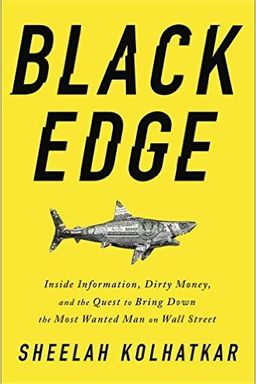
If you want to understand how ambition and secrecy collided to shape modern Wall Street, start with the chase for black edge—the insider information that moves markets before anyone else can react. In Black Edge, Sheelah Kolhatkar tells how Steven Cohen’s SAC Capital came to embody that pursuit, building an empire on speed, analysis, and whispers that often drifted across the line between smart research and criminal advantage.
The book traces how hedge funds evolved from boutique partnerships into trillion-dollar forces reshaping global finance. As money concentrated in fewer hands, the pressure to find new sources of edge intensified. Cohen, once a tape reader at Gruntal, created SAC in 1992 as a high-performance factory—an institution designed to extract market insights faster than anyone else. By the 2000s his firm was so powerful that its internal culture, incentives, and secrecy became central to government suspicion.
From White to Gray to Black
To grasp what “black edge” means, you have to see the gradation of information: white edge is public data anyone can trade on; gray edge is context—an analyst’s nuanced understanding of industry tone; and black edge is material, nonpublic information that makes trades illegal. In the hedge-fund boom, gray edge became the new normal, and black edge simply the next step. Traders convinced themselves they weren’t breaking rules—they were just winning the race for insight.
At SAC, Jason Karp’s “color code” of edges formalized this logic. Analysts learned how to flirt with legality without saying anything outright. As long as you called it “mosaic analysis,” you could claim you were synthesizing fragments rather than acting on insider tips. (Note: The “mosaic” defense echoes arguments used decades earlier by Ivan Boesky before insider-trading laws hardened.)
How Firms Created the Shadow Market
Once hedge funds dominated liquidity, they built proprietary intelligence networks. Expert-network firms like Gerson Lehrman Group (GLG) and Primary Global Research (PGR) created paid pipelines between scientists and traders. Consultants were paid thousands for half-hour calls, ostensibly for “industry color.” In reality, many offered small but material datapoints—patient counts, side effects, or manufacturing issues—that blew open earnings surprises.
These channels generated blurred moral and legal boundaries. When SAC’s analyst Mathew Martoma cultivated neurologist Sidney Gilman through GLG, the relationship seemed routine until Gilman shared confidential bapineuzumab trial data. That revelation turned routine due diligence into the largest insider-trading case in hedge-fund history. (Comparable cases, such as the Milken-Levine deals of the 1980s, were far smaller in scale.)
The Government’s Counteroffensive
Kolhatkar’s story pivots when investigators introduce criminal wiretaps—the same tools once reserved for mobsters—into the insulation of hedge-fund offices. FBI agents like B. J. Kang and David Makol launch a new era of financial surveillance, mixing data forensics with human flips. They listen to coded trader conversations, subpoena phone records, and convince mid-level insiders to wear wires. The government learns that insider trading is not in spreadsheets—it’s in spoken words.
Civil and criminal agencies converge. SEC lawyers such as Charles Riely and Sanjay Wadhwa connect litigation records, phone logs, and expert-network contracts to the FBI’s audio evidence. Private suits—like Michael Bowe’s for Biovail—feed details and public pressure. The paper trail becomes intelligence.
Why the Story Matters
The book’s moral argument goes beyond one firm. Hedge funds are portrayed as laboratories of human incentive: when the payoff for success is multimillion-dollar bonuses, and failure means termination, rational boundaries collapse. Cohen’s culture of “trade to win” rewarded aggression more than ethics. Martoma’s fateful trade on Elan and Wyeth wasn’t a deviation—it was the logical outcome of structural pressure.
Ultimately, Black Edge tells how law enforcement, technology, and psychology collided in the effort to penetrate Wall Street’s upper tier. It shows that markets rely not just on capital but on moral codes—and when those codes erode, the line between genius and criminality disappears. As Kolhatkar demonstrates through real people, black edge is not just information; it’s an idea—a conviction that winning justifies whatever it takes.
Core insight
“Black edge” thrives where ambition meets opacity. The greater the reward and secrecy, the weaker the ethical boundary becomes—unless regulators innovate as fast as traders.