
Idea 1
Measuring America From the Middle
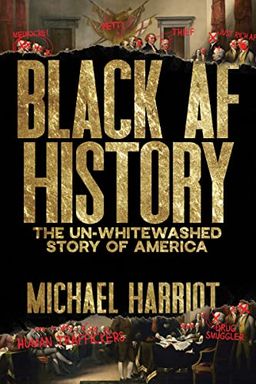
How do you see a nation clearly when its official stories hide the scaffolding? Michael Harriot argues that you begin in the “middle room” — a Black-centered classroom disguised as a family den — and carry that lens through every era. He contends that when you swap out the whitewashed yardstick for one built by Black thinkers and chroniclers (Du Bois, Carter G. Woodson, Zora Neale Hurston, Arturo Schomburg, Dorothy B. Porter), the shape of America changes: origin stories look engineered, progress looks contingent, and resistance becomes central rather than exceptional.
You learn that slavery’s birth was not inevitable but manufactured through church law, imperial greed, and nautical science. You see how Jamestown’s “rescue” in 1619 turned on stolen people and policy tweaks. You move into South Carolina’s rice swamps, where West African expertise produced both wealth and the Gullah-Geechee world, and where autonomy bred uprising. Then you track how rebellions — from maroons to Haiti — rearranged global power and triggered retribution. You witness Reconstruction’s bright promise and deliberate rollback; you watch law itself become the instrument of Jim Crow through Plessy. In the twentieth century, you see the state professionalize counterinsurgency via COINTELPRO and reconstitute forced labor through the Thirteenth Amendment’s exception clause. All along, you taste how culture — from soul food to stand-up to rock and roll — carries memory and counter-history, often authored by Black women who also architected freedom movements behind the scenes.
The Middle Room as Method
Harriot’s childhood den in Hartsville, South Carolina functioned as a home school and counter-archive. His mother curated primary sources and demanded a different measuring tape: Black labor, creativity, and survival became the norm against which America was judged. When you start here, Du Bois’s “double-consciousness” isn’t a grad-school concept; it’s the tool a child uses to decode textbooks that label Black existence a footnote. (Note: This echoes Carter G. Woodson’s Miseducation of the Negro — history told from the margin deforms the center.)
Origins Reframed
From papal bulls to Henry the Navigator’s maritime school, Harriot shows how religion, innovation, and state power built a human-trafficking market before the Americas scaled it. By the time the White Lion docks at Jamestown with “20 and odd” stolen Angolans, you understand the chain: capture, commerce, and colonial survival intertwined. Law then rationalizes theft into heredity and race. (Compare to Walter Rodney’s How Europe Underdeveloped Africa for parallel economic framing.)
Resistance as the Rule
Harriot flips the script: Black people aren’t passive cargo; they are the architects of opposition. From maroons in the Great Dismal Swamp to the Stono Rebellion to the German Coast uprising, everyday insurgency forced white lawmakers to harden codes. Haiti proves that revolt can overthrow empires — and that the world will punish a Black republic with debt and isolation.
Progress and Its Reversal
Reconstruction documents what Black freedom looks like when backed by federal will: land on the Sea Islands, schools, voting rights, representation. But the Compromise of 1877, Andrew Johnson’s pardons, paramilitary terror, and Supreme Court abdication teach you that rights without enforcement dissolve. Ida B. Wells’s reporting records the pyre where democracy and lynch mobs met.
Law, Surveillance, and the Carceral Through-Line
Harriot maps how “separate but equal” sanctified caste, how COINTELPRO professionalized disruption of Black politics, and how the Thirteenth Amendment’s exception clause rebuilt coerced labor into convict leasing and modern mass incarceration. Policy is the plot here; profit is the motive; race is the organizing logic. (Note: Michelle Alexander’s The New Jim Crow draws the same arc from Jim Crow to mass incarceration.)
Culture as Counter-Narrative
Food, comedy, and music carry a ledger of labor and lineage. Soul food’s “juice,” edges, and grease taboos are not quirks — they are rules that encode community. Charlie Case’s stand-up template and Sister Rosetta Tharpe’s electrified gospel show how Black creators built genres later rebranded as American mainstream. Black women — Mary Church Terrell, Callie House, Ella Baker, Amelia Boynton, Mary McLeod Bethune, Mary Ellen Pleasant — meanwhile design the strategies, raise funds, and teach the tactics that move the needle.
Core Claim
“For me, the America that existed in the middle room is the real America.” The book’s invitation is simple: change the ruler, change the reading. When you measure this nation by Black presence, technology, resistance, and culture, the hidden machinery of law, money, and myth comes into view — and so do the blueprints for freedom.