
Idea 1
Making a Life from Bits and Pieces
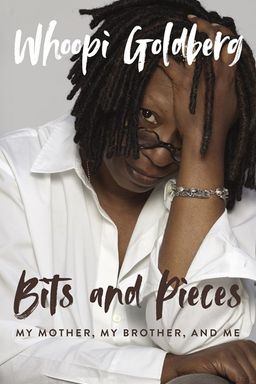
Who holds your memories when the people who really knew you are gone? In Bits and Pieces, Whoopi Goldberg argues that a life is built from small, stubborn acts of love, humor, and grit—often performed by people who never make the headlines. She contends that the person you become is stitched together from everyday choices and the steady drumbeat of values handed down by your people, even when memory itself is unreliable. This is a memoir about a nucleus family of three—her mother, Emma; her brother, Clyde; and her—who made a full life out of very little money, a lot of culture, and a fierce insistence on dignity.
Goldberg frames the story around two seismic losses: the sudden death of her mother in 2010 and the unexpected death of her brother five years later. Those losses force a reckoning with memory’s limits and with the question of who you are without the witnesses to your life. Along the way, she revisits growing up in the Chelsea projects in Manhattan, surviving her mother’s hospitalization and amnesia after electroshock treatments, finding her voice on stage, navigating Hollywood as a Black woman in the 1980s and ’90s, wrestling with addiction, raising a daughter while chasing an improbable career, and learning how to grieve without getting stuck there.
A Family That Makes Magic Out of Scarcity
At the heart of the book is Emma Johnson, a practical nurse turned Head Start teacher who refused self-pity. Emma’s approach—“You’ve got two choices. You can waste time complaining, or you can get up and figure out how to fix it”—becomes Whoopi’s operating system. Without money but with audacity, Emma gave her kids the city: free museum days, Shakespeare in the Park, the Rockettes, the Beatles at Shea Stadium. Christmases felt impossible and then suddenly appeared, like stagecraft, tree and presents materializing overnight. That magic wasn’t about cash; it was about intention and hard planning (think layaway in February and secrets kept even in a five-room apartment). The emotional ballast of those choices makes adulthood possible later, when grief and fame complicate everything.
Trauma, Secrecy, and Reinvention
In a devastating mid-childhood rupture, Whoopi comes home to find her mother attempting suicide. Emma is taken to Bellevue and subjected—over her husband and father’s signatures—to experimental electroshock. When she returns two years later, she does not recognize her own children. Goldberg only learns the full truth four decades on, when Emma admits she came home and determined to “figure it out” without letting anyone know she didn’t remember. That vow, and Emma’s lifelong refusal to see a doctor again, reverberates through the family. Yet the same woman who was failed by institutions becomes a beloved early-education teacher, staging pumpkin lessons about mortality and helping tiny humans meet the world without fear. (For context, this arc echoes Tara Westover’s observation in Educated that survival sometimes demands your own curricula, even against the grain of formal systems.)
From Caryn to Whoopi—and Representation as a Mission
Goldberg learns to learn differently because of undiagnosed dyslexia, memorizing aloud when reading fails on the page. She drops out after tenth grade with her mother’s blessing—on condition that she build her own syllabus of lectures and exhibits each week. On stage, she crafts a one-woman universe of characters that becomes The Spook Show, then a Broadway phenomenon after Mike Nichols sees it and weeps. Steven Spielberg entrusts her with Celie in The Color Purple; Patrick Swayze fights for her casting in Ghost. Yet for Goldberg, representation isn’t just personal triumph: she lobbies Gene Roddenberry to include a Black woman on the bridge in Star Trek: The Next Generation because she, as a kid, needed to see Nichelle Nichols to believe Black people had a future in space. (Compare Michelle Obama’s similar note in Becoming: you can’t be what you can’t see.)
Grief Without Self-Pity
After Emma dies, Whoopi and Clyde honor her wishes—no funeral; “put me in the microwave”—and quietly scatter ashes at Disneyland’s It’s a Small World, the ride Emma loved for its vision of human unity. When Clyde dies, the loneliness changes shape; now the two people who truly knew her are gone. What follows isn’t melodrama but Emma’s ethic applied to grief: ask for help when you can’t get off the bed; write condolence cards that tell the hard truths about disorientation; make practical checklists about death, documents, and decisions; and, above all, laugh. The grief never ends—it evolves and lurks “in the corner”—but kindness and humor keep you moving.
Why This Memoir Matters
Bits and Pieces is a manual for building a self when money is scarce but culture is abundant, when institutions fail you, and when the people who made you aren’t here to confirm the story. It’s about turning embarrassment into agency (the infamous uncleaned room and the leather belt), turning addiction into a line in the sand (cocaine on a hotel closet floor), and turning fame into service (AIDS activism with Elizabeth Taylor; mentoring by showing up). If you’ve ever wondered how to be both tender and tough, this is your field guide.
In this summary, you’ll see how Emma’s practical love shaped a worldview; how trauma reshaped a family; how Whoopi built a career from self-invention and strategic allies; how race, hair, and voice became battlegrounds and breakthroughs; how addiction and motherhood forced boundary-setting; and how grief can be carried without letting it carry you off course. The result is less a celebrity tell-all than a blueprint for sharing the earth with other people, one principled, funny, stubborn choice at a time.