
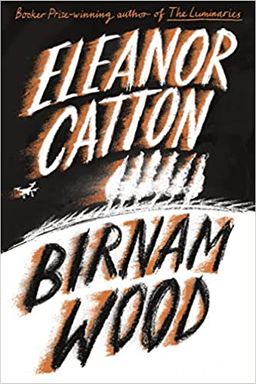
Birnam Wood cover

Birnam Wood

by Eleanor Catton

Birnam Wood is a thrilling saga of idealism versus capitalism, where a group of activists collides with a charismatic yet dangerous billionaire. As tensions rise, secrets unravel, leading to a tragic and suspenseful showdown. Eleanor Catton crafts a tale of power, betrayal, and resistance, echoing the timeless themes of Shakespearean tragedy.

Power, Activism, and the Ecology of Motive

What happens when ideals of ecological justice collide with the machinery of global power? In Birnam Wood, Eleanor Catton reframes activism and environmentalism within the logic of surveillance, wealth, and betrayal. You begin in the world of a grassroots collective that plants crops on neglected land and end in a labyrinth of moral collapse driven by technological capitalism. The book tests whether moral imagination can survive in an environment dominated by secrecy and greed.

At its centre stands Mira Bunting, founder of Birnam Wood, and her pragmatic counterpart Shelley Noakes. Their story begins as a tale of guerrilla gardening and resourcefulness and becomes a test of integrity once billionaire Robert Lemoine enters with drones, money, and hidden motives. Catton layers this with journalism (Tony Gallo’s investigation), corporate espionage, and ecological deceit in Korowai Pass—an isolated region that turns landscape into a stage for power.

From grassroots idealism to systemic compromise

Birnam Wood begins as a porous, consensus-driven collective operating outside formal political institutions. You watch Mira and Shelley improvise tools, barter seeds, and disguise themselves as contractors to plant on vacant lots. The group’s ideals are noble: reclaim wasted land and feed communities. Yet their fragility is practical—the absence of funding, bureaucracy, and security pushes them toward compromise. Catton’s insight is that survival can corrode purity; the more a movement scales, the more it mirrors the systems it resists.

This structural tension defines the story’s arc. When Mira accepts Lemoine’s offer to plant on the Darvish farm, she views it as expansion. What she cannot yet see is that every partnership with power carries a surveillance cost. The moment the group moves from guerrilla plots to private land under corporate patronage, the boundary between autonomy and manipulation blurs.

Characters as moral instruments

Each major figure embodies an aspect of modern ideology. Mira expresses the dream of transformational activism—her motto, “breaking good,” invokes reform through practical labour. Shelley personifies the cost of unseen care work—her administrative competence holds the collective together yet leaves her emotionally depleted. Tony represents a form of investigative conscience: he turns moral rage into evidence. Lemoine, in contrast, is the new archetype of power—technocratic, rich, and morally amoral. He funds projects, manipulates people, and rewrites digital records to preserve his control.

You notice how these forces converge. Mira’s secrecy, Shelley’s exhaustion, Tony’s obsession, and Lemoine’s manipulation form a web of mutual dependency. The book thereby shifts from local realism to systemic metaphor: the micro-decisions of individuals echo the much larger patterns of environmental exploitation worldwide.

Korowai and Thorndike: place as moral geography

Korowai Pass, with its landslide and isolation, literalizes the book’s thematic conflict. The closure of the pass creates a temporary commons—an opening for activists to reclaim land—and simultaneously offers cover for extraction. Thorndike is both opportunity and danger. Lemoine’s rare-earth mining project operates beneath the rhetoric of conservation and philanthropy. Catton turns the landscape into a metaphor for opacity: beauty hides harm, and geological silence masks corporate crime.

Surveillance and narrative control

Technology becomes the novel’s invisible narrator. Lemoine’s drones, IMSI-catchers, and data manipulations allow him to rewrite reality faster than anyone can verify it. By altering email timestamps, editing GPS logs, and deploying pseudo-generous gestures like consoling Jill Darvish, he constructs not only a cover-up but a parallel universe of truth. You learn that the capacity to watch—and to edit what is watched—defines modern power.

Central moral thread

Catton’s deepest question is not whether activism can succeed, but whether truth itself can survive against wealth, surveillance, and propaganda. The story asks: what happens when every moral act leaves a digital trace manipulable by those in control?

Class and environmental hypocrisy

By the novel’s turning point, the class divide becomes brutal. Birnam Wood’s idealism collapses under Lemoine’s financial gravity. Mira sacrifices transparency; Shelley becomes the scapegoat; Tony sacrifices his safety. The narrative makes you feel how moral systems crumble when asymmetric wealth dictates who gets to define virtue. Environmental language itself—drones, conservation clauses, endangered birds—turns into marketing camouflage for mineral theft.

The human cost

Tony’s final pursuit, Mira’s deception, Shelley’s heartbreak, and Lemoine’s utilitarian cruelty culminate in tragedy. The deaths, manipulations, and cover-ups illustrate the cost of confronting power in the twenty-first century: integrity competes with survival. Catton leaves you with a chilling reflection—ethical labour, ecological concern, and truth-telling are fragile currencies in a world governed by the speed and wealth of those who can buy silence. The novel’s ultimate insight is that moral clarity requires not only courage but control over the technologies that define what counts as fact.


Mira Bunting’s Pragmatic Vision

Mira Bunting is the novel’s moral and strategic axis. You watch her define activism through practical labour rather than rhetoric: she scours empty land, recycles materials, negotiates with hosts, and makes political argument by example. Yet her moral compass—aimed at systemic change—rotates under pressure. Her need to scale Birnam Wood turns pragmatism into secrecy and collaboration with a billionaire whose ethics she cannot control.

Ambition and contradiction

Mira’s origin story roots her politics in personal experience. Raised by left-leaning parents who prized independence, she learned self-reliance early and equated competence with virtue. That upbringing drives her to treat activism as craft. But it also breeds solitude; she sees emotional vulnerability as weakness. Her refusal to confide—whether about Lemoine’s money or Shelley’s doubts—creates the fractures later exploited by others.

Breaking good and moral flexibility

Mira frames "breaking good" as rebellion through community benefit—a reversal of “breaking bad.” She sees land reclamation as proof that goodness can be subversive. Yet when resources shrink, she bends her ideals. Accepting Lemoine’s cash deposit and using it secretly show how desperation rewrites ethics. She treats negotiation like ecological design: test conditions, adjust inputs, and iterate outcomes. The danger is that she rationalises compromise as evolution.

Leadership under strain

Her leadership style blends charisma and control. Mira inspires through competence but governs through omission. She withholds information, frames decisions as fait accompli, and manipulates group consensus. Catton reveals that leadership in moral campaigns often exchanges transparency for efficacy: when urgency dominates, ends justify means. Mira’s attempts to save Birnam Wood from poverty paradoxically erode its trust.

Core dilemma

Can a collective remain ethical when its leader believes in noble deceit? In Mira’s story, strategy is inseparable from secrecy, and those choices transform vision into isolation.

By the end, Mira’s brilliance and blindness mirror the book’s thesis: idealism without accountability may reproduce the structures it seeks to dismantle. You admire her resourcefulness yet witness how ambition under capitalism inevitably toys with complicity.


Shelley Noakes and the Burden of Care

Shelley Noakes stands for the invisible labour that sustains ethical movements. Where Mira improvises and dreams, Shelley manages and preserves. She is the bookkeeper, Facebook administrator, seed organiser, and emotional stabiliser of Birnam Wood. Through Shelley, Catton examines the undervalued role of care and competence in activist ecosystems—and how exhaustion can become a moral breaking point.

Logistical genius and moral credibility

Shelley’s actions are tangible: she negotiates host agreements, turns broken appliances into greenhouses, and plans crop rotations using scavenged supplies. Her work embodies discipline rather than ideology. That credibility makes Birnam Wood palatable to outsiders; she translates radicalism into everyday trust.

Emotional labour and invisibility

Catton highlights Shelley’s psychological wear. She fears conflict and internalises guilt, making her susceptible to manipulation and burnout. The novel treats her anxiety as structural—movements depend on quietly competent people but rarely protect them. Shelley’s internal dialogue about service versus sales (echoing her mother’s advice) captures how kindness becomes commodity in activist spaces.

Departure and betrayal

Her plan to leave Birnam Wood reflects the emotional limits of idealism. She imagines normality—a job, income, independence—but knows departure will wound the project. Catton portrays leaving as an ethical act of self-preservation. When Shelley later becomes entangled in Lemoine’s manipulations, her empathy and practicality turn into liabilities. She becomes scapegoat not through failure but through proximity to power.

Lesson

Political idealism without emotional infrastructure breeds collapse. Shelley’s story proves that ethical labour must include care, not only mission.

In Shelley’s arc, you see how care and competence keep revolutions functional but rarely rewarded. Catton redefines activism not as heroic stance but as continuous maintenance—necessary, exhausting, and often invisible.


Robert Lemoine and the Logic of Control

Robert Lemoine represents the modern god of wealth—technocratic, theatrical, and paranoid. Former CEO of Autonomo, he embodies how surveillance and philanthropy merge into domination. His charisma deceives; his generosity manipulates; his technology rewrites truth. Catton constructs him as a psychological and moral paradox: a man whose compassion hides an instrumental intent.

Origins and self-mythology

Raised within secrecy—parents linked to intelligence agencies—Lemoine grows addicted to opacity. He narrates his childhood as pursuit and plots life like chess, always controlling both sides. His mantra, “His sovereignty was his revenge,” explains his psychology: every act of control avenges childhood powerlessness. In adulthood, that revenge manifests as economic dominance and surveillance mastery.

Methods of domination

Lemoine’s tactics combine generosity, technology, and narrative manipulation. He funds Mira, supplies pad thai and LSD to cultivate intimacy, and monitors everyone through secured feeds. His drone networks make landscape legible to him alone; his hacking of phones and timestamp editing converts fact into fiction. When Darvish dies, he rewrites emails and locations hours within the event—literally scripting reality before witnesses can grasp it.

Moral utilitarianism

Lemoine justifies catastrophe through arithmetic: a few deaths are acceptable collateral for market opportunity or geopolitical balance. He presents atrocity as strategy, using language of efficiency rather than empathy. You see a portrait of technocratic evil reminiscent of Joseph Conrad’s Kurtz or modern data monopolists—people who weaponize logic itself. Catton’s realism turns philosophical: when moral calculus becomes business logic, conscience no longer constrains capacity.

Interpretive key

Lemoine’s control over narrative is not secondary—it is the novel’s medium. Whoever edits truth owns morality. His manipulation teaches you that surveillance is not just seeing; it is authoring what counts as fact.

In him, Catton crystallizes the book’s warning: technological power plus trauma produces systems immune to ethics. Lemoine’s charisma seduces both readers and characters, reminding you how easily intellect disguises exploitation.


Korowai Pass and Hidden Extraction

The Korowai Pass operates as the novel’s deep structure—where nature becomes argument and secrecy drives narrative. After quakes and landslide, the pass closes, isolating Thorndike and enabling Robert Lemoine’s covert rare-earth mining project. You watch Tony Gallo’s investigation unfold like a detective essay on ecological betrayal.

The landscape as camouflage

Tony’s fieldwork exposes manhole grids, chemical drums, dead birds, and boreholes leaking toxic solution. Autonomo’s supposed conservation drones mask extraction. The park—a national symbol of protection—becomes a stage for corruption. Catton uses these details to explore how corporate secrecy depends on remoteness: ecological beauty provides cover for industrial harm.

Institutional complicity

Darvish and local agencies sign NDAs linking Autonomo to conservation programs, substituting endangered species clauses to divert surveillance. Bureaucratic wordplay transforms exploitation into environmental stewardship. Lemoine manipulates these agreements to secure plausible innocence. Catton draws a moral equation: when green language serves profit, civic oversight fails.

Environmental insight

Secrecy breeds in places designed for silence. Conservation without accountability becomes extraction by another name.

Korowai thus symbolizes the moral inversion at the heart of the book: public land turned private resource, activism turned alibi, truth buried under both soil and data. The terrain itself writes the lesson that isolation creates opportunity not only for idealists but also for exploiters.


Tony Gallo’s Investigation and Sacrifice

Tony Gallo is the book’s conscience—the man obsessed with exposure. A former activist turned journalist, he becomes the ethical lens through which corruption is revealed. His story demonstrates the personal cost of truth-seeking in a system built for obfuscation.

From resentment to inquiry

Tony arrives angry, humiliated by Mira’s group’s compromises with power. His subsequent investigation morphs that anger into civic purpose: uncovering what Lemoine hides in Korowai. By tracing land titles and registering flight numbers, he reconstructs the hidden economy of exploitation. Catton crafts him as archetypal watchdog—imperfect, emotional, but morally precise.

Fieldwork and analogue resistance

Tony chooses analog tools—film photography, physical notes—to resist surveillance. He documents environmental destruction, knowing digital evidence can be erased. This choice becomes symbolic: truth requires friction. When drones hunt him, he hides under nets, uses the terrain’s limits against high-tech pursuit, and plans his story as global exposure. His declaration, “I’m going to be so fucking famous,” underscores fame as strategy—visibility as protection.

Sacrifice and martyrdom

His injury and eventual death (foreshadowed by pursuit and cover-up) mirror the fate of whistleblowers everywhere. Catton crafts him as tragic but necessary: proof that truth demands physical risk. The asymmetry between his body and Lemoine’s drones defines the novel’s epistemic despair—one investigative mind against a machine of deletion.

Moral inference

Exposure is survival’s opposite: to show truth is to make oneself a target. Tony teaches that courage is clarity pursued beyond personal safety.

His arc completes the novel’s moral geometry. Without him, Birnam Wood is a story about ideals betrayed; through him, it becomes an indictment of how secrecy kills those who resist it. His sacrifice turns journalism into activism’s most dangerous form.


Class, Corruption, and Environmental Rhetoric

The novel’s final movement exposes the systemic linkage between class privilege and environmental deceit. Catton examines how capital disguises extraction as conservation, how rhetoric of protection becomes instrument of cover, and how ideologically pure collectives are devoured by wealth when oversight collapses.

Greenwashing and language

Autonomo’s projects articulate ecological concern while conducting mining under NDAs. The shift of endangered species clauses—from orange-fronted parakeet to fairy tern—illustrates semantic erasure. Words meant for conservation are redeployed for secrecy. Catton’s portrayal resonates with real-world cases of corporate NGOs where public virtue camouflages private gain.

Economic asymmetry and scapegoating

Birnam Wood’s idealists are young, precarious, and dependent; Lemoine is wealthy and shielded. When systems collapse, class hierarchy dictates responsibility. Shelley becomes public face for disaster; Mira vanishes behind moral ambiguity; Lemoine remains untouchable. The dynamic converts justice into narrative manipulation. Catton exposes how public opinion is directed not by truth but by media architectures built on wealth.

Democratic consequences

You end the book aware that civic transparency is fragile. When money buys both surveillance and language, even regulatory institutions fall silent. Environmentalism without accountability becomes its own enemy. Catton’s concluding tone is warning: unless investigative truth and grassroots autonomy remain protected, public goods—from land to facts—will always be privatized by those who can afford the narrative.

Final takeaway

Integrity isn’t idealism—it’s vigilance. The novel teaches that rhetoric must be audited, power traced, and narratives questioned, or goodness will serve as camouflage for harm.

In closing, Catton reframes environmental morality as a class battleground: an arena where the appearance of virtue competes with the machinery of corruption. The slow collapse of Birnam Wood mirrors the wider truth—that purity without structure is defenseless against capital.

Dig Deeper

Get personalized prompts to apply these lessons to your life and deepen your understanding.

Go Deeper

Get the Full Experience

Download Insight Books for AI-powered reflections, quizzes, and more.