
Idea 1
Biohacking Your Brain for Lifelong Cognitive Health
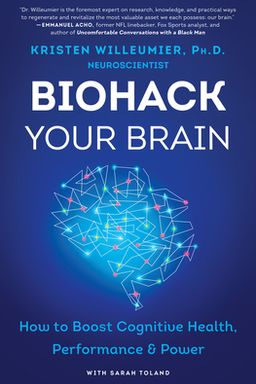
Can you really change your brain, no matter your age or past choices? In Biohack Your Brain, neuroscientist Kristen Willeumier answers that with a resounding yes—and not in the vague self-help sense. She contends that your brain is a living, evolving organ that can regenerate, rewire, and even reverse damage through scientifically designed lifestyle modifications. By combining research from neurobiology, neurogenetics, and brain imaging, Willeumier builds a compelling case that everything you eat, think, feel, and do physically can reshape your cognitive landscape.
The book operates on a bold premise: everyone, from elite athletes to aging adults, can “biohack” their brain—essentially, use targeted biological and behavioral strategies to optimize mental performance and longevity. This is not Silicon Valley-style brain hacking with gadgets or nootropics, but an evidence-based reprogramming of daily habits to support neurogenesis, circulation, emotional balance, and structural integrity. Willeumier shows that the same brain once thought to be fixed, fading with age, is in fact staggeringly adaptable when given the right tools for maintenance and growth.
The Core Argument: The Brain Is Malleable
Willeumier’s central claim dismantles the myth that the brain’s changes are irreversible. Through research with NFL players and patients suffering from cognitive decline, she demonstrates profound transformations on brain scans after months of tailored interventions—diet, exercise, supplements, hydration, and stress management. In her narrative, even football players with years of concussion damage improved cerebral blood flow and cognition, proving that behavior can literally change brain structure. (Similar to Norman Doidge’s The Brain That Changes Itself, Willeumier expands this idea beyond rehabilitation into everyday optimization.)
Why This Matters Now
The book’s urgency arises from a cultural blind spot: mainstream health often ignores cognitive care while obsessing over heart health and body weight. Yet, as Willeumier warns, neurological decline begins decades earlier than symptoms appear. Dementia risk, for example, starts forming cellular changes in our 30s and 40s. “If you think of your brain as a car,” she writes, “ignoring its maintenance is far costlier than skipping an oil change—it’s like letting the engine seize for life.” Her vision reframes wellness so that improving brain circulation, neurogenesis, and hormonal regulation becomes not a luxury but a survival skill for long-term clarity, creativity, and joy.
The Book’s Roadmap
Willeumier breaks down the path to cognitive renewal into interconnected “offensives”—strategic domains for biohacking your brain’s biology. Each chapter deep dives into one, from diet (“The Better Brain Diet”) to exercise (“The Better Brain Workout”), supplementation, hydration, stress regulation, thinking habits, brain games, and finally real-time self-monitoring. These build cumulatively toward a holistic transformation. For Willeumier, neuroscience isn’t just clinical—it’s personal; she applies findings from her research on NFL athletes to caring for her father with Parkinson’s disease, demonstrating that diet and oxygen therapy can sustain mobility and life quality even amid neurodegeneration.
A Promise Grounded in Science
“No brain left behind,” she writes—a credo supported by her work at Amen Clinics, where scans repeatedly showed recovery after simple lifestyle upgrades. Whether through omega-3 supplements, yoga, green juices, or cognitive puzzles, Willeumier demonstrates measurable improvements in blood flow, hippocampal volume, and emotional stability. The radical message? You can rebuild neural integrity faster than you think, using protocols accessible to anyone.
By the end of Biohack Your Brain, you’re not just convinced that neuroplasticity extends across a lifetime—you’re given a step-by-step toolkit to live it. Willeumier’s conversational tone makes neuroscience actionable: eat clean fats to grow neurons, train aerobically to oxygenate tissue, meditate to shrink the amygdala, sleep to cleanse toxins, and think optimistically to trigger healing chemistry. The book’s fusion of science, story, and empathy transforms brain care into a daily ritual of self-mastery—an owner’s manual for anyone intent on staying sharp, happy, and fully alive.