
Idea 1
Learning from the Biggest Mistakes of the Greatest Investors
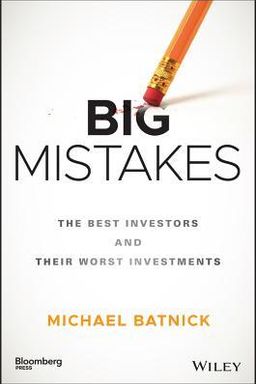
Have you ever lost money on an investment and wondered, “How could I have been so wrong?” In Big Mistakes: The Best Investors and Their Worst Investments, Michael Batnick argues that even the world’s most brilliant investors—Warren Buffett, John Maynard Keynes, Jesse Livermore, Mark Twain, and others—have made mistakes as spectacular as their successes. His central idea is that failure is not just inevitable in investing—it’s the tuition you pay to become wiser.
Batnick contends that understanding the psychology, overconfidence, fear, and emotion behind these failures offers more lasting wisdom than studying success stories alone. Rather than focusing on how to pick the right stock or time the market, he encourages readers to recognize that the best investors succeed not because they avoid mistakes, but because they learn how to survive—and grow stronger—from them.
Why Studying Failure Matters
As Batnick reminds us, most books about investing glorify success. You can easily find guides on how Warren Buffett built Berkshire Hathaway or how George Soros “broke the Bank of England.” Yet for every triumph, there are devastating missteps—the type people quietly bury. By unearthing these failures, Batnick shows how markets expose human frailties: greed, fear, pride, and overconfidence. He illustrates that the difference between amateurs and great investors isn’t the absence of mistakes, but their response to them.
The Psychology Behind Investment Errors
Batnick draws heavily on behavioral finance, the science that explores how emotions distort financial decision-making. Through stories of geniuses like Isaac Newton and economists like John Maynard Keynes, he demonstrates how intelligence alone offers no protection against emotion. Newton, for instance, who could calculate the motion of the planets, couldn’t resist following the crowd during the South Sea Bubble—and lost a fortune doing so. Keynes, one of the greatest economic minds ever, lost 80% of his wealth before realizing he needed to change his short-term speculation into long-term investing. These tales reveal that discipline trumps intellect when emotions run high.
Patterns of Hubris, Overreach, and Reinvention
Throughout the book, Batnick finds a repeating pattern in these investors’ lives: success leads to hubris, hubris leads to overreach, and painful losses force humility and reinvention. Warren Buffett’s ill-fated purchase of Dexter Shoes, a company he thought had an unbeatable moat, cost Berkshire Hathaway nearly $6 billion in lost value. Michael Steinhardt’s foray outside his expertise into European bonds during the 1990s blew up his hedge fund. Bill Ackman’s ego-driven crusade against Herbalife devastated his reputation and returns. In each case, hubris—the belief that past success guarantees future accuracy—proved to be their Achilles’ heel.
Why These Lessons Matter for You
You don’t need to be a fund manager to relate. Every investor grapples with fear, greed, regret, and the temptation to chase performance. By reading how Buffett, Munger, or Druckenmiller fell into the same traps, you gain humility and emotional armor for your own decisions. Batnick’s message is liberating: you can’t avoid mistakes—but you can avoid ruin. By staying humble, managing risk, and understanding your own psychology, you can survive losses that might otherwise knock you out of the game.
Structure of the Book
Each chapter centers on a celebrated figure—from Benjamin Graham to Chris Sacca—and dissects their biggest blunders. We learn how Jesse Livermore, the legendary trader, made and lost multiple fortunes through overtrading; how Mark Twain’s pride and emotional attachment to inventions bankrupted him; and how Charlie Munger and Sequoia’s deep concentration in Valeant Pharmaceuticals reminds us that even great research can’t defeat behavioral bias. The final chapters turn the mirror toward us—showing that we all contain the seeds of these mistakes and that maturity in investing is emotional, not intellectual.
In essence, Big Mistakes offers a philosophy of financial resilience. As Batnick puts it, success in investing means learning how to manage your behavior when fortune, fear, or failure challenge you most. The book is not about never erring—it’s about making errors survivable and wisdom portable. This is why Batnick ends not with Buffett or Keynes, but with himself—confessing his own trading addictions and missteps—to remind readers that being wrong is inevitable, but staying humble, disciplined, and reflective turns mistakes into the very foundation of mastery.