
Idea 1
Embracing Big Feelings in a Chaotic World
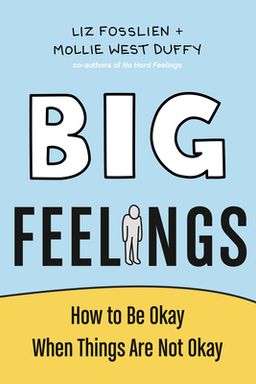
When was the last time you felt overwhelmed by your own emotions—so uncertain, angry, or burned out that it seemed impossible to move forward? In Big Feelings, Liz Fosslien and Mollie West Duffy argue that these emotions are not signs of weakness or failure but instead essential parts of being human. The book’s central premise is that so-called “negative” emotions—uncertainty, comparison, anger, burnout, perfectionism, despair, and regret—can be powerful teachers if you learn to recognize, name, and work through them.
The authors contend that emotional suffering often worsens not because of the feelings themselves but because of how we resist them. We’re taught from early childhood to suppress, ignore, or rationalize our way out of discomfort—messages that disconnect us from ourselves and each other. Fosslien and West Duffy aim to rewrite that script by offering a modern emotional field guide rooted in psychological research, personal vulnerability, and storytelling drawn from hundreds of real people. Their goal is not to eliminate big feelings, but to help you live alongside them with grace and curiosity.
Why Big Feelings Matter
In today’s hyperconnected, high-speed world, emotions have become both ever-present and taboo. People endure anxiety about uncertainty, envy on social media, exhaustion from work, and guilt for not feeling grateful enough. Yet these emotions can also carry important messages: anxiety signals fear of the unknown, anger highlights violated boundaries, and regret points toward your values. The authors argue that when you learn to decode your emotional states, you can transform distress into meaningful growth.
Drawing on research from psychology and neuroscience (as well as thinkers like Brené Brown and Pema Chödrön), Fosslien and West Duffy show that the key to emotional health lies in emotional granularity—the ability to precisely name what you’re feeling. For instance, distinguishing between feeling stressed, burned out, or despairing helps you respond appropriately rather than spiraling.
The Authors’ Journey into Emotional Honesty
Both authors began this project during personal crises: Liz was coping with anxiety, health issues, and family illness, while Mollie faced chronic pain, depression, and disconnection from work. They realized that their emotional turbulence contrasted sharply with their professional personas as successful women in corporate and creative fields. Their previous book, No Hard Feelings, explored emotions in the workplace; Big Feelings goes deeper, unraveling what happens when those emotions spill into every corner of life.
Through their own experiences and interviews, they discovered that nearly everyone feels isolated within their emotional struggles—even though those emotions are nearly universal. By naming them, sharing stories, and breaking down the science behind them, they sought to normalize big emotions and reduce the shame that keeps people silent.
The Seven Big Feelings
The book devotes a chapter to each of seven major emotions:
- Uncertainty — How to find stability when life feels unpredictable and uncontrollable.
- Comparison — How envy and self-judgment can clarify your true desires.
- Anger — How this misunderstood emotion can become a productive and clarifying force.
- Burnout — Why exhaustion isn’t just overwork, but a signal to regain alignment with your values.
- Perfectionism — How the pursuit of flawlessness keeps you trapped and disconnected from yourself and others.
- Despair — How to survive emotional rock bottom and rediscover meaning.
- Regret — How to transform remorse into wisdom and forward movement.
Each chapter debunks myths (e.g., “certainty is attainable,” “get off social media and comparison will disappear,” or “resilience alone will save you”) and replaces them with concrete practices. These include sitting with discomfort, naming your feelings, and translating vague anxieties into specific fears. The authors also introduce tools like the “withins and beyonds” framework for uncertainty, the Burnout Profile Assessment, and the “anger expression tendencies” model.
A Candid, Research-Backed Approach to Emotion
What distinguishes Big Feelings from other self-help books is its blend of vulnerability and practicality. Fosslien and West Duffy don’t claim to have transcended their emotions—they openly admit to still crying at work, feeling jealous, and fighting burnout. This honesty builds credibility, making their advice feel human rather than prescriptive. Their writing is also deeply accessible, frequently illustrating points with humor, vivid anecdotes, and comics that make emotional literacy approachable.
The authors weave together personal stories (like Liz’s physical collapse after a panic attack and Mollie’s suicidal despair) with data and expert insights to show that emotions are not obstacles to productivity—they are vital feedback systems. The book’s final message mirrors Buddhist philosophy and modern psychology alike: pain is inevitable, but suffering is optional when you meet your emotions with curiosity rather than judgment.
Why This Book Is Urgently Relevant
As society faces global instability, pandemics, and cultural shifts, we’re all contending with uncertainty and emotional overload. Big Feelings arrives as both a field manual and a mirror—it reflects the collective exhaustion of our times and offers a more compassionate approach to self-management. Rather than chasing constant positivity or suppressing discomfort, Fosslien and West Duffy remind us that to live fully is to feel deeply. Their roadmap teaches you to sit with the “messy middle” of human emotions—and in doing so, reclaim peace, resilience, and connection.