
Idea 1
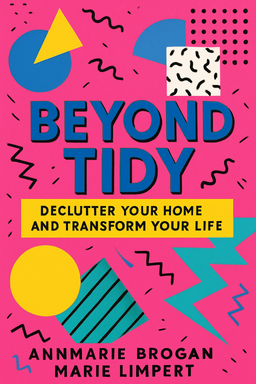
Going Beyond Tidy: Transforming Your Space and Mindset
How often have you cleaned your home only to find it sliding back into chaos a week later? In Beyond Tidy, professional organizers Annmarie Brogan and Marie Limpert argue that true organization begins not with color-coded bins or pristine countertops, but with the way you think. They contend that the secret to sustainable organization lies in cultivating a growth mindset and aligning your inner life—your beliefs, thoughts, and emotions—with the outer order of your environment.
The authors invite you to redefine what it means to be organized. Instead of pursuing the glossy perfection of Pinterest-worthy spaces, they teach that organization means having what you need, knowing where to find it, and creating surroundings that empower your best self. Their approach blends practical tools, psychological research, and compassionate encouragement, offering a roadmap to design a home and life that reflect your purpose.
The Core Philosophy: Inside-Out Change
Brogan and Limpert root their philosophy in a deceptively simple idea: change on the outside must begin with change on the inside. You can learn dozens of tidying techniques, but if your mind still clings to guilt, fear, or self-judgment, clutter will always creep back. Drawing on Carol Dweck’s research on fixed versus growth mindsets and Barbara Fredrickson’s concept of positivity’s “upward spirals,” they show that sustained organization is ultimately an act of self-development. You must first believe you can change—and then practice behaviors that reinforce that belief through consistent action.
Through warm anecdotes from their clients—ranging from overwhelmed parents to busy professionals—they reveal that disorganization isn’t just a lack of skill, but often a consequence of life transitions, anxiety, mental health challenges, or ingrained habits. By nurturing self-compassion and curiosity instead of shame, anyone can begin to rewrite their internal story and feel capable again.
Beyond Clutter: The Emotional Dimension
The book distinguishes between surface clutter and emotional clutter. Objects carry meaning, and letting go of them can evoke vulnerability. A client’s hesitation to part with her grandmother’s jewelry or her grown children’s toys may be less about storage space and more about identity or memory. Rather than forcing minimalism, Brogan and Limpert help readers understand this emotional connection and make mindful choices that honor their past while freeing space for their future.
This perspective reflects ideas found in Marie Kondo’s The Life-Changing Magic of Tidying Up, but pushes further by coupling decluttering with emotional intelligence and resilience. For the authors, an organized home isn’t a static masterpiece—it’s a dynamic environment shaped by self-awareness, confidence, and personal growth.
The Eight Principles: Building the Framework
After exploring mindset and motivation, the book introduces eight foundation principles—practical yet psychologically rich tools that guide transformation:
- Set goals that are BEYOND SMART—specific, measurable, attainable, realistic, and timely—but also infused with hope, resilience, and personal meaning.
- Create a vision for each space and establish zones that align with how you actually live, not how you imagine perfection.
- Sort through belongings by grouping “like with like” to understand what you truly own.
- Decide what stays and what goes using compassion and reason rather than guilt.
- Give everything a home so your belongings function like residents in a well-planned community.
- Create associations between items and their locations—an internal GPS for your household.
- Manage your space to match your inventory, not the other way around.
- Always finish the task—from folding laundry to filing mail—to avoid creating mental and physical “open loops.”
Each principle saves time, money, space, and—most importantly—mental energy. Together, they form a living system, a framework that supports peace of mind and efficiency without rigidity. (Note: The “Finish the Task” concept ties directly to the Zeigarnik Effect in psychology, showing how incomplete chores occupy mental energy until resolved.)
Organization as a Path to Empowerment
Brogan and Limpert emphasize that tidiness is a means, not an end. The true reward is empowerment—the belief that you can handle challenges with clarity and confidence. When your physical environment supports your mental state, you experience hope and self-efficacy, which ripple outward into relationships, work, and health. Organized people, they say, aren’t just neat; they’re adaptable, proactive, and emotionally equipped to manage life’s unpredictability.
Core Message
Organization is not about perfection—it’s about creating harmony between your inner and outer worlds. When you shift from seeing tidying as punishment to seeing it as self-care, you free up space not only in your home but within yourself.
Across its pages, Beyond Tidy transforms the act of decluttering into a journey of emotional growth, resilience, and everyday empowerment. By going “beyond tidy,” you don’t just make your home look better—you reinvent how you live in it.