
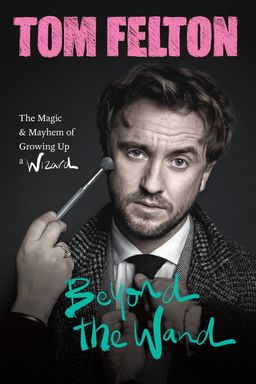
Beyond the Wand cover

Beyond the Wand

by Tom Felton

Beyond the Wand provides an intimate look at Tom Felton''s life, detailing his rise to fame in the Harry Potter films and the personal challenges he faced. With humor and honesty, Felton shares lessons on resilience, friendship, and finding happiness beyond the spotlight.

Finding Light Beyond the Wand: Growing Up, Falling Down, and Learning to Be Human

What happens when your childhood dream life—the kind that millions would envy—becomes a world you must learn to survive rather than simply enjoy? In Beyond the Wand: The Magic and Mayhem of Growing Up a Wizard, Tom Felton offers an intimate, witty, and unflinching look at a life shaped by fame, family, and the search for identity. Best known as Draco Malfoy from the Harry Potter films, Felton uses humor and honesty to recount his transformation from mischievous child actor to reflective adult who learned that fame is not freedom—and that magic exists not in wizardry but in human connection.

At its heart, Felton’s memoir is about what it means to live an ordinary life under extraordinary circumstances. He argues that fame magnifies rather than replaces human vulnerability. Through his stories of family support, awkward stardom, and battles with mental health, Felton invites you to look past the illusion of celebrity. What you’ll discover, he says, is that even the boy who sneered at Harry Potter had to learn humility, love, and self-acceptance.

The Actor in the Spotlight and the Boy Behind Him

Felton’s book begins not on a movie set but in an ordinary English household—the youngest of four spirited brothers, raised by a tireless mother and a practical father in Surrey. His journey into film was accidental, sparked by curiosity and coincidence rather than ambition. Yet, this serendipity launched him into international stardom as Draco Malfoy. The memoir traces how this unexpected fame both shaped and unsettled him, showing the tension between the character he portrayed and the person he was allowed to be.

Felton recalls the adoration and discomfort of being typecast as a villain. On one hand, kids hissed "Malfoy" at him on the street; on the other, adults assumed he lived a life of privilege. Yet, behind the polished façade was a restless teenager who wanted to fish, skateboard, and laugh with his brothers. The book challenges the assumption that child stars are pampered prodigies. Instead, Felton explores the loneliness that comes from being “famous but still grounded,” a theme echoed by other actor memoirs like Greenlights by Matthew McConaughey and Open by Andre Agassi, which also reveal the paradox of success.

Magic, Chaos, and the Price of Growing Up Famous

The memoir’s middle chapters unfold through bright anecdotes of the Harry Potter years—auditions, laughter, and the family created on set. There’s boyish mischief, like smuggling skateboards into filming locations, and genuine warmth in his reflections about co-stars Emma Watson and Daniel Radcliffe. Yet, for all its charm, Felton doesn’t shy away from the emotional costs of this decade-long project. He describes the bittersweet camaraderie of the cast: they grew up together but were also trapped by their characters in public imagination. As Watson notes in her foreword, “Tom doesn’t flick a switch—he is always Tom.” That authenticity became both his strength and his vulnerability.

Fame distorted ordinary life. School friends called him the “Broomstick Prick” or the “Harry Potter Wanker.” He longed for anonymity but found that playing a famous villain meant carrying others’ projections. Here the book’s central insight crystallizes: it is impossible to separate who we are from who the world expects us to be. Felton’s humour (“Even Draco got told off for stealing CDs from HMV”) masks his awareness that fame is a fragile shield against self-doubt. The memoir deftly balances mischief with melancholy, exploring the blurred line between performance and personhood.

Falling Apart and Finding Meaning

Where most celebrity memoirs end with triumph, Beyond the Wand goes further—it descends. Felton recounts hitting rock bottom in Los Angeles after Potter ended, numbed by alcohol, isolation, and the emptiness of Hollywood promise. In vivid storytelling, he describes a life that looked glamorous on the outside—sports cars, parties, VIP attention—but felt hollow within. His eventual intervention and trips to rehab mark a transformative turning point where the story evolves from recollection to redemption. Rather than a scandal, this self-examination becomes a kind of moral renewal, echoing the themes of courage, friendship, and self-discovery woven through the Harry Potter universe itself.

The contrast between “Draco Malfoy the villain” and “Tom Felton the human” becomes a mirror for readers asking how to reconcile public roles with private truths. By the end, Felton reframes his journey not as a fall from grace but as a return to normality. Fishing, walking his dog, and playing guitar become his new forms of magic. This closing insight—that ordinary joys can be miraculous—is reminiscent of memoirs like Eat, Pray, Love or Educated, both of which argue that reclaiming oneself is the deepest adventure of all.

Why This Story Matters

Felton’s candid, often self-deprecating voice reminds you that personal storytelling can be therapeutic not just for the writer but for anyone coming of age amid pressure and comparison. His story resonates because it asks universal questions: How do you define yourself when others define you first? How do you rebuild when the script that guided your life ends? How do you live an examined life in a world obsessed with appearances? In answering, Felton offers tools for resilience—humor, humility, and authenticity—qualities that make both a good actor and a grounded person.

“The only true currency we have in life,” Felton concludes, “is the effect we have on those around us.”

That idea anchors every chapter—from the laughter of his Muggle family to the companionship of Hollywood friends, and finally, to the quiet clarity he finds beyond the wand. The book is not about wizardry but about wonder—the kind that lives in forgiveness, friendship, and the courage to start over.


The Muggle Family That Grounded a Wizard

Long before fame, Tom Felton was simply the runt of the pack—a cheeky youngest brother in a loud, loving British family. His early chapters reveal that everything he would later navigate in Hollywood began with lessons learned at home. The Feltons, an ordinary family in Surrey, raised him with a mix of affection and tough humor that became his emotional compass when wizard stardom threatened to sweep him off course.

Brothers, Banter, and Belonging

Felton paints a vivid picture of his brothers—Jink, Chris, and Ash—each shaping him in different ways. Jink taught him creativity and the confidence to perform (his early musical performances inspired Tom to see that art wasn’t weird). Chris gave him a love for the outdoors—and introduced him to rule-bending adventures like nighttime fishing or, later, his first joint. Ash shared humor and compassion but also revealed how fragile mental health can be, as he struggled with emotional turbulence in his teens. Their teasing nicknames, like "Maggot" or "Runt," kept Tom humble and playful. In their chaos, he found the normalcy he’d cling to once surrounded by fame.

Mum the Hero, Dad the Builder

Behind the Felton boys stood their mother, Sharon—a patient, hard-working woman holding multiple jobs so she could nurture their hobbies. She believed in enthusiasm over obligation, allowing Tom to abandon one fascination for another without pressure. That unconditional support laid the foundation for his balance later in life. His father, a civil engineer and self-described practical joker, embodied British stoicism. He taught Tom discipline, self-reliance, and humor. Their differences came to a head when Tom’s early acting success clashed with his father’s skepticism. At a film premiere, his dad teasingly remarked, “You weren’t in it much, were you?”—a joke that Tom later saw as love disguised as restraint.

Divorce, Resilience, and Early Independence

When his parents divorced during his preteen years, Tom’s world didn’t crumble. Instead, it became a lesson in honest communication. His mother’s pragmatic approach—"Your father and I are getting a divorce"—taught him that empathy and acceptance often matter more than explanation. Their split also pushed him to grow up quickly, traveling alone for film sets and learning how to adapt between two worlds—the one with fame and the one with fish bait and dirty boots. This tension between the magical and the mundane became a central metaphor throughout his life.

“They provided me with a healthy dose of normality,” Felton writes. “And that’s what saved me.”

The family’s humor, work ethic, and authenticity became the foundation for his later survival. In contrast to Hollywood’s artificial intimacy, Felton’s family modeled unconditional belonging—something he’d strive to recreate on and off set. His story reminds you that fame cannot replace love, and no amount of spotlight matters without people ready to laugh at your bad jokes and call you 'Maggot' anyway.


Becoming Draco: Fame, Fortune, and a Bleached Identity

When Tom Felton dyed his hair white and first sneered at the camera, he had no idea he’d be immortalized as Draco Malfoy. His story of landing—and surviving—that role becomes both hilarious and profound. The making of Draco wasn’t just a casting decision; it was an unplanned initiation into the contradictions of fame: admiration and misunderstanding, privilege and alienation, visibility and invisibility.

A Reluctant Wizard

Felton confesses he arrived at the Harry Potter auditions clueless. He hadn’t read the books and even bluffed his way through questions about the story, accidentally calling Gringotts—a goblin-run bank—a kind of flying creature. That nonchalance impressed director Chris Columbus, who saw in him the casual arrogance perfect for Draco. What started as irony became destiny.

His journey on set was surrounded by legends: Alan Rickman, Maggie Smith, Robbie Coltrane, and Richard Harris. Yet to Felton, they were mentors disguised as magical characters. Watching Rickman deliver a single word with gravitas taught him more than any acting class. As he recalls, Rickman once simply said, “You’re good.” That brief validation shaped his confidence for years.

Life in the Great Hall

On set, Felton’s life oscillated between boredom and brilliance. The table reads were surreal gatherings of British icons, occasionally interrupted by comedy chaos—Rik Mayall shouting “Race you to the toilets!” or Robbie Coltrane cracking jokes between scenes. The studio became a second home, complete with red cards for mischief (Rupert Grint once “fined” himself £2,500 for uncontrollable giggling). For a decade, the Great Hall was a microcosm of real school, except your headmaster was Dumbledore and your detention involved dragons.

The Price of a Bleached Head

Bleaching his hair became the symbol of transformation—and alienation. Away from the cameras, the white-blond look made him an instant target for teasing at school. Classmates dubbed him the “Broomstick Prick.” Even as he mastered film technique, he struggled to master being normal. Kids wanted him to perform celebrity, while teachers treated him as unruly. Felton’s rebellious streak—smoking behind bike sheds, being late, dodging PE—was less about arrogance and more about preserving his sense of self. “If they were cooler for skipping class,” he notes, “I wanted to be cooler for showing up late.”

Draco’s sneer, he admits, was half acting, half teenage defense mechanism: “I just used the face I gave my brothers when they stole the TV remote.”

Felton’s honesty about these contradictions is what elevates his memoir from nostalgia to insight. He shows how playing a villain made him practice empathy. As he realized while meeting fans—some loving, some hostile—human behavior often mirrors the same insecurities that made Draco sneer. The fame that once isolated him eventually became a mirror for understanding others, and himself.


Friendship, Love, and the Myth of Dramione

If every fan wanted Draco Malfoy to end up with Hermione Granger, they got half their wish in Tom Felton’s enduring friendship with Emma Watson. In one of the most touching threads of Beyond the Wand, Felton dismantles fan fantasies to reveal something richer: a love story rooted in mutual understanding, not romance.

From Sniggers to Soulmates

Their relationship began terribly. Emma, nine years old and eager to impress, once performed a dance routine for Felton and his friends, only to be mocked by the older boys. Years later, he felt guilt for that cruelty, realizing how much harder Emma’s journey was—being the only girl in a male-dominated, media-obsessed franchise. She faced scrutiny well beyond her years. Learning empathy for her was Felton’s first step toward emotional maturity. “She was navigating fame,” he writes, “when I was still figuring out skateboards.”

Quacking Together

Emma once told Tom a story that became their private code: she always felt like a duck told to cluck like a chicken. With him, she could finally quack. This metaphor—stubbornly whimsical, deeply poignant—captures the heart of their platonic love. Each helped the other maintain authenticity amid a life lived on-screen. Emma called him “the person who makes me feel seen.” Tom called her his soulmate. Theirs is a friendship defined not by attraction but recognition: two people who refuse to act a part when the world demands one.

Watson’s foreword to the memoir amplifies this connection, describing Tom’s "heart the size of a planet" and his refusal to wear a public mask. Like Socrates’ claim that “the unexamined life is not worth living,” she sees Felton’s vulnerability as bravery. Their bond transcends the gossip it inspired—proof that deep friendships can outlast fame and misunderstanding.

“We’re soulmates,” Watson writes. “And we’ve always had each other’s backs.”

The chapter becomes Felton’s quiet manifesto: true magic lies not in fantasy but connection. In choosing empathy over ego, he found a lifelong friend and a mirror for his better self—a lesson as valuable as anything learned at Hogwarts.


Facing the Darkness: Loneliness, Addiction, and Recovery

After the wizarding world faded to black, Felton’s real battle began—not against evil wizards, but against himself. Beyond the Wand takes a daring turn when the author drops the playful nostalgia and dives into his struggles with mental health, substance use, and identity loss. The result is a story of survival that is painfully honest but ultimately redemptive.

Hollywood’s Mirage

When Felton moved to Los Angeles, he imagined success would bring fulfillment. He drove luxury cars, attended elite parties, and was showered with designer gifts. Yet the more his status grew, the emptier he felt. “If you blow enough smoke up someone’s arse,” he quips, “they start breathing it in.” The constant affirmation warped his sense of self. He missed fishing trips, family jokes, and the small rituals of ordinary life. In chasing stardom, he’d lost his compass.

Descent into Denial

His downward spiral was gradual. Nights at Barney’s Beanery, a West Hollywood dive bar, became both escape and refuge. What began as “a pint before dinner” turned into habitual drinking. When his girlfriend Jade and management intervened with a staged meeting that led him to rehab, Felton’s first reaction was rage. “Forgiveness?” he thought. “Forget it.” Yet the shock of seeing professionals and loved ones gathered for an intervention forced him to face what he’d been avoiding: he wasn’t okay.

Three Kings by the Sea

His escape from rehab one night reads like allegory: stripped of everything, he wandered alone along the Malibu coastline—muddy, sobbing, but alive. There he met three strangers who restored his faith in humanity. An old shopkeeper who gave him his last twenty dollars after saying, “I am a rich man because I have my family.” A cab driver who drove him miles for free. A bar bouncer, Nick, who took him home and listened all night. These “three kings” helped him rediscover grace, compassion, and the humility to rebuild. They became symbols that wealth and fame mean nothing compared to kindness.

“I wasn’t rich because of money,” Felton realized, “but because of the effect I could have on others.”

The Long Road Back

Rehab, once rejected, became his sanctuary. Structured routines—morning reflections, volunteering, therapy—restored purpose. He calls this healing environment “time well spent,” not punishment. Yet, true recovery demanded facing recurring depression years later and learning to ask for help without shame. Felton’s candor about relapse and vulnerability makes his story stand apart from typical celebrity redemption arcs. He normalizes therapy as ordinary self-maintenance, arguing that everyone needs “some form of rehab”—even if it’s thirty minutes of honest reflection.

By confronting darkness, he discovered what fame never provided: empathy, gratitude, and authenticity. His journey turns the book’s title literal—beyond the wand, beyond illusion, he finds real magic in being human.


The Legacy of Magic: Choosing Kindness and Normalcy

In the final chapters, Felton reframes what success and magic truly mean. No longer a spellbinding child star or a Hollywood burnout, he emerges as a man anchored by realism, creativity, and kindness. His purpose shifts from chasing applause to appreciating ordinary beauty.

Rich in the Right Way

When asked by a kind stranger, “Are you a rich man?” Felton first thought of fame and finances. Later, he realized wealth lives in connection—with family, fans, and even strangers. Today, he measures richness by impact. “The only true currency,” he writes, “is the effect we have on those around us.” That philosophy runs through everything—from supporting Great Ormond Street Hospital to playing with his rescued dog, Willow. Like Dumbledore’s quiet wisdom or Robin Williams’ reflective humor, Felton’s maturity now lies in gentleness.

The Return to Art and Story

Rediscovering creativity, Felton returned to music, poetry, and theatre, performing in 2:22: A Ghost Story on London’s West End. Acting became personal again, not transactional. He shares that storytelling—whether as Draco or as Tom the musician—connects people through shared emotion. Stories, he argues, give shape to chaos. They build bridges, heal divides, and remind us that even villains deserve empathy.

Online Kindness and Self-Identity

In his “lost chapter,” written after the book’s success, he reflects on what it means to be mistaken for others—sometimes Aaron Paul or even Eminem. These moments, once amusing, become metaphors for identity confusion. When fans began recognizing him not just as Draco but as Tom, something shifted. He realized that authenticity online—and in life—means living as yourself, not as a projection. In a digital age of constant opinion, he advocates for empathy on social media: use words carefully; power should connect, not destroy.

By the end, Beyond the Wand becomes a gentle philosophy manual disguised as a memoir. Its lessons echo through his closing reflection: “All things must pass.” Magic, fame, pain—they fade. But kindness, honesty, and self-awareness endure. Felton teaches that real sorcery is turning your own story, however chaotic, into light for others—a spell anyone can learn.

Dig Deeper

Get personalized prompts to apply these lessons to your life and deepen your understanding.

Go Deeper

Get the Full Experience

Download Insight Books for AI-powered reflections, quizzes, and more.