
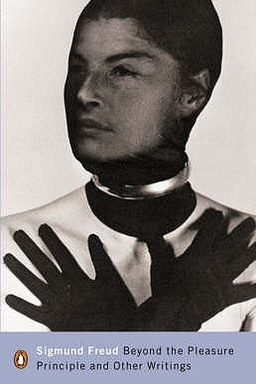
Beyond the Pleasure Principle cover

Beyond the Pleasure Principle

by Sigmund Freud

Beyond the Pleasure Principle marks a pivotal moment in Freud''s exploration of psychology, introducing the controversial death drive. This concept redefines the basic instincts driving human behavior, offering a novel lens to view the tension between seeking pleasure and yearning for tranquility.

The Conflict Beyond Pleasure

Why do we sometimes repeat painful experiences, even when they bring us no joy? In Beyond the Pleasure Principle, Sigmund Freud challenges one of psychology’s central assumptions: that human behavior is driven entirely by the pursuit of pleasure and the avoidance of pain. He suggests that beneath this pleasure-seeking surface lies something far more complex—a compulsion to repeat experiences, even traumatic ones, and an instinctive drive toward death itself.

Freud begins with an observation: life seems to operate under the pleasure principle, a mental tendency to seek pleasure and avoid discomfort. Yet reality often disrupts this—the world forces us into situations where suffering cannot be avoided. To adapt, we rely on the reality principle, which allows us to delay gratification and tolerate frustration for long-term safety. But as Freud looks deeper—through his patients’ dreams, the behaviors of children, and even the traumas of war veterans—he realizes something unsettling: life doesn’t fully submit to pleasure or reason.

The Puzzle of Painful Repetition

Freud sees soldiers who, though safe, relive their traumatic experiences nightly in dreams. He watches an infant invent a game where he throws a reel away (“gone!”) and then retrieves it (“there!”)—a reenactment of his mother’s departures. These actions do not produce obvious pleasure. Instead, they seem to repeat experiences of loss or fear, as if the mind is driven to master what once overwhelmed it. This leads Freud to his famous idea of the repetition compulsion, a force that drives us to relive old wounds rather than simply heal them.

Could this mean the psyche is not merely chasing pleasure but also seeking control—an instinctive effort to bind energy, to master suffering, and perhaps even to return to a previous state of equilibrium? Freud calls this tension a clue: maybe there’s something in us that’s older and more powerful than desire itself.

Speculation and the Death Drive

As the book progresses, Freud transforms clinical findings into sweeping biological speculation. He imagines that life itself may have originated from inert matter—and that living organisms carry a hidden drive to restore that original peace. Thus, while part of us (the sexual or life instincts) strives to connect, reproduce, and sustain life, another part (the death instincts) pushes toward dissolution and a return to inanimate stillness. This means our deepest conflicts—love and hate, creation and destruction—mirror the fundamental opposition between life and death within every organism.

This idea creates the dualistic foundation of Freud’s later theories. The life instincts, embodied in “Eros,” bind and preserve. The death instincts, lurking within aggression and destruction, dissolve. Human existence becomes the battleground where these forces collide, shaping everything from the persistence of war to our compulsive revisiting of pain.

Why It Matters

Freud’s argument changes the way we think about desire, trauma, and even creativity. Pleasure is not the ultimate goal—it is merely the surface ripple of deeper instincts. Our habits, fears, and self-destructive behaviors stem from the same unconscious repetition that powered life’s first stirrings. If you’ve ever wondered why you replay heartbreak, sabotage success, or return to painful memories, Freud’s unsettling answer is that repetition itself may be life’s oldest command.

Across this summary, you’ll explore how Freud defines the pleasure principle, why trauma defies it, how repetition and instinct shape neurosis, and how he arrives at his controversial conclusion: that every living thing may secretly long for death. You’ll also see how these theories inspired later thinkers—from Carl Jung to Jacques Lacan—and still echo in psychology, art, and everyday life. Whether you see Freud’s “death instinct” as profound truth or poetic metaphor, his exploration opens a new lens on what it means to live beyond the pursuit of pleasure.


The Pleasure and Reality Principles

Freud begins with the premise that mental life typically follows the pleasure principle: we seek pleasure and avoid pain by reducing tension within the psyche. He likens this to an energy system striving for stability. Pleasure signals the reduction of psychic excitation, while pain reflects an increase. Yet, the human mind is not a simple pleasure machine—it must survive in a world that resists immediate satisfaction.

From Pleasure to Reality

As we mature, the pleasure principle gives way to the reality principle. This new mental rule insists that we delay gratification, endure discomfort, and align our desires with the constraints of the real world. Imagine a child wanting candy: the pleasure principle says “Eat it now!”; the reality principle intervenes—“Wait until after dinner.” The adult psyche internalizes this delay endlessly, learning that the path to pleasure may require pain, effort, or time.

Conflict and Adaptation

Freud shows that the ego must constantly balance these principles. The id pushes for immediate satisfaction, while the ego and superego impose moral and pragmatic restraints. This constant negotiation is the root of all psychological conflict. When pleasure dominates, we act impulsively; when reality dominates, we repress desire. Either extreme brings suffering.

Freud reveals that the pleasure principle is never abolished—it is modified. Beneath reason, it continues to pulse, waiting for a moment of release. Every compromise we make between desire and reality reflects this deeper tension.

(This idea resonates with later thinkers: Albert Ellis’s rational-emotive therapy also examines how pleasure and reality principles can conflict. Freud laid the groundwork for seeing psychological health as the art of balancing satisfaction with restraint.)


Trauma and the Repetition Compulsion

Freud’s turning point comes from studying trauma—especially his World War I patients. Soldiers haunted by explosions relive the event in their dreams. Children replay painful experiences as games. Instead of avoiding suffering, they repeat it. Freud calls this phenomenon the repetition compulsion, a drive that pushes the psyche to recreate past experiences even when they hurt.

Dreams of Trauma

In theory, dreams should fulfill wishes, offering comfort. Yet Freud observes that traumatic dreams do the opposite—they bring patients back to terror. A soldier dreams again of the explosion; a crash survivor replays the collision. Why would the mind return to pain? Freud hypothesizes that these dreams attempt to bind unprocessed energy from the trauma. The psyche repeats the event to gain mastery—to transform chaos into order.

Child’s Play and Mastery

Freud’s famous example is a toddler’s game: throwing a reel away (“Fort!”) and then pulling it back (“Da!”). The act dramatizes loss and return. Through repetition, the child replaces helplessness with control. Even painful experiences can be re-enacted to turn passive suffering into active mastery. The child sends away what once sent him pain—his mother’s absence.

Beyond Therapy

Freud extends this idea to adult life. Neurotics, lovers, and even societies reenact their wounds. A patient sabotages every relationship in the same way; a nation rekindles old conflicts. This repetition moves beyond simple memory—it’s instinctive, perhaps biological. Freud concludes that repetition is not subordinate to pleasure—it may precede it. Life may be condemned to rehearse the unresolved.

(Carl Jung called this the “complex” repeating until integrated; modern trauma therapies, like EMDR, echo Freud’s insight that healing requires revisiting pain to transform it.)


Binding and the Organization of Psychic Energy

Freud visualizes the psyche as an energy system constantly bombarded by stimuli. To survive, it must not only seek pleasure but also bind the influx of energy that threatens to overwhelm it. He uses the analogy of a protective barrier between the mind and the outer world—similar to a skin that shields against trauma.

The Protective Barrier

When external shocks—physical or emotional—pierce this barrier, the system floods with raw energy. The mind then mobilizes every resource to bind that energy into manageable forms. This process explains the paralysis or exhaustion after pain, and the need for dreams or repetitive behaviors to digest what occurred. In trauma, the normal barriers falter, letting the psyche drown in unbound excitation.

Pain and Psychic Defense

Freud suggests that bodily pain mirrors this breach—the protective layer of the mind or body is broken, and energy floods in. The repeated dreams of trauma victims serve as the psyche’s attempt to restore defenses, to practice “apprehension” that failed before. Repetition then acts as a healing exercise.

To Freud, binding is the mind’s primal act of survival—the foundation of memory, repression, and thought. It transforms chaos into pattern and energy into narrative.

(In modern neuroscience, similar ideas appear in the concept of neural integration—where trauma disrupts normal binding processes through excessive stimulation. Freud’s metaphor anticipated this by decades.)


Life and Death Instincts

Freud’s most radical move comes when he proposes a dual system of instincts: those that preserve and those that destroy. He calls these the life instincts (Eros) and the death instincts (Thanatos). This idea reframes everything—from sexuality to aggression—as expressions of two cosmic tendencies locked in tension.

Life Instincts (Eros)

Eros binds—creating unity, complexity, and relationships. It works through love, sexuality, and connection, seeking to preserve life and ensure reproduction. On the biological level, Freud links Eros to the fusion of cells and the perpetuation of species. Psychologically, it manifests as attachment and creativity—the drive to make something endure.

Death Instincts (Thanatos)

The death drive, by contrast, seeks release—an end to tension, a return to inorganic stillness. We glimpse it in aggression, self-destruction, and the repetition of suffering. It is the mind’s quiet wish to undo itself. Freud believes that living beings carry the memory of their origin in inanimate matter and, beneath the striving for survival, a secret longing to return to it.

The Struggle Within

Rather than nihilism, Freud sees this duality as the essence of life’s dynamism. Every creative act depends on something destructive; every love contains an impulse to dissolve boundaries. Civilization itself channels the death drive outward—to aggression, war, and competition—while Eros holds communities together. This tension fuels art, ambition, and even neurosis.

(Later psychoanalysts, like Melanie Klein and Jacques Lacan, expanded Freud’s death drive into ideas about envy, repetition, and symbolic annihilation—interpreting it as the foundation of psychic conflict and creativity.)


The Biological Mirror of Mind

Freud extends his psychological insight into biology, suggesting that the instincts governing the mind correspond to physical laws of life. He compares his death drive theory to biological research by August Weismann, who divided living matter into mortal soma and immortal germ-plasm. In Freud’s parallel, the soma reflects the death instincts, and the germ cells embody the life instincts striving for continuity.

Life and the Echo of Inanimate Matter

Freud imagines the beginnings of life as a rupture—matter disturbed into animation that forever carries the desire to return to equilibrium. Every organism, he speculates, dies from internal causes, replaying life’s original tension. Thus, death is not an accident but a fulfillment of life’s fundamental drive.

Sexuality as Renewal

Sexual instincts challenge this downward pull. Through reproduction, life renews itself—defying dissolution by creating continuity. Freud sees sexual union as a symbolic and biological act of defiance against death, a reassertion of life’s power to regenerate. In his mythic conclusion, he evokes Plato’s story of humanity’s original split beings—forever seeking reunion through love.

Psychological Implications

For Freud, this biological drama mirrors the emotional one. Our relationships, ambitions, and conflicts reenact the cosmic struggle between connection and dissolution. Desire unites; aggression divides. The psyche becomes the stage where biology and myth intertwine.

(Freud’s speculations inspired later “drive theories” and even influenced existential philosophy. While modern science revises his models, the metaphor of death and life as twin forces continues to shape how we understand motivation, trauma, and transformation.)


The Pleasure Principle Revisited

In the final chapters, Freud returns to the pleasure principle with new understanding. The pursuit of pleasure, he suggests, may itself serve the death instinct’s deeper aim: the reduction of tension to zero. If pleasure comes from releasing energy, its ultimate limit—complete equilibrium—would be death.

Tension and Relief

Freud distinguishes between functions and tendencies. The psyche’s function is to bind energy and maintain balance; its tendency—expressed in the pleasure principle—is to minimize excitation. Wherever we experience joy, it signals that the system has reached momentary calm. Pain marks disturbance. In this view, life itself regulates between tension and release, always oscillating toward neutrality.

The Limits of Hedonism

Pleasure is not simply indulgence—it’s the brief echo of life’s quieter goal. Freud notes that the sexual climax, life’s most intense pleasure, temporarily extinguishes excitation entirely. Thus, the pleasure principle hints at the same quiet state the death drive seeks permanently. “The greatest pleasure,” he observes, “is bound up with the quenching of a greatly heightened excitation.”

Human Significance

This reconciliation turns Freud’s theory into philosophy: our love and creativity are ways of defying the void, yet our relief in peace mirrors the stillness of death. Living means finding rhythm in this opposition—binding excitation without extinguishing it. Every human act, from inventing to loving, transforms death into life for another moment.

Freud ends with humility. His speculations, he admits, may be wrong—but they illuminate how deeply intertwined pleasure, pain, and mortality are in the machinery of life.

(Modern psychoanalysis continues to reinterpret this idea—seeing pleasure and death drives as metaphors for integration and dissolution, for the pulse between vitality and rest that defines the human condition.)

Dig Deeper

Get personalized prompts to apply these lessons to your life and deepen your understanding.

Go Deeper

Get the Full Experience

Download Insight Books for AI-powered reflections, quizzes, and more.