
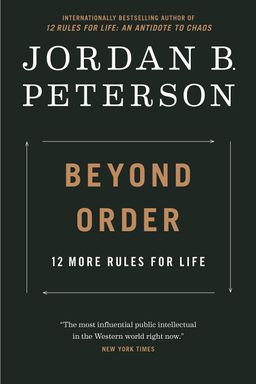
Beyond Order cover

Beyond Order

by Jordan B Peterson

Beyond Order by Jordan B. Peterson provides a roadmap for navigating modern life''s complexities. By balancing chaos and order, leveraging social structures, and embracing personal responsibility, readers can overcome life''s challenges and find deeper meaning. Discover new rules for living that help you thrive amidst uncertainty.

Living Between Order and Chaos

What does it mean to live a meaningful life when existence itself trembles between structure and unpredictability? Jordan Peterson’s central claim is that you exist in a narrow, fragile corridor between order—the domain of the known, habit, and culture—and chaos—the realm of novelty, terror, and possibility. Meaning, he argues, arises when you balance these opposites, neither collapsing into sterile control nor dissolving into formless disorder.

Order and Chaos Defined

Order is the patterned world: stable institutions, routines, and maps that make life predictable. You rely on it for cooperation and sanity. Education, family, work, and shared customs anchor you here. Chaos sits at the frontier of the unknown. It is danger and creative possibility in equal measure—an empty canvas and a lurking abyss. Peterson’s own medical collapse and near death illustrated how chaos engulfs when order shatters without preparation.

The Dynamic Balance

Too much order leads to rigidity and tyranny. Too much chaos breeds anxiety and disintegration. You are healthiest holding one foot in each: grounded by responsibility, yet open enough to adventure into new learning, art, or relationships. His clients—a disillusioned waiter and a blocked photographer—rediscovered vitality when they accepted institutional discipline (order) and risked creative self-expression (chaos). That dialectic—security plus exploration—becomes the book’s master key.

Institutions as Cultural Memory

Institutions embody solutions to ancient problems. They shrink complexity and provide psychological scaffolding. When you mock or discard them carelessly, you cut away inherited wisdom. Yet traditions can petrify, so you must learn the rules, master them, then extend or reform them with humility and competence. This marriage of respect and creativity fuels social renewal. The archetype of the Fool—beginner, curious, humble—illustrates how transformation starts at the bottom of hierarchies.

Myth and Moral Navigation

Peterson uses myths not as superstition but as ancient blueprints for growth. Marduk confronting Tiamat, Horus rescuing Osiris, and Harry Potter facing Voldemort all dramatize how a person integrates chaos into order. These fables teach that voluntary confrontation with the unknown changes you. To strive toward your imagined better self—to rescue the father, restore the kingdom, or slay the dragon—is the timeless pattern of psychological maturation.

Responsibility as Meaning

Instead of chasing happiness, Peterson insists that meaning arises from taking responsibility where others refuse. Each neglected duty—a broken workplace, a failing family—conceals potential fulfillment. Carry what you legitimately can. Responsibility gives you dignity, organizes your psyche, and generates gratitude for existence. It is the antidote to nihilism and resentment.

Integration Through Discipline and Truth

You become whole through disciplined focus and moral integrity. Pick a project and pursue it until your talents cohere, like carbon turning to diamond under pressure. Tell the truth, especially about small pains before they grow into fog and bitterness. Never act against your conscience—even quietly complying with absurdity corrodes you. Avoid ideology, which offers simple villains instead of nuanced responsibility. Work, speak, and create within reality’s complexity.

Art, Beauty, and the Sacred

Artists live on the frontier between chaos and order. They translate the ineffable into form so others can perceive the new. That is why beauty is not decoration but revelation; it lifts perception above cynicism. Making one room beautiful or one act sincere grounds the infinite in the tangible. Beauty restores gratitude and childlike wonder, showing that meaning can be cultivated daily.

From Memory to Transformation

Unintegrated pain traps you in the past. Writing, reflection, and storytelling transform traumatic fragments into coherent narrative. Understanding dissolves fear. Likewise, truthful communication sustains marriage, friendship, and community. Negotiation and honesty—never tyranny or servitude—are how love endures. Gratitude, courage, and integrity thus complete the journey: acknowledging suffering, yet affirming life anyway.

Core insight

Meaning is found where order meets chaos: in the disciplined, truthful, responsible exploration of what lies outside the familiar. Stand at that border, create, and renew the world.


Respect and Reform Institutions

Peterson reminds you that institutions—family, education, law, work—are the accumulated solutions of civilization. They compress centuries of experiment into practical wisdom. Yet reverence must be balanced with reform. You should neither desecrate nor worship them blindly. Institutions fail when corrupted by ideology or ossified by fear of change.

Learning Before Changing

First, learn how the system works. The clinical checklist Peterson uses (education, job, health, social life, relationship) proves the point: when institutional participation collapses, people drift into chaos. The structure holds sanity. Only mastery grants license to innovate. Like the Fool apprenticing in a craft, you begin with humility and progress toward creative leadership.

Competence Hierarchies

Social hierarchies arise naturally where skill and reliability matter. Corruption begins when power replaces competence as the organizing principle. Your task: ascend through skill, not resentment. If you fume at every inequality, you blind yourself to excellence. The ideal is mobility: climb, learn, then mentor. Conservative instincts preserve order; creative instincts rebuild when conditions change. Civilization depends on both.

Practical Practice

Before trying to change a school, job, or family structure, ask whether it still solves a real problem. If yes, respect it. If not, reform it carefully. The disciplined waiter and the photographer show how honest engagement within the rules precedes transformation. This tempered relationship to authority—respect first, critique later—builds culture rather than burning it down.


Imagine Who You Could Be

Peterson’s second rule asks you to visualize your potential self as vividly as possible. You orient your life by a story; to grow, you must choose a meaningful narrative to inhabit. Myths of heroes—from Exodus to Harry Potter—illustrate how individuals transform by voluntarily facing chaos.

The Mythic Map of Growth

Hero tales encode universal psychology. The dragon guards the treasure you most need. Marduk’s victory over Tiamat, Horus restoring his father Osiris, and St. George rescuing the maiden all mirror the same logic: attention + courage = transformation. When you align imagination and discipline toward a noble aim, you become the integrated self—the Rebis of alchemy—that unites order and chaos.

Practical Aiming

Choose a goal that genuinely challenges you, something both daunting and achievable. Commit to apprenticeship—a phase of humility and learning. Then act despite fear, adapt through feedback, and reform your habits. As your competence expands, your vision clarifies. Peterson’s moral: aim at the highest good you can currently conceive, adjusting only when deeper understanding demands it.

Heroic Insight

You are not what you are but what you could become when you courageously orient toward meaning.


Truth Versus the Fog

Truth, Peterson argues, is not polite—it is medicinal. When you avoid what hurts, you retreat into fog: a psychological cloud of unspoken grievances and self-deception. Over time, that fog breeds resentment and illness. The antidote is articulation: name what you fear to see.

Everyday Evasions

The famous plate story—Peterson’s father-in-law erupting over lunch plates—shows how petty irritations hidden for decades erupt chaotically. The fog sedates until it suffocates. Marital stability or mental health both depend on surfacing these irritations early, phrased gently but honestly: “I feel unseen when…” opens doors that silence bolts forever.

From Deception to Clarity

Avoiding truth is often motivated by cowardice or momentary peace. Yet suppressed awareness leads to distorted perception. Peterson’s own near-fatal medical ordeal symbolized what happens when inner conflicts remain unintegrated: chaos erupts physically. Fighting the fog means disciplined confession—both to yourself and to trustworthy others. Small truths, told early, prevent large disasters.

Applications

Speak the truth in manageable doses, verify perceptions through feedback, and correct yourself when wrong. You cannot improve a reality you refuse to describe. Disperse the fog by looking straight at what you would rather ignore—the first step from confusion to repair.


Responsibility and Transformation

Peterson reframes frustration: wherever responsibility has been dropped, meaning waits to be found. The mythic image is Horus rescuing Osiris—youth reviving decayed tradition. Taking responsibility heals both society and the self.

Becoming Invaluable

Start by doing what others neglect. Show up early, stay longer, master tasks. The diligent waiter’s triple promotion exemplifies how initiative breeds opportunity. Responsibility transforms chaos into competence—your world becomes ordered as your character strengthens.

Responsibility as Antidote

Meaning grows directly with the burden you voluntarily carry. You will still suffer, but suffering under purpose dignifies life. Abandoning responsibility leads to nihilism and ideological resentment. Carrying it kindles gratitude because your effort co-creates order itself.

Core maxim

If you want purpose, find a burden worth carrying and lift it fully.


Conscience and Ideology

Peterson unites two moral imperatives: never do what you hate, and never surrender to ideology. Conscience, the silent moral compass, must outrank institutional convenience. Acting against it fractures your integrity; the cost is psychological decay.

Refusing Complicity

When workplaces demand absurdity—like censoring harmless words—participation perpetuates falsehood. You need not stage revolution; instead, build skills, plan exits, and refuse quiet self-betrayal. Moral resistance done skillfully preserves both livelihood and soul.

The Lure of Ideology

Ideologies simplify complexity into one cause—class, gender, race, or environment—and promise purity through blame. They comfort the resentful but destroy nuanced thought. Historical reductionisms (Marx, Freud) captured partial truths, yet their exaggeration birthed moral disasters. Reality is multi-causal; understanding demands humility, not slogans.

Freedom Through Integrity

By trusting conscience over ideology, you reclaim independent judgment. Work on specific, solvable problems, not crusades. Say what you believe carefully, act responsibly, and sustain honesty amid pressure. Your conscience is your line of defense against collective madness.


Discipline, Art, and Beauty

Peterson’s synthesis: transformation requires discipline and contact with beauty. Focused, long-term effort unifies your fragmented impulses, while aesthetic engagement opens perception to meaning. Art and practice are twin engines of growth.

Work Hard on One Thing

Pick a sustained project—a craft, job, or study—and persevere until internal chaos crystallizes into skill. Apprenticeship humbles, mastery empowers. The repetitive heat and pressure of discipline forge integrity, enabling creative innovation later. Avoid drifting among options; commitment itself transforms you.

Artists at the Frontier

Artists stand where the known meets the unknown. They turn mysterious intuitions into shareable forms, bringing order from chaos. Peterson’s stories of Renaissance art and Soviet realism illustrate that art can outlast ideology by embodying genuine seeing. (Note: he likens the artist’s vulnerability to Sapolsky’s wildebeest—standing out invites danger but drives evolution.)

Make One Room Beautiful

Beautify one space as an everyday ritual. A room filled with color, light, and meaning counteracts institutional sterility and cynicism. Beauty is moral education through vision—a daily reminder of possibility. Creating beauty locally teaches that sacredness can be cultivated, not merely hoped for.


Healing Memory and Sustaining Love

Unintegrated memories bind you to the past; neglected love decays into polite estrangement. Peterson pairs personal writing and truth-telling within relationships as essential therapies for the psyche and the couple.

Writing as Integration

Trauma persists when incomprehensible. Writing forces causal sequencing and moral understanding, transforming threat into information. Clinical examples—abuse reframed through age awareness, misdiagnosed possession revealed as trauma—show that narration reorganizes the brain’s fear circuits. Anything still painful when recalled requires further articulation.

Romance Through Negotiation

Marriage survives by truth and scheduling, not luck. Plan dates, divide chores, and negotiate desires explicitly. Peterson uses arithmetic to show that thousands of small honest encounters build intimacy. Truth replaces tyranny or slavery with respectful negotiation. Commitment—symbolized by the candle held between spouses—creates a sacred frame for continual renewal.

Healing inner wounds and maintaining external bonds follow the same logic: articulate reality, integrate truth, and act out love voluntarily.


Moral Dangers and Resilient Gratitude

In the final movement, Peterson warns that resentment, deceit, and arrogance are the inner adversaries of meaning. They twist suffering into justification for cruelty. The cure lies in courage, truth, and gratitude renewed through love.

Recognizing the Adversary

Within you coexist the Hero and the Adversary. Resentment whispers that others caused your pain; arrogance insists you’re above moral law. These voices feed ideology and tyranny. Honesty and humility restore the Hero’s guidance. Peterson invokes scriptural metaphors—Paul’s conscience as Holy Spirit—to show that moral decay begins with false speech.

Gratitude Beyond Optimism

True gratitude emerges only after facing terror. Life includes tyranny, illness, and loss; yet acts of love amid suffering reveal its worth. The antidote to Mephistophelean nihilism is courageous service—being the calm at funerals, the reliable hand in grief. Gratitude practiced here is not sentimentality but strength: choosing to affirm existence despite its pain.

Final Integration

When you voluntarily carry responsibility, speak truth, create beauty, and face suffering without bitterness, you embody the synthesis of order and chaos. Peterson closes with this moral equation: gratitude + courage + truth = redemptive meaning.

Dig Deeper

Get personalized prompts to apply these lessons to your life and deepen your understanding.

Go Deeper

Get the Full Experience

Download Insight Books for AI-powered reflections, quizzes, and more.