
Idea 1
The Power of Habits to Transform Life
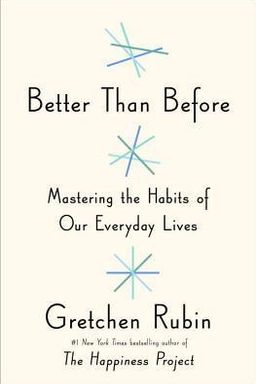
How can you change your life—really change it—without endless struggles with willpower and self-discipline? In Better Than Before, Gretchen Rubin argues that habits are the invisible architecture of everyday life. She contends that happiness and success depend less on momentary choices and more on the routines we build that free us from constant decision-making. The book suggests that if you understand your nature and learn the right strategies, you can transform your behavior—and by extension, your destiny.
Rubin explores why some people can cultivate good habits easily while others struggle for years. Her central insight is that habits work because they eliminate the need for decision-making. Once established, a habit no longer taxes your willpower, and this liberation from constant choice allows you to act effectively and serenely. Instead of wrestling with every temptation, you simply do what you’ve already decided to do. This is why changing habits is so powerful—it turns desired behaviors into effortless ones.
Understanding Human Differences
One of Rubin’s major revelations is that people respond to expectations in fundamentally different ways. Some thrive under rules and plans; others recoil from them. Through stories and observations from her research, she discovered four core personality patterns that shape habit formation: Upholders, Questioners, Obligers, and Rebels. Each type interprets expectations—external or internal—in its own way, which means that no single approach to building habits works for everyone.
An Upholder, like Rubin herself, dutifully meets outer and inner expectations and finds satisfaction in discipline. A Questioner resists doing anything that seems arbitrary and needs logical reasons to act. An Obliger performs well when others depend on them but struggles to meet personal goals. A Rebel defies both inner and outer expectations, insisting on personal freedom above all. Understanding these tendencies helps you tailor your strategies to your psychological nature rather than forcing yourself into someone else’s mold.
Self-Knowledge as the Foundation
Rubin insists that self-knowledge precedes all successful habit change. You must start with an honest understanding of yourself—your motivations, your environment, your preferences, and even your contradictions. She shares dozens of personal distinctions, such as whether you’re a Lark or an Owl, an Abstainer or a Moderator, a Marathoner or a Sprinter. The book encourages you to stop fighting your natural inclinations and instead build habits that harmonize with them. As she puts it, “I can build a happy life only on the foundation of my own nature.”
This philosophical approach resembles that of William James and Aristotle, who also saw habits as central to moral development and self-command. Rubin’s modern take, however, merges ancient wisdom with cognitive psychology, showing how conscious design can turn behaviors into automatic routines that foster happiness, health, and creativity.
Strategies for Lasting Change
Rubin organizes dozens of practical methods into “strategies” for habit formation: Monitoring, Foundation, Scheduling, Accountability, and many others. Each strategy answers why habit change falters and how it can succeed. She blends science with real stories of ordinary people—from her sister and husband to readers around the world—who experimented with these principles. As she shows, when you adopt habits that suit your temperament, you conserve energy and willpower, freeing you to focus on more meaningful pursuits.
Ultimately, Rubin argues that habits are not about perfection; they are about progress. When you make small, consistent changes based on your unique personality, you become “better than before.” Her vision of happiness is practical, not idealistic—it’s about creating the kind of everyday life that feels calm, productive, and rewarding, step by step. She closes with a profoundly human insight: perfection may be impossible, but through habits, we can continuously grow happier, healthier, and more ourselves.
“Habits make change possible by freeing us from decision-making and from using self-control.” —Gretchen Rubin