
Idea 1
The Quest for Alpha in Modern Investing
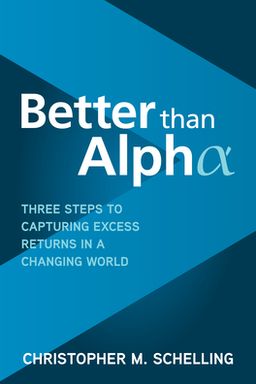
Why do investors keep chasing “alpha” even when it’s vanishing? In Alpha Masters Revisited, Schelling argues that what most people call “alpha”—excess return unattached to market exposure—has been steadily eroded by technology, scale, and transparency. He reframes the idea: true alpha is a rare residual, not a repeatable product. If you misuse benchmarks or confuse factor exposures with skill, you’re paying for beta at alpha prices.
Across the book, Schelling traces the history of alpha—from its early definition in Jensen’s model, through the factor revolution (Fama–French, Carhart), the rise and fall of hedge funds, and the evolution of private equity—and builds a practical framework for modern investors: alpha survives in places data and scale have not yet crushed. You also discover new sources of “behavioral,” “process,” and “organizational” alpha—forms of excess return arising from better human decision architecture, not market timing.
From Residual Return to Factor Awareness
At its foundation, alpha is what remains after you adjust for beta. Schelling walks through examples: a manager who earns 10% with beta 1.0 produces no alpha; one with beta 0.6 earns 4% alpha. Yet this definition depends critically on benchmark choice—if you pick the wrong index or period, you mismeasure skill. Modern finance discovered that much of what appeared as alpha was actually exposure to persistent factors such as size, value, and momentum. Once these became investable via index products and ETFs, competing for alpha within liquid public markets turned into a zero-sum game.
The Price of Crowding and Scale
Throughout Schelling’s narrative, scale undermines edge. Hedge funds illustrate how informational advantages erode as capital floods in: early players like Jones, Soros, and Steinhardt exploited sparse data and flexible mandates, but trillions later, average returns collapsed. The same dynamic hit private equity—larger funds paid higher entry multiples and relied more on leverage than operational improvement, shrinking IRRs and MOICs over time. Size converts scarce skill into commoditized beta.
Technology and Alpha Decay
Moore’s law accelerated data availability and computing power, transforming markets into hyper-efficient engines. Machines now dominate structured tasks—pattern recognition, arbitrage, factor mining—so human edges thrive only where judgment, complexity, or illiquidity resist automation. Schelling’s warning is clear: if the game is data ranking, computers win. Durable alpha must come from unstructured arenas such as private credit, litigation finance, and operational improvements in private assets.
The Human Side of Alpha
Despite technological efficiency, Schelling shows behavioral and organizational forces still matter. Investors fall victim to System 1 biases—confirmation, loss aversion, overconfidence—that distort decisions. The antidote is structured System 2 discipline: pre-specified benchmarks, falsifying evidence hunts, and process design that channels attention to high-impact choices. Organizations also breed alpha or destroy it depending on governance—trustees with expertise outperform political appointees, and clear accountability drives better long-term results.
Rethinking Success
Ultimately, Schelling reframes success: investors don’t eat alpha; they eat total return. Beating a benchmark means little if you miss your real goal—funding liabilities, endowments, or spending. Define risk as the probability of failure, not volatility. “Behavioral alpha” emerges when you set realistic expectations, implement robust—not optimized—portfolios, and govern decisions through skilled, aligned teams. The result is a cohesive philosophy: alpha rarely lives in quick trades—it grows in how you design systems, think probabilistically, and manage the inevitable biases that lead others astray.
Core message
Alpha is not just excess return—it’s evidence of scarce insight or superior decision architecture. In liquid markets, assume it’s gone; in private and behavioral dimensions, assume it’s possible if you do the work.
The book thus evolves from a definition of alpha into a multidisciplinary manual for how to create, measure, and sustain edge when traditional security selection no longer suffices. Schelling unites hard finance, behavioral science, and organizational psychology into one story: enduring advantage belongs not to the fastest, but to the most deliberate thinkers.