
Idea 1
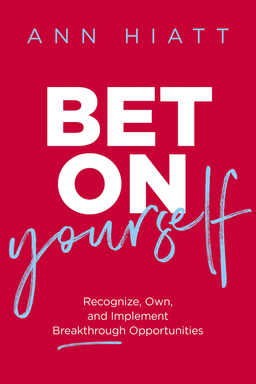
Bet on Yourself: Turning Opportunity into Impact
Have you ever wondered how some people seem to create remarkable careers from ordinary beginnings—turning small steps into extraordinary leaps? In Bet on Yourself, Ann Hiatt draws on decades spent alongside visionary leaders like Jeff Bezos, Marissa Mayer, and Eric Schmidt to reveal what separates those who wait for luck from those who engineer their own breakthrough opportunities. Her central argument is both pragmatic and empowering: success is not born of privilege or perfection but from the courage to recognize your potential, own your growth, and implement your ambitions through consistent, strategic action.
Hiatt proposes a framework she calls the ROI philosophy—Recognize, Own, Implement—a roadmap anyone can use to transform setbacks, self-doubt, and uncertainty into catalysts for growth. Drawing from her unique vantage point inside tech giants during their defining years, she dismantles the myth that extraordinary outcomes require extraordinary circumstances. Instead, she invites you to view your work and life as a series of strategic bets—guided by curiosity, resilience, and meaningful risk-taking. Each chapter closes with an “ROI Sprint,” a practical exercise to help readers apply the lessons directly to their own careers.
From Small Beginnings to Silicon Valley
Hiatt’s story begins far from the sleek campuses of Amazon and Google. As the first non-farmer in a family of Idaho potato growers, she credits her upbringing with instilling the foundation that later allowed her to thrive in high-pressure environments: an ethic of hard work, adaptability, and humility. Her early lesson was clear—joy comes from doing hard things well. Through the story of her father’s audacious leap from farm life to Air Force fighter pilot, she illustrates how calculated risks and persistence define lives of purpose. This ethos becomes the thread connecting her own unlikely ascent from a nervous teenager in Seattle to executive business partner to some of the most powerful CEOs in tech.
From the start, Hiatt frames her book as a democratization of Silicon Valley success. You don’t need a Stanford degree, financial backing, or luck to enact transformation. You need the tools to create opportunities wherever you are—whether that means redefining your role at work, seeking mentors, or learning to speak up before you feel ready. Her emphasis on “betting on yourself” is less about ego than about self-trust: the ability to make bold choices even when outcomes remain uncertain.
Learning from Titans: Lessons at Amazon and Google
Hiatt uses vivid stories from the early days of Amazon and Google to anchor her lessons in reality. As Jeff Bezos’s young assistant, she accidentally booked the helicopter that crash-landed in west Texas—an event she half-jokingly calls “the day I almost killed Jeff Bezos.” That disaster became her crash course in crisis management, emotional control, and the power of composure. Instead of firing her, Bezos praised her calm under pressure. “I hear you’re really good under stress,” he told her—a moment that reframed failure as accelerated learning. This episode symbolizes the book’s mantra: Every stumble is data for growth.
At Google, Hiatt learned from Marissa Mayer the art of managing at scale and the importance of curiosity-led innovation. Later, as chief of staff to Eric Schmidt, she discovered the subtler dimensions of leadership—strategy, trust, communication, and team design. Across these experiences, she distills universal leadership principles: create environments for experimentation, build resilience through repetition, and take ownership of your developing expertise. Scholars might recognize these ideas as aligned with Carol Dweck’s Growth Mindset and Angela Duckworth’s Grit, but Hiatt makes them tangible through her own missteps and course corrections.
The ROI Framework: Recognize, Own, Implement
The book’s framework anchors each concept in deliberate action. To Recognize means identifying opportunities for impact—even hidden within mundane tasks. To Own is to claim the authority to steer your growth, rather than waiting for permission or perfect timing. And to Implement is to translate ambition into measurable, time-boxed progress. Hiatt borrows this “sprint mindset” from tech culture, where projects break down colossal goals into small, achievable bursts of execution. Her point is universal: progress precedes perfection. By applying this process repeatedly, you build not only skill but also confidence—the foundation of sustainable career success.
Why Betting on Yourself Matters Now
Hiatt’s message resonates especially in an era of mass reinvention. The COVID-19 pandemic, she and Eric Schmidt note in the foreword, revealed how fragile “certainty” really is—and how essential adaptability has become. The future belongs to those who can pivot, take calculated risks, and translate adversity into opportunity. “We need more voices, more insights, and more diversity of experience to build a future full of hope,” she writes, grounding her philosophy not in Silicon Valley elitism but in inclusion and purpose.
In the chapters that follow, Hiatt expands her argument across every stage of growth—from building foundational habits in humble beginnings to claiming a seat at the table, leading teams, and reinventing oneself after loss. Her experiences with Bezos, Mayer, and Schmidt serve as case studies, but her ultimate thesis reaches far beyond tech: everyone can become the hero of their own story by learning to recognize possibilities, own their path, and implement their unique vision for impact. Bet on Yourself is thus both a memoir of transformation and a manual for deliberate career design—an invitation to trade fear for curiosity and to step decisively into the driver’s seat of your own professional life.