
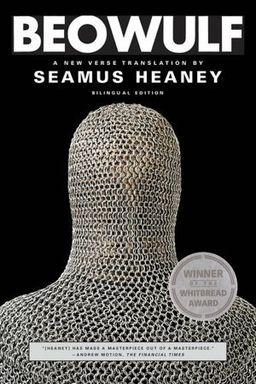
Beowulf cover

Beowulf

by Unknown

Beowulf is an epic tale of heroism set in sixth-century Scandinavia. This narrative poem follows the legendary warrior Beowulf as he battles ferocious monsters and ultimately becomes a revered king. Exploring themes of bravery, leadership, and mortality, Beowulf''s story continues to inspire and influence literature and culture today.

Heroism and the Duality of Faith in Beowulf

What does it mean to be a hero in a world torn between belief in fate and faith in God? Beowulf, the anonymous Old English epic, invites you into this paradox—a universe where courage defines humanity and yet all human endeavor unfolds under divine or fateful command. Translated and introduced by John McNamara, this edition underscores how the poem straddles two powerful cultures: the pagan warrior ethos of Northern Europe and the Christian moral vision that began to take hold in Anglo-Saxon England after its conversion. The result is not simply an adventure about monsters and heroes—it’s a meditation on mortality, leadership, and the tension between human glory and divine destiny.

A Fusion of Pagan and Christian Worlds

The heart of Beowulf lies in its cultural duality. Composed sometime between the 700s and 1000s, the poem reflects a world navigating the shift from tribal paganism to Christian civilization. The poet, McNamara explains, was Christian, but his characters are rooted in a pre-Christian past: warriors prized courage, loyalty, gift-giving, and fame more than spiritual salvation. Yet through the narrator’s voice, the reader hears echoes of Christian teaching—God’s providence, divine justice, and humility contrasting with the pagan pursuit of glory. This synthesis gives Beowulf its enduring complexity: it’s both an elegy for a lost heroic age and a moral allegory about redemption and pride.

When Beowulf wrestles Grendel, his battle is not just physical—it symbolizes the struggle between good and evil, light and dark, much like the Christian cosmic war against sin. Later, when Hrothgar warns Beowulf not to succumb to pride, we see the moralizing voice of Christianity gently correcting the heroic code. The poem, therefore, becomes a microcosm of historical transformation, blending the mythic grandeur of pagan storytelling with the introspective morality of the medieval mind.

A Story of Life’s Cycles

The story itself moves through the cycle of life: youth, triumph, and inevitable decline. McNamara highlights this structure as symbolically organic—an aesthetic balance between beginnings and endings. The poem opens with a funeral (Scyld’s seafaring burial) and closes with another (Beowulf’s own pyre), forming a perfect circle of life and death. In between, Beowulf’s three great battles—with Grendel, Grendel’s mother, and the dragon—trace the hero’s rise, maturity, and fall. These encounters mirror the stages of human existence: youthful vigor, tested wisdom, and the twilight of mortality.

This cyclical structure embodies what J.R.R. Tolkien called the poem’s unity of theme: the opposition of beginnings and endings, victory and death. Beowulf’s triumphs are always shadowed by the knowledge that “every soul-bearer is destined to seek his appointed place.” The poem acknowledges, even celebrates, the inevitability of death, but frames it within the Christian promise of divine judgment—the hero may die, yet his moral character endures beyond the grave.

Artistry and Oral Tradition

McNamara explores how Beowulf emerged from oral tradition before being preserved by scribes around 1000 CE. It retains the sound of storytelling—the rhythms of chant, formulaic epithets, and patterns of repetition and variation. This oral inheritance gives the poem its musical strength. Like Homer’s Iliad, Beowulf’s meaning arises from the act of performance: “I have heard tales sung” recurs as a formula of authority, linking narrator and audience through shared memory. The storyteller conjures a collective identity—a culture bound by the spoken word, where to remember is to belong.

Oral artistry also manifests in structural techniques: ring composition (themes looping back), digressions that mirror parallel heroes (Sigemund, Heremod), and “variation,” where each repeated image is re-described from a new angle. This intricate design reflects the same care seen in Anglo-Saxon visual art—the interlace patterns on jewelry or manuscripts—where meaning emerges through intertwining lines.

Enduring Relevance

Why does an ancient hero’s story still matter to you? Because Beowulf asks timeless questions about how to live honorably in the face of mortality. The poem teaches that heroism is not just physical strength—it’s moral integrity amid fading glory. Beowulf dies undefeated in spirit, declaring he ruled well and betrayed no oath. His acceptance of fate evokes the Stoic courage admired by modern thinkers like Marcus Aurelius, but also the Christian humility of recognizing one’s limits before God. As McNamara notes, Beowulf’s final comfort rests not in earthly triumph but in a clean conscience.

In today’s world—where fame often eclipses virtue—this Old English epic reminds you that true greatness lies not in conquest but in integrity. Like Hrothgar’s warning, “Do not foster pride, glorious warrior!” still echoes. Beowulf doesn’t simply dramatize heroism; it redefines it as a moral and spiritual discipline. Reading this poem becomes a mirror for your own life, challenging you to find courage that endures beyond achievement and faith that outlasts fear.


The Structure of Heroic Life

John McNamara shows that Beowulf is not three disconnected monster battles but a carefully designed reflection on the stages of existence—each fight symbolizing an era of life. The encounters with Grendel, Grendel’s mother, and the dragon parallel the arc from youthful ambition to mature service and finally to the weary wisdom of old age.

Youthful Courage: The Battle with Grendel

Beowulf’s first battle epitomizes the vigor of youth. When he sails to Denmark, his courage borders on audacious confidence. He insists on fighting Grendel without weapons, trusting in strength and divine favor. This moment demonstrates the ideal of heroic self-reliance—a form of youthful purity untouched by pride. McNamara likens it to the archetype of the young knight who answers evil with faith and body alone. Grendel, a descendant of Cain, represents inherited sin—a destructive force humanity cannot combat with swords but only with spiritual power.

Mature Judgment: The Battle with Grendel’s Mother

By his second battle, the hero has evolved. When Beowulf dives into the mere to confront Grendel’s mother, he navigates darkness born of vengeance—a feminine embodiment of grief and rage. His victory comes not from brute force but from divine intervention: God “decreed which was the victor.” Here heroism shifts from physical strength to moral alignment. The sword that fails him, Hrunting, symbolizes human inadequacy; the “giant’s sword” he discovers represents grace—salvation through a higher power. McNamara calls this the poem’s turning point: Beowulf learns humility, realizing courage alone does not conquer evil.

Wisdom and Mortality: The Dragon Fight

Beowulf’s final fight, at age eighty, is vastly different. The dragon symbolizes internal decay—a monster guarding treasure, like a human clinging to material pride. When Beowulf faces it alone, he acts from duty, not glory. His words to Wiglaf—“I ruled my people well, never turning to treachery”—reveal spiritual maturity. In battling the dragon, he wrestles not with evil but with the limits of time. He wins but dies, a symbol that even righteousness cannot defeat mortality. This tragic symmetry echoes the structure of classical epics like The Iliad but infuses it with Christian redemption: Beowulf’s death cleanses his people’s legacy.

A Life in Balance

Across these battles, McNamara identifies a moral symmetry—rising from pride to humility, strength to wisdom. Youth’s glory fades into service, and service ends in sacrifice. This balance defines what J.R.R. Tolkien labeled the poem’s “organic unity”: the tension between worldly triumph and inevitable loss. Each victory foreshadows death, each celebration is shadowed by lament. Through Beowulf, you learn that the meaning of life isn’t found in conquest but in the grace with which you face decline. That’s the poem’s greatest insight—you cannot escape your fate, but you can meet it honorably.


The Fusion of Heroism and Faith

Where pagan courage meets Christian piety, you find the unique moral heart of Beowulf. McNamara argues that the poet deliberately fused these value systems to create a world both ancient and universal: one where loyalty and bravery coexist with moral introspection and divine justice.

Pagan Virtues: Warrior Ethics

The pagan ethos prizes tangible actions—gift-giving, loyalty to lord, vengeance for kin. Hrothgar’s hall, Heorot, is the epicenter of this social order: a place of feasting, communal bonds, and storytelling. Here, the value of a man lies in his deeds; grief must be answered with revenge. When Beowulf says, “It is better for each man that he avenge his friend than to mourn him much,” he embodies this creed. The community upholds honor through mutual obligation, defined by the comitatus code (Tacitus describes similar practices in Germania), where the leader rewards service and the thanes repay it with absolute loyalty.

Christian Morality: Divine Providence

Overlaying this heroic code is Christian commentary. The poet often intrudes as a moral observer, lamenting pagan ignorance of God while recognizing their nobility. Grendel becomes not just a monster but a moral embodiment of evil, a descendent of Cain cursed by divine justice. Beowulf, though “heathen,” becomes God’s unwitting instrument. His victories are framed as acts of grace: “The holy God decreed which was the victor.” McNamara emphasizes that this doesn’t erase pagan values—it reframes them as foreshadowing Christian virtues like justice, humility, and service.

Creative Tension: Between Earth and Heaven

This fusion creates a constant tension—the poem neither condemns nor glorifies pagan heroism, but holds it in dynamic balance with spiritual truth. When Hrothgar warns Beowulf against pride, he articulates the Christian moral that all human glory is transient. Yet he does so in the rhythm of warrior speech, maintaining the dignity of the old ways. The result is a worldview of coexistence, not conversion. Beowulf’s death is heroic in the pagan sense and salvific in the Christian: he dies defending his people and accepts divine will with grace.

McNamara calls this “creative fusion” the poem’s genius—it speaks from a culture in transition, allowing you to glimpse how humanity evolves spiritually through its stories. Heroism and faith are not opposites but stages of the same journey: courage becomes morality, and morality becomes faith. You might see in Beowulf the timeless synthesis of human ideals—the bravery to act, and the humility to believe.


The Power of Oral Poetry

Before Beowulf was written, it was spoken. McNamara explains how oral tradition shaped not only the content but the entire spirit of the poem. Every repetition, every parallel, every formulaic phrase—“Then Beowulf spoke, the son of Ecgtheow”—echoes an ancient practice of storytelling where memory, rhythm, and community fused into art.

Formula and Memory

The oral poet did not memorize thousands of lines but composed through formulas: ready-made phrases for recurring actions and characters. This method, studied by Milman Parry and Albert Lord, allowed epics like Homer’s Iliad and Beowulf to exist in performance. In McNamara’s view, the “singer of tales” created poetry in real-time, using patterns to maintain rhythm and meaning. Each formula—“gray-eyed Athena” in Homer or “protector of the Scyldings” in Beowulf—became a unit of art and memory. These recurring forms gave audiences familiarity and reinforced shared values.

Variation and Interlace

Rather than redundancy, repetition in Beowulf serves a sophisticated purpose. McNamara describes “variation,” where each retelling of an image—such as the ship sailing home—is enriched with new metaphorical detail. These patterns mirror the interlacing ornament of Anglo-Saxon manuscripts: threads overlapping, words echoing each other in complexity. The poem’s digressions—stories of Sigemund, Heremod, or the Swedish-Geatish wars—aren’t tangents but symbolic mirrors, inviting the audience to weave connections mentally. Oral poetry thus demands active listening; understanding is co-created by performer and audience.

Communal Imagination

Above all, oral tradition made poetry communal. “I have heard the tale sung” means the poet claims authority through collective voice, not individual genius. This shared authorship contrasts modern solitary writing; in Beowulf, culture itself speaks. When monks later copied the poem, they preserved echoes of that communal rhythm, turning it into literature without erasing its heartbeat. McNamara notes that Beowulf lives “in the borderland between oral tradition and the world of the book”—an image of transformation itself. In reading it today, you don’t just read history; you overhear the living pulse of storytelling—the sound of a people remembering themselves.


Language and Poetic Craft

The artistry of Beowulf rests as much in language as in plot. McNamara’s analysis of Old English poetics reveals a style rich in sound, metaphor, and rhythm—where every line becomes a miniature battlefield of meaning. Understanding this craft helps you feel the music of the story, even in translation.

Alliteration and Rhythm

Each line of Beowulf divides into two halves joined by alliteration: “Beowulf spoke, the son of Ecgtheow.” The repeated consonants tie meaning to melody, giving spoken power to thought. This structure replaces rhyme with movement, creating the pulse of oral memory. McNamara shows how stresses fall on key syllables, guiding the listener’s ear to the words that matter—names, actions, divine forces. It’s poetry forged for sound, not sight, designed to be heard by warriors feasting after battle.

Kennings and Metaphor

Kennings—the compound metaphors like “whale-road” for sea or “battle-flasher” for sword—transform the mundane into the mythic. They reveal how Old English thought joined physical and spiritual worlds through imagery. The sea isn’t just water; it’s the highway of destiny. McNamara compares kennings to riddles—cryptic puzzles that teach by forcing perception beyond literal sense. They remind you that language itself is heroic: an act of creative conquest over silence.

Syntax and Variation

Beowulf’s grammar favors parataxis—placing clauses side by side without subordination: “He fought, and he conquered, and he spoke.” This rhythm mirrors action itself—simple, direct, relentless. Variation, another stylistic hallmark, layers synonyms and appositives so that Beowulf is simultaneously “the Geatish hero,” “the son of Ecgtheow,” “protector of men.” Each repetition expands identity rather than repeats it. McNamara reveals how this style creates moral depth: each name recalls lineage, duty, and fate, binding personal identity to collective memory.

Through this linguistic artistry, the poem becomes more than story—it’s the embodiment of its culture’s worldview, where every word carries weight of history and every rhythm echoes shared experience.


Mortality and Legacy

At its core, Beowulf is an elegy for human mortality. McNamara sees the poem as a meditation on the inevitability of death and the meaning left behind. Unlike the pagan warrior who seeks fame, Beowulf comes to value peace, legacy, and moral clarity.

The Acceptance of Fate

Fate, or wyrd, governs the poem like an invisible law. From the beginning, the narrator declares that no one may escape destiny. Yet Beowulf never curses it; he meets it head-on. His final comfort before dying is that he governed justly and betrayed no oath—an affirmation that virtue is the only permanence mortality allows. McNamara interprets this as a fusion of pagan fatalism with Christian resignation. Life’s cycles are under divine command, not nihilistic chance: death serves purpose, just as Scyld’s funeral foreshadows resurrection.

Legacy Through Memory

In the end, Beowulf’s people memorialize him with song: “They sang of his valor.” This communal remembrance completes the cycle of oral culture—the hero lives on through spoken word. The poet himself becomes part of that legacy, preserving faith through storytelling. McNamara notes that Beowulf’s barrow facing the sea symbolizes continuity: it guides future sailors, linking human life and endurance across generations. For you, it’s a reminder that legacy is not wealth but remembrance woven into community—your deeds echo through those who retell them.

Thus Beowulf closes in harmony with its opening: from Scyld’s drift through the waves to Beowulf’s pyre under the heavens. The hero’s life ends, but the song goes on—proof that while “every child of men” must sleep in earth, meaning endures through memory and faith.

Dig Deeper

Get personalized prompts to apply these lessons to your life and deepen your understanding.

Go Deeper

Get the Full Experience

Download Insight Books for AI-powered reflections, quizzes, and more.