
Idea 1
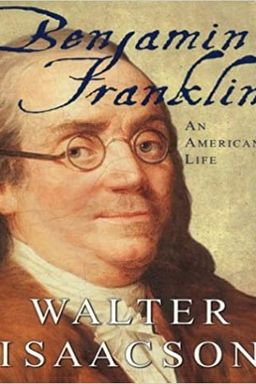
Benjamin Franklin and the Making of an American Archetype
How does one man’s life become a template for a nation’s character? In his biography of Benjamin Franklin, Walter Isaacson presents Franklin not just as a historical figure but as a living experiment in civic virtue, practical intelligence, and self‑invention. You watch Franklin fashion himself from humble beginnings into a cosmopolitan statesman—and in doing so, supply America with an identity grounded in industriousness, tolerance, and wit.
Isaacson’s Franklin is more than a polymath; he is a craftsman of reputation, a self‑made intellectual whose personal trajectory mirrors the rise of democratic modernity. Through experiments, essays, and institutions, he tests how rational inquiry, social cooperation, and moral optimism could build a republic. Each stage of his life—from apprentice printer to elder constitution‑maker—adds a piece to an argument: that useful knowledge, civic association, and human improvement are the engines of progress.
From Puritan roots to self‑taught rationalism
Franklin’s story begins with the spirit of dissent. Raised in a family of English Puritans who emigrated to New England, he inherits two crucial habits: religious independence and industrious craft. His father Josiah’s candle shop and his brother James’s printing house train him in both trade and argument. Early readings—Plutarch, Bunyan, Cotton Mather, and Defoe—give him a moral vocabulary for self‑improvement. Yet Franklin departs from dogmatic piety toward a pragmatic religion of deeds: virtue matters because it benefits others. This evolution from Puritan introspection to practical moralism becomes a defining American hybrid.
_Image‑making and the American character_
Franklin’s genius lies partly in storytelling. His Autobiography is not only confession but composition—a deliberate performance designed to teach thrift, diligence, and good humor. The famous scenes—walking down Market Street with bread rolls, working in a fur cap in Paris—are acts of moral theater. His seemingly modest habits advertise civic virtue while concealing a canny understanding of public psychology. For Franklin, image is not hypocrisy; it is pedagogy. He builds a persona that ordinary people can imitate, turning the artisan’s ethic into a national myth. (Isaacson calls this the origin of the “founder as everyman.”)
_From the printing press to the town hall_
Franklin’s work as a printer becomes his laboratory for influence. Through pseudonymous essays—Silence Dogood, Busy‑Body, Poor Richard—he practices satire and moral instruction under comic guises. The press connects him to the public sphere, laying foundations for libraries, reading societies, and the first American magazines. His media enterprises are proto‑republican institutions: they disseminate reasoned debate and practical advice while turning enlightenment into a business. In modern terms, Franklin converts information literacy into social capital.
_Civic invention as political philosophy_
When Franklin organizes the Library Company, the fire brigade, the Academy, and the Pennsylvania Hospital, he demonstrates a principle still revolutionary: citizens can solve public problems through voluntary association. These are not acts of charity but models of self‑governing cooperation. By establishing bylaws, subscription funding, and matching‑grant systems, Franklin turns moral ideals into institutional mechanics. His philosophy of “doing well by doing good” fuses private interest with collective welfare—making civic entrepreneurship the moral counterpart to capitalism.
_Reason, electricity, and the power to improve nature_
Science for Franklin is democracy in the laboratory. From studying Leyden jars and lightning to inventing the stove and bifocals, he treats curiosity as social technology. His plain, empirical style breaks European elitism in science—the Royal Society admires him for clarity more than theory. Every experiment implies a political corollary: knowledge should serve public safety. The lightning rod becomes a material metaphor for Enlightenment—channeling dangerous power through reason’s conductor.
_From experiments to empire and independence_
Franklin’s political life follows his experimental method: propose, observe, revise. His Albany Plan (1754) outlines federal cooperation decades before the Constitution. As colonial agent in London, he explores whether an enlightened empire could balance liberty with loyalty, writing pamphlets that combine satire and demographic logic. When imperial institutions prove intractable—through the Paxton massacre, Stamp Act crisis, and the humiliating “Cockpit” hearing—his rational loyalty turns into revolutionary persistence.
_Diplomat, philosopher, and moral finisher of the Revolution_
In Paris and later at the peace table, Franklin wields image and intellect to secure survival for the new republic. His rustic simplicity charms salons; his cunning negotiates independence on favorable terms. His diplomacy blends Enlightenment ideals with shrewd realism—courting France while quietly advancing American interest. In old age, he embodies moderation: calling for modest pay for officials, aiding in the Connecticut Compromise, and signing the Constitution despite doubts. His final acts—abolition petitions, middle‑class philanthropy, and civic bequests—extend his lifelong pattern: moral principle expressed through practical design.
_The lasting pattern: morality mechanized_
Across Isaacson’s portrait, Franklin turns every domain into an experiment in improvement—of self, society, and system. You encounter a thinker who merges trade skill with political vision, humor with philosophy, and genius with cooperation. His legacy is not perfection but method: an American habit of invention that translates ideals into institutions. Through Franklin, you learn that character, community, and curiosity are not separate virtues but complementary tools for sustaining progress.