
Idea 1
Facing Mortality and the Meaning of Medicine
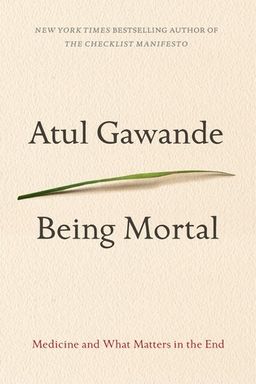
How can you live fully when you know that life is finite? In Being Mortal, surgeon and author Atul Gawande confronts one of the most profound—and uncomfortable—truths of human existence: that medicine can extend life but cannot transcend mortality. He asks us to reconsider what it means to have a good life when our bodies begin to fail, and how doctors, patients, and families can face decline and death without losing the essence of what makes life worth living.
The Crisis of Modern Medicine
Gawande begins with a confession familiar to many clinicians: in medical school, he was taught how to save lives—not how to help people die. Modern medicine, he argues, has made aging and death medical experiences rather than human ones. The result is an era in which doctors fight fiercely against nature's limits, wielding technology and treatments that often replace comfort with suffering. Instead of guiding patients toward lives of meaning, medicine has become a system that measures success by survival alone. This, Gawande insists, is not enough. Our goal should not be just survival at any cost—it should be well-being.
Medicine’s Blind Spot About Mortality
To show how this blind spot manifests, Gawande recalls the story of Joseph Lazaroff, a cancer patient whose aggressive treatment led to prolonged suffering. Doctors, including Gawande himself, were so focused on what they could do—surgery, radiation, ventilation—that they neglected what Lazaroff actually needed: honesty, comfort, and guidance. His story mirrors The Death of Ivan Ilyich by Tolstoy, a literary case study showing how denial and silence around death can deepen suffering. Through both medical and moral lenses, Gawande reveals that our system often makes dying worse precisely because we refuse to talk about it.
Redefining What Matters in Life’s Final Chapter
Medicine, Gawande contends, must move beyond its “fix-it” mentality. Instead of asking, “How can we prolong life?” doctors should ask, “What does this person want when time is short?” That question can change everything—from how we treat aging in nursing homes to how we help terminally ill patients plan their final days. He argues for a new paradigm that values autonomy, purpose, and dignity just as much as biological survival. This shift demands courage not only from patients but also from medical professionals and loved ones.
A Journey Through Aging, Illness, and Endings
Across chapters, Gawande explores multiple dimensions of aging and dying: the loss of independence, the inadequacies of nursing homes, visionary alternatives in assisted living, and the transformative power of hospice care. He illustrates these themes through deeply personal stories—his grandmother’s traditional end-of-life in India, his patient Alice Hobson’s struggles with dependence, and ultimately his father’s own encounter with spinal cancer. These narratives reveal not just the decline of the body but also the possibilities for living with grace and purpose within it.
Why This Book Matters for You
If you've ever watched an aging parent wrestle with loss of independence, or felt uneasy during a loved one's medical treatments, Being Mortal gives words to that discomfort. Gawande challenges readers to ask difficult yet transformative questions: What makes life valuable when cure is impossible? How do we balance safety with autonomy? What does courage mean—not in conquering death, but in meeting it with clarity and compassion? By the end, he shows that understanding mortality is not a matter of despair but a guide to how best to live—all the way to the end.