
Idea 1
Becoming Yourself After Fame
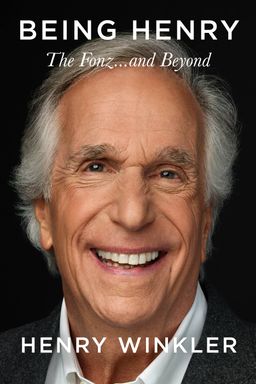
How do you find the person you really are when the whole world thinks you’re someone else? In Being Henry, Henry Winkler argues that a life worth living is a long, lurching arc from performing for approval to inhabiting your own skin. He contends that courage, craft, compassion, and late-blooming self-knowledge can turn paralyzing shame into service and artistry—yet to do so, you must understand the traps of typecasting (in work and in life), the hidden power of learning differences, and the discipline of listening to your gut.
This memoir is not a victory lap for the Fonz. It’s a map of disorientation: a dyslexic kid labeled dummer Hund by German refugee parents; a young actor improvising his way into Yale and, later, into the role that would define a generation; a middle-aged celebrity walking through a decade-long desert after Happy Days; and, finally, a septuagenarian who finds his greatest, truest role on Barry after beginning therapy. Winkler’s core claim is simple but hard-won: fame amplifies you; it does not complete you. The work, the people, the habits—and, eventually, the willingness to get help—are what make you whole.
The case for guts over scripts
Again and again, Winkler chooses forward motion in the face of fear. At his Happy Days audition, he has six lines and buckets of sweat. He points at the reader in the room and hears a voice he’s never used—low, assured, a little dangerous—say “Ayyy.” He commits so fully that the other actor sits down without being asked. Earlier, terrified at his Yale audition after his Shakespeare monologue vanishes, he improvises something Shakespeare-ish—and gets in. Later, on The Mary Tyler Moore Show tryout, he invents a pencil-glass gag in the casting office to show, not tell, why he can be funny. His mantra becomes: “You can’t catch a fish unless your fly is in the water.”
He pairs that nerve with fidelity to the ensemble. When ABC wants to rename the sitcom Fonzie’s Happy Days, he refuses—out of respect for Ron Howard and the cast. (Howard, who had threatened to leave, never forgot it.) That choice cements a culture that let the show run eleven seasons and turn into a phenomenon so big that a Neiman Marcus crowd of 20,000 in Dallas parts like the Red Sea when the Fonz asks it to.
The cost of a persona—and the long walk back
Fame explodes Winkler’s life—fan mail by the bushel, policemen at his apartment door asking for photos, women interested in the guy on TV—but it also traps him. For a decade after the show ends, he can’t get arrested for roles that aren’t the Fonz. He produces (MacGyver), directs (A Smoky Mountain Christmas; Cop & ½), and learns by failure (being fired from Turner & Hooch by Jeffrey Katzenberg; saying yes with his head not his gut to Monty). He discovers the difference between pompous leaders who belittle crews (director John Rich) and true collaborators (Ron Howard, Jerry Paris, Garry Marshall). Creativity, he learns, is a team sport. (This echoes Ed Catmull’s Creativity, Inc.: culture beats brilliance.)
Dyslexia as a portal, not a prison
Winkler doesn’t discover he’s severely dyslexic until 34, after his stepson Jed is diagnosed. Suddenly, the report cards full of Ds and Fs, the bar mitzvah “reading” memorized phonetically, the water-sprinkled book pages to look well-used—they all make sense. What he once internalized as stupidity was wiring. That realization births service: with Lin Oliver, he writes 39 children’s books (Hank Zipzer and beyond) for the “reluctant reader,” then sees kids light up: “How did you know me so well?” He offers rules you can steal: don’t finish negative sentences; replace them with something positive (even a “moist chocolate Bundt cake”); keep your fly in the water; let your tummy lead when your head is confused.
Why this matters for you
Winkler’s story is a mirror if you’ve ever been typed—by a job, a parent’s expectations, a diagnosis, or a success that came too early. He shows you how to honor the gift without becoming the mask; how to hold boundaries with family while keeping your heart open (declining ABC’s wallet while they gave him a VCR; quietly absorbing Ron Howard’s counsel not to slam a script; telling ABC not to rename the show); and how to start over in your 70s with auditions that terrify you. He models service (Special Olympics; MacLaren Hall; United Friends of the Children) and gratitude (fly-fishing in Montana; teaching kids to light Hanukkah candles beside a Christmas tree).
Two anchors to carry forward
1) “If you will it, it is not a dream” (Theodor Herzl, a strip of metal mailed by a fan); 2) “Your head knows some things; your tummy knows everything.”
In this summary you’ll see how Winkler transmutes fear into fuel; how he rides a culture-shaping rocket without losing the ensemble; how he turns a learning difference into a writing life; why bad bosses and good teammates shape a career; what it takes to repair intimacy at home; and how audition-by-audition humility leads to Gene Cousineau and a Primetime Emmy at 72. Most importantly, you’ll see how to stop performing for love and start living from it.