
Idea 1
The Biology and Context of Human Behavior
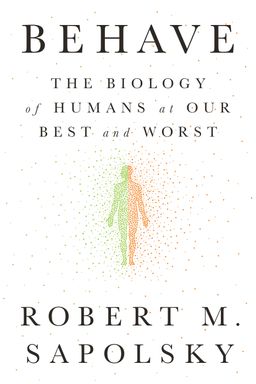
Why do humans commit violence or show compassion? The central argument of Robert Sapolsky’s work is that no single factor—genes, hormones, childhood, or culture—can explain complex behavior. You must view actions as the outcome of nested causes across time, spanning milliseconds of neural activity to millions of years of evolution. Sapolsky offers an integrated multilevel approach—an arc of causation that connects neurons, hormones, development, culture, and evolution into one continuous web. Every explanation at one level implies the levels beneath and above it.
From seconds to millennia
Sapolsky’s “arc” begins one second before an act. Neural firing in the amygdala, frontal cortex, and dopamine circuits sets immediate probabilities. Seconds and minutes before, subliminal cues—faces, smells, words—bias perception and readiness. Hours and days before, hormones tune thresholds for aggression or empathy (testosterone, oxytocin, cortisol). Weeks and months shape plasticity: synapses strengthen or atrophy, new neurons grow or fade. Childhood establishes scripts of attachment, fear, and trust; fetal environments write epigenetic instructions; and millennia of culture and evolution determine which behaviors society rewards or condemns.
Each level interacts dynamically. A hormonal surge can destabilize frontal restraint built over years of development; cultural norms can magnify or suppress innate biases. This model rejects tidy disciplinary buckets. When you say “neurotransmitter X caused aggression,” you are implicitly invoking genes, hormones, early experiences, and cultural incentives that produced that neural state.
The integrated explanatory toolkit
Sapolsky urges you to ask sequentially: What happened one second before? (neural circuits), minutes before? (sensory context), hours or days before? (hormonal milieu), months before? (plasticity and learning), years before? (development and culture). This approach turns analysis into an expanding map rather than a single cause. Neuroscience and history fuse into biography-without-blame: you see how biology and culture coauthor every act.
Concrete cautionary tales
He warns against single-level dogmas. Behaviorism claimed any infant could be molded into any adult; crude neurobiological reductionism led to lobotomies; and eugenic misuse of genetics excused prejudice. Each mistake arose from ignoring the cascade of influences. Dropping disciplinary arrogance is a moral act as much as a scientific one.
Why this matters
Practically, the multilevel map helps you choose interventions. Acute violence calls for stress reduction and social reform, not only medication. Depression, addiction, or compassion deficits demand actions across levels—psychological, social, economic, and biological. The approach reframes responsibility and empathy: you judge less and understand more.
Central insight
Human behavior is a product of nested causes—from neurons to nations. You cannot isolate one domain without impoverishing understanding. Integrated causation makes science deeper and morality more humane.
By mastering this integrative lens, you gain a disciplined empathy: the ability to see each act as the endpoint of biology braided with history. Violence becomes understandable without being excusable, and compassion becomes a learned response with biological roots. That synthesis is Sapolsky’s tremendous achievement.