
Idea 1
The Power of Beginning Again
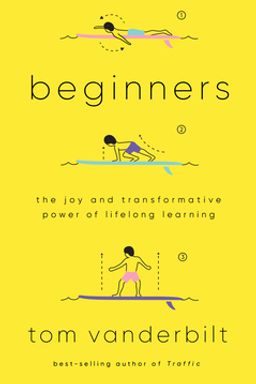
What happens when you decide, as an adult, to learn something completely new? In Beginners: The Joy and Transformative Power of Lifelong Learning, Tom Vanderbilt argues that embracing the role of a novice isn’t just about acquiring a skill—it’s about reshaping how you see yourself and the world. He insists that a beginner’s mind, the state of open curiosity and unguarded attention, is a vital antidote to the complacency of expertise.
Vanderbilt doesn’t preach this concept abstractly; he lives it. Over the course of a year, he learns chess, singing, juggling, surfing, and drawing, while also exploring what researchers, coaches, and neuroscientists know about how we learn. Each domain reveals one piece of a larger puzzle about how to cultivate plasticity, humility, and joy at any age.
Why We Need Beginner’s Mind
At the Marshall Chess Club, Vanderbilt sits across from eight-year-olds who can outplay him easily. He learns that when you drop expert pretension, you experience what Zen master Suzuki called the state of “many possibilities.” Beginners notice more because they haven’t yet built rigid internal models. Early learning floods your brain with novelty and attention, giving a neurochemical edge that experts often lose. This steep initial curve produces progress that’s both rapid and motivating.
Social and psychological barriers, however, make embracing this state difficult. Adults feel exposed when learning publicly, constrained by stereotypes that say trial and error belongs to childhood. But Vanderbilt finds that by choosing intentional, low-pressure spaces—a beginner’s chess tournament or a casual community choir—you can practice failure safely and rediscover curiosity.
Lessons from the Youngest Learners
When Vanderbilt visits NYU’s Infant Action Lab, researchers Karen Adolph and Jennifer Rachwani show him that babies are perfect demonstrations of how humans truly learn. Toddlers take 14,000 steps a day and fall 17 times an hour. They don’t practice perfection; they explore variability. This constant experimentation produces durable skill. The message for adults is simple: failure is not a verdict—it’s information. Like babies, you should welcome variability, alter contexts, and expect non-linear progress.
He also notes that learning rate isn’t fixed by biology. Differences between societies—such as when Ache children begin walking much later—don’t harm long-term outcomes. The real secret is continuous exploration and tolerance for messiness, echoing Carol Dweck’s growth mindset work: to stay in motion, even when confidence lags.
From Voice to Surf: Learning as Self-Reconstruction
In chapters about singing and surfing, Vanderbilt learns that to acquire new abilities, you must first unlearn. Adults carry deeply embedded habits—physical, cognitive, and emotional—that narrow flexibility. In singing lessons with Danielle Amedeo, he relearns how to breathe and produce sound, discovering that rebuilding a voice often means letting go of the compulsion to sound “good.” As one coach puts it, “You’ve got to sound ugly if you want to sound pretty.”
Surfing provides a mirror for this vulnerability. His first successes give way to a slump—the U-shaped curve that marks deeper learning. Just as with language or music, progress in motor skills often dips before rising again. It demands humility, patience, and structured feedback. At Surf Simply in Costa Rica, coaches turn surfing into a science of teachable steps and feedback loops, reminding him that “the ocean decides”—you can only refine your response to it.
Learning Together: The Social Engine
Vanderbilt’s Britpop Choir and group trips like SwimQuest demonstrate that social context is one of the most powerful motivators of learning. Singing in a choir synchronizes breathing and heart rates, producing measurable biochemical effects like increased oxytocin and lowered cortisol. Apps like Smule show that this social resonance works even across distances—duetting with strangers online builds courage and connection.
For adult learners, group environments counteract shame and isolation. At Surf Simply, midlife beginners—surgeons, teachers, parents—share risks and laughs, converting embarrassment into camaraderie. In these moments, learning becomes less about skill and more about belonging and transformation.
The Modern Beginner’s Landscape
Finally, Vanderbilt situates this personal odyssey within our larger cultural moment. Never before has it been easier to start over: online platforms like Khan Academy or Coursera lower entry barriers, while local maker spaces and community classes restore the apprenticeship model. Whether through digital tools or physical studios, today’s learner can construct flexible hybrids—structured practice plus playful exploration—that sustain motivation.
By the end of the book, the message is clear: lifelong learning is not about collecting skills; it’s about transforming the self through attention, humility, and social connection. If you let yourself be a beginner again, you not only build new abilities—you rediscover the full range of what it means to be alive, curious, and capable of change.