
Idea 1
How Churches Made the Pastor’s Wife Essential
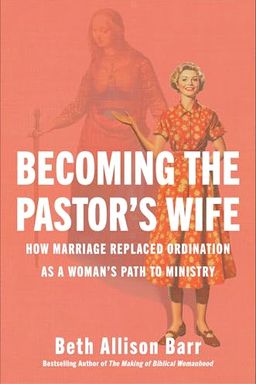
How did the pastor’s wife become treated as part of the pastoral job description? In The Pastor’s Wife, Beth Allison Barr argues that modern evangelical culture—especially white Protestant and Southern Baptist contexts—has normalized a “two-for-one” model in which a church hires a man and silently expects his wife to contribute unpaid, gendered labor. Barr contends this system isn’t biblically mandated or historically inevitable; it emerged through specific medieval reforms, Reformation improvisations, and twentieth-century denominational politics that narrowed women’s formal authority and expanded expectations for unpaid spousal work.
You see the evidence in ordinary moments: a hiring committee asks about a candidate’s wife’s child plans or job; a retired pastor’s wife casually assumes the new pastor’s wife will do the bulletin; a candidate is told “it’s time for you to marry” when singleness costs him a job. These aren’t one-offs but patterns Barr documents, reinforced by seminary “wives’ programs” and advice literature that train women in hospitality, appearance, and submission (Dorothy Patterson’s manuals are emblematic). Lifeway Research (2023) finds 83% of women leading women’s ministries in evangelical/Black Protestant settings are unpaid—proof that churches continue to depend on uncompensated female labor.
Thesis in one line
“The pastor’s calling assumes the calling of his wife”—a cultural habit that hides gendered inequality under spiritual language.
History that unsettles inevitability
If you assume women never led in the early church, Barr asks you to look again. Romans 16 greets Prisca (often named before Aquila) and Junia (“prominent among the apostles”), while Acts 21 notes Philip’s prophesying daughters. Archaeology from the Priscilla Catacombs (Rome) shows women portrayed with books, orans postures, and liturgical symbolism (Christine Schenk, Carolyn Osiek and Kevin Madigan, and Joan Taylor catalog these), suggesting female authority in prayer, teaching, and house-church leadership. These sources complicate modern claims of a uniform male-only tradition.
How ordination narrowed—and gendered—power
Medieval reforms redefined ordination from functional appointment (lectors, deacons, abbesses—roles women could hold) to an ontological priestly power tied to Eucharistic consecration (Fourth Lateran, 1215). As sacramental power sacralized, clerical celibacy hardened and priests’ wives were stigmatized. This narrowed pathway to authority prefigured Protestant shifts: when Reformers ended celibacy, they invented a new figure—the pastor’s wife—who gained social respect but whose influence was routed through marital status rather than ordination.
From autonomous leaders to supportive companions
Twentieth-century evangelicalism then re-centered women’s ministry around male headship. The Willie Turner Dawson Award illustrates the turn: Dawson (1963) was honored as a public leader who preached and organized nationally; Carol Ann Draper (2006) was praised primarily for supporting her husband’s platform (“PHT—Put Hubby Through”). Pastor’s wife literature followed suit: the post-1989 boom (shaped by the Danvers Statement and Piper/Grudem’s Recovering Biblical Manhood and Womanhood) normalized submission language, with Beverly Hyles, Lorna Dobson, and Dorothy Patterson instructing wives to defer to husbands, including in sexual and domestic spheres. (Not all swam that current—Denise Turner, Jill Briscoe, Kay Warren, and Diane Langberg offered more generous visions—but the trend line bent complementarian.)
Institutional power and hidden economics
SBC politics made the model feel “biblical.” Resolutions (1984), faith statements (1998, 2000), and networked leaders (Paige and Dorothy Patterson, Al Mohler, CBMW) codified male-only pastorates while still relying on women’s unpaid labor. Ordination also became a gatekeeper to tangible benefits (e.g., parsonage housing allowances), so restricting women’s ordination preserved economic advantages for men (a dynamic Elgee Bentley called a “weapon of choice”). Sociologists describe this as a “two-person single career” (Gail Murphy-Geiss, Tamika Ledbetter); Schleifer & Miller show hiring committees implicitly prefer married men because they bring “free” spousal work.
Role-model paradox and racial variation
Where women can’t be ordained, pastor’s wives become the most visible ministers. That visibility inspires women but can also mask structural limits (Benjamin Knoll and Cammie Jo Bolin; Kate Bowler notes how churches hide women staff online while spotlighting unpaid wives). Black church history tells a different, hopeful story: drawing from West African “mother” traditions and survival leadership under slavery and segregation, many Black First Ladies exercise robust authority (Weptanomah W. Carter), navigating respectability politics (Evelyn Higginbotham) and sometimes strategic conformity (Candice Benbow’s critique) to lead and protect community.
Costs and ways forward
The costs are real: hiring bias against single clergy, unpaid expectations for wives with separate careers, and—most disturbingly—institutional choices that protect male authority over women’s safety (e.g., the Maria Acacia case and “forgive and forget” responses). Yet history also shows alternatives: women once taught men openly (Dorothy Scarborough in Waco), the SBC in 1983 urged fair pay for women, and many churches now ordain women. You can push change—revise seminary training, audit pay and benefits without assuming spousal labor, write transparent job descriptions that never conscript wives, and put survivor protection over brand management. Barr’s point is simple: if this system was built, it can be rebuilt.