
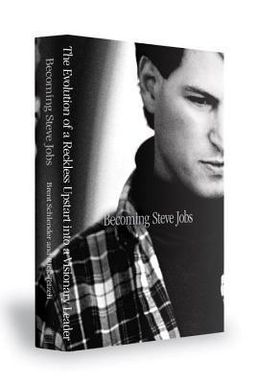
Becoming Steve Jobs cover

Becoming Steve Jobs

by Brent Schlender and Rick Tetzeli

Becoming Steve Jobs reveals the complex journey of a tech icon, from his audacious beginnings to becoming a visionary leader. Discover the trials, triumphs, and innovations that shaped Apple and transformed entire industries. This compelling narrative provides a deeper understanding of Jobs''s relentless pursuit of excellence and creativity.

The Contradictory Visionary: Steve Jobs’ Dual Nature

How can a barefoot Buddhist and a Mercedes-driving perfectionist be the same person? The book paints Steve Jobs as a study in contradictions: spiritual seeker and ruthless businessman, artist and engineer, tyrant and visionary. These contradictions are not flaws to resolve—they form the engine of his creativity and leadership. Understanding Jobs means understanding how friction between two worlds—craft and commerce, beauty and technology, control and freedom—drove the invention of modern digital life.

Roots of Contradiction

Jobs’ upbringing by Paul and Clara Jobs explains much of his paradoxical nature. Paul, a machinist, taught him craftsmanship—how even the hidden backside of a cabinet matters. Clara, a gentle supporter, encouraged his belief that he was special. This blend of humility and entitlement nurtured a man obsessed with detail yet convinced of his destiny. From calling Bill Hewlett at fourteen for parts to studying calligraphy at Reed and traveling to India for enlightenment, Jobs blended technological pragmatism with a pursuit of aesthetic purity and self-transcendence.

Vision Through Friction

That tension—between artistry and commerce—shaped his approach to products. He imagined computers as tools for the mind, not industrial machines. His early Apple work proved it: the Apple II’s clean casing, the Macintosh’s typographic elegance, and later the iPhone’s tactile poetry. Every product carried his father’s lesson about beauty and his mother’s permission to break rules. But that same duality made him volatile: quick to tears, bursts of fury, and moments of humility. For every story of cruelty lies another of vulnerability—after berating colleagues at Seva he wept in his car, revealing that under arrogance lay a desperate need for authenticity and meaning.

The Public Mask and Private Quest

Jobs wore his contradictions openly: barefoot in boardrooms yet immaculately designing ads; meditating on simplicity yet manipulating markets. Reporters found him magnetic and maddening. He simultaneously hated and used the media—building myth while chafing against caricature. From early Apple launches to Brent Schlender’s long interviews, Jobs tested journalists as intensely as engineers, probing whether they could grasp his vision rather than reduce it to headlines. This complex dance built the Steve Jobs myth: part prophet, part perfectionist, both deeply real and deliberately curated.

Why Contradiction Was the Gift

For Jobs, paradox was power. It let him imagine harmony between technology and liberal arts, between silicon and soul. When that balance held—Macintosh, iPod, iPhone—the results redefined industries. When it broke—Apple III, NeXTcube—it exposed the fragility of vision detached from practicality. Yet even failures became lessons. The wilderness years refined his rough edges; Pixar taught him to lead through trust rather than domination. The contradictions did not vanish; they transmuted into discipline. By the time he returned to Apple, he had learned how to channel paradox into focus.

Core Insight

To understand Steve Jobs is to embrace contradiction as creative fuel. His genius emerged not from harmony but from the dynamic tension between aesthetic purity and ruthless execution, between idealism and control. Those competing impulses made him intolerable to some yet indispensable to the age of digital design.


Design as Destiny

Design wasn’t ornamentation to Jobs—it was strategy, ethics, and differentiation. He believed that the look and feel of a product were inseparable from how it worked, and that people could sense integrity in an object the way they sense authenticity in art. As he told his teams, “Design is not just what it looks like; design is how it works.”

Craft as Competitive Edge

Apple’s strength under Jobs came from meticulous design integration. From the Apple II’s friendly beige case to the Mac’s graphical interface, details signaled emotional accessibility. Influenced by calligraphy lessons at Reed and by Dieter Rams’ minimalism, Jobs fused technology with artistry. He treated packaging, typography, and even store layouts as part of the user experience. Each choice expressed a belief that technology should feel humane—what he called “a bicycle for the mind.”

From Perfectionism to Practicality

This devotion often collided with reality. The fanless Apple III overheated because silence mattered more to him than airflow. The NeXT cube’s magnesium casing cost a fortune and took forever to manufacture. Jobs learned that design alone could not save a poor market fit. At Pixar, by contrast, he witnessed how disciplined creativity—protecting artists while managing budgets—could sustain innovation. Over time, he translated those lessons into Apple’s pragmatic design system: one that paired beauty with manufacturability and profit logic.

The Rise of Jony Ive and Material Poetry

Jobs’ partnership with Jony Ive marked a turning point. Ive’s exposure to Rams provided the vocabulary Jobs had long sought: simplicity, honesty, longevity. Together they reinvented Apple’s visual language—from the translucent iMac to the brushed aluminum MacBook and the glass-smooth iPhone. Jobs encouraged obsessive detail: screw placement, plastic feel, and even the reflection ratio on icons. The result wasn’t sterile minimalism but emotional resonance—products that seemed to invite touch and devotion.

Lesson

Design is the embodiment of values. When balanced with cost and customer empathy, it becomes your strategy; when pursued in isolation, it becomes self-indulgence. Jobs oscillated between those extremes—and taught the world that aesthetic conviction can redefine technology itself.


Leadership Under Pressure

Jobs’ leadership was legendary and lethal in equal measure. His intensity built teams capable of miracles—the Macintosh group, the iPod skunkworks—but also left wreckage in its wake. He could inspire engineers to transcend limits yet alienate managers who stabilized the business. The story of his evolution is the story of channeling fire into structure.

Inspiration in a Small Circle

Jobs was at his best with small tribes. The early Mac team worked like artists on a mission, energized by his rallying cry, “Real artists ship.” He created a cult of excellence—demanding, emotional, and personal. Members signed the inside of the Mac chassis because they saw themselves as creators, not employees. Jobs’ gift was narrative: he could make a circuit board feel like art and technical deadlines feel like destiny.

Failure to Scale—and the Exile That Saved Him

But charisma doesn’t scale. At Apple in the early 1980s he clashed with CEO Mike Scott and board members like Markkula. His dismissal in 1985 taught him what unbridled passion without structure can cost. During the NeXT “wilderness” years, he built beautiful but unsellable machines, proving again that inspiration must meet discipline. When he invested in Pixar, however, he began to observe another model: Ed Catmull’s gentle, process-oriented leadership that protected creativity through systems, not speeches.

Learning to Build Systems

By the time Jobs returned to Apple, he applied those lessons ruthlessly. The Monday 9 a.m. executive meetings enforced transparency. The quadrant strategy (two desktops, two laptops) imposed focus. He hired A-plus players—Tim Cook, Tevanian, Ive—and dismissed those who didn’t meet the standard. Yet he also trusted deeply once earned: he let Cook run operations, Ive shape design, and Cue master media deals. Harsh feedback remained—“This is shit!”—but now came with rapid revision and genuine empathy for talent.

Key Takeaway

Leadership brilliance lies not in charisma but calibration—knowing when to drive, when to delegate, and when to protect fragile creativity. Jobs’ journey from tyrant to master builder mirrors the transformation every founder must make to turn vision into organization.


Failures, Relearning, and the Return

Jobs’ exile from Apple was not an ending but a crucible. At NeXT he built an overdesigned cube for a market that didn’t exist, while at Pixar he bet on struggling animators who would eventually transform entertainment. The contrast between both ventures explains how failure educated him better than success.

NeXT: Beautiful Disaster, Hidden Treasure

NeXT’s ambition exceeded its means. The magnesium-cased cube looked like a museum piece, but its $6,500 price doomed it with universities. Jobs’ obsession with perfection—square circuit boards, optical drives, immaculate packaging—proved design without discipline can be self-sabotage. Yet beneath the hardware mistake lay gold: NeXTSTEP, an object-oriented OS that would later power the iPhone. Even in apparent failure, the company produced the technology and talent (Tevanian, Forstall) that rejuvenated Apple after 1996.

Pixar: Learning to Let Go

Pixar was the inverse. Instead of dictating, Jobs financed and protected. Ed Catmull and John Lasseter led the craft; Jobs learned to step back. When Toy Story launched in 1995, its $361 million success transformed Pixar into Hollywood’s most trusted animation studio—and Jobs into a billionaire again. But the real gain was managerial humility. He saw how to cultivate culture rather than command it, how to guide creatives through trust and clear values. Pixar became a preview of the “new Steve”—intense but patient, visionary but human.

Lesson

Every visionary needs a wilderness. Jobs’ exile taught him that genius without empathy isolates, and that teams built on respect outlast those built on fear. Pixar reeducated him in the art of sustainable creativity—a lesson he carried back to Apple.


Rebuilding Apple: Focus and Design Discipline

When Jobs returned to Apple in 1997, the company was hemorrhaging cash and producing a chaotic range of products. His answer was ruthless focus. He killed dozens of lines, reduced inventory, renegotiated Microsoft’s deal, and invented a system that tied hardware, software, and operation into one disciplined framework.

The Quadrant Strategy

Jobs drew a grid on a whiteboard: consumer and pro, desktop and portable. Four slots—no more. Every engineer had to fit their project somewhere or kill it. This minimalist portfolio enabled excellence: the iMac, iBook, Power Mac, and PowerBook became the foundation of Apple’s comeback. Jony Ive’s translucent iMac embodied the philosophy: fewer products, higher quality, emotional design. Cutting Newton, eMate, and the G4 Cube demonstrated a new rule—beauty alone isn’t enough; fit and execution matter.

From Focus to Ecosystem

This focus extended to software. Avie Tevanian’s OS X modernized NeXTSTEP into Apple’s core. With fewer hardware variations, Apple could optimize performance across devices, creating coherence unseen elsewhere in tech. This was the prelude to the “whole widget” strategy—control everything the customer touches, from silicon to storefront.

Execution Culture

Tim Cook enforced supply discipline—inventory fell from $400 million to $78 million in months. Jobs’ Monday meetings set rhythm and accountability. Feedback was blunt, but results immediate. In two years, Apple returned to profitability. What began as a rescue became a reinvention: a lean design-driven company where aspiration met execution daily.

Core Insight

Focus isn’t about saying yes; it’s about saying no—relentlessly. Jobs’ quadrant system turned chaos into clarity, proving that creative freedom thrives within strategic constraint.


The Whole Widget Revolution

Jobs’ defining innovation wasn’t any single product—it was the system for making products: the whole-widget approach. He believed that only by controlling hardware, software, and sales channels could Apple deliver the seamless experience people craved. This philosophy reshaped not just computing but the business of digital life.

Building the Digital Hub

In the early 2000s, Jobs reframed Apple as the center of consumers’ digital worlds—the “digital hub.” First came iMovie, then iTunes, then iPod. Each step extended the same idea: simple interfaces that connected creative tools to emotional satisfaction. Buying SoundJam instead of developing from scratch showed his newfound pragmatism—speed over purity. The iPod’s click wheel, Rubinstein’s mini-hard drive discovery, and Jony Ive’s crisp aesthetic merged art with engineering elegance.

Ecosystem as Strategy

When Jobs launched the iTunes Music Store in 2003, he didn’t just sell songs; he reorganized an industry. By integrating rights management, microbilling, and a unified storefront, Apple made digital music simple and legal. This same pipeline—device + software + store—became the template for later revolutions: iPhone + App Store, iPad + iCloud. Each layer strengthened Apple’s ecosystem, locking in loyalty through delight, not contracts.

Retail and Brand as Experience Design

The Apple Stores took this philosophy offline. Designed by Ron Johnson, they transformed retail from sales channel into theater. Customers didn’t just shop—they participated. The “Think Different” campaign extended this experience to identity, turning consumers into a creative tribe. (Note: This mirrors Howard Schultz’s vision for Starbucks—sell community, not coffee.) Apple didn’t advertise features; it sold belonging.

Key Takeaway

You don’t just sell a device—you sell an ecosystem that removes friction and amplifies joy. Jobs’ whole-widget model fused design, technology, and commerce into a self-reinforcing cycle that made Apple nearly impossible to imitate.


Legacy, Blind Spots, and Lessons for Leaders

Jobs died in 2011, leaving more than products behind—he left a playbook for creative leadership and its moral limits. The book balances admiration with accountability, reminding you that genius can blind itself if not tempered by empathy and ethics.

Myth and Media

Media both magnified and distorted Jobs. Early flattery fueled his legend; later scrutiny froze him as the eternal enfant terrible. He used the press strategically—every keynote was theater—but the myth sometimes trapped him in his own persona. Schlender’s reporting humanizes him: a man capable of kindness, confession, and reflection rarely portrayed in surface-level coverage. Understanding Jobs means reading past the myth to the iterative learner within.

Controversies and Human Cost

His story also includes darker notes: SEC investigations over stock‑option backdating, labor controversies in China, and antitrust battles with publishers and competitors. Emails reveal strategic cunning and flashes of cruelty. Health secrecy raised corporate governance concerns. These episodes show that brilliance does not exempt one from scrutiny. Vision without compassion can erode legacy as quickly as it builds empire.

The Enduring Standard

Yet what endures is a culture of excellence and integration that outlived him. The principles he refined—focus, simplicity, control of experience, relentless iteration—still guide Apple’s DNA. The lesson for any leader is not to copy his style but his discipline: question everything, protect purpose, and never compromise what defines your product’s soul.

Final Insight

Jobs’ contradictions gave us tools that merged technology with emotion. His blind spots remind us that mastery of craft must be matched by mastery of self. The true legacy isn’t Apple’s profit—it’s the standard he set for what human-centered innovation can be.

Dig Deeper

Get personalized prompts to apply these lessons to your life and deepen your understanding.

Go Deeper

Get the Full Experience

Download Insight Books for AI-powered reflections, quizzes, and more.