
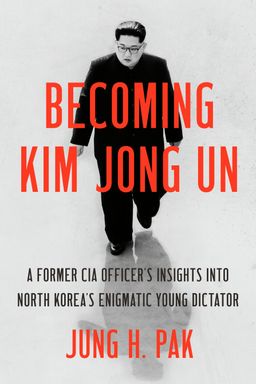
Becoming Kim Jong Un cover

Becoming Kim Jong Un

by Jung H Pak

Becoming Kim Jong Un provides an in-depth analysis of North Korea''s enigmatic leader. Former CIA officer Jung H Pak delves into Kim''s strategic use of nuclear power, his oppressive regime, and his attempts to gain legitimacy through diplomacy. Discover the complexities behind the persona and policies that shape a global threat.

Creating and Sustaining a Modern Dynasty

How can a small, impoverished, isolated state command global attention and survive decades of sanctions and famine? The book argues that Kim Jong Un’s North Korea is not a frozen relic but a dynamically adaptive dictatorship—a system that fuses divine myth, militant deterrence, technological modernization, and terror-based control into a self-reinforcing survival machine. This is a dynasty consciously engineered to survive the twenty-first century by turning ideology into spectacle and coercion into governance.

To grasp this transformation, you have to connect origins to outcomes. Kim Il Sung created the myth, Kim Jong Il refined the control apparatus, and Kim Jong Un modernized both—with consumerism, cyberwarfare, and televised empathy—all wrapped in nuclear deterrence. What emerges is not a static tyranny but a hybrid regime that uses modernization to deepen repression rather than dissolve it (compare the Chinese model of reform and openness; Kim’s path is reform without liberalization).

Myth, Education, and Emotional Rule

You first encounter religious politics: the regime’s juche ideology and suryong worship structured society around filial loyalty. This spiritual core makes loyalty emotional, not institutional. Children grow up learning guerrilla hero stories, rehearsing opera scenes glorifying the Kim bloodline, and memorizing imported lessons of ‘self-reliance’. It’s a national theology that makes dissent sacrilegious. Kim Jong Un reproduces these myths through ritual appearances—factory visits, hugs with schoolchildren, and high-profile parades that merge governance with liturgy.

Inheritance and Grooming

His personal story shapes the dynasty’s ideological evolution. Kim’s Swiss schooling exposed him to Western technology and leisure, but his return embedded him in a militarized education system at Kim Il Sung Military University. His thesis on GPS mapping became propaganda proof of technical mastery. This dual experience—European privilege and North Korean indoctrination—produced a ruler comfortable mixing designer optics with doctrinal rigidity. That upbringing explains why consumer amenities coexist with gulags, and why he styles himself as youthful modernizer while retaining absolute control.

Consolidating Through Fear and Theater

Kim’s first years were an exercise in brutal consolidation. The 2013 purge of Jang Song Thaek displayed both method and message: public accusation, forced confession, and spectacular execution reportedly by antiaircraft guns. It was governance as theater—the spectacle signaling that loyalty must be personal, unconditional, and visible. Purges are not anomalies; they are ritual renewals of authority. Kim replaced the old guard with younger loyalists, creating generational turnover and a new patronage web. Fear breeds dependence, and dependence assures continuity.

From Famine to Managed Prosperity

The collapse of the state distribution system during the 1990s famine birthed illegal markets—jangmadang—which Kim later rebranded as sanctioned spaces of enterprise. These markets gave rise to the donju elite, traders who link the regime to Chinese supply chains. Kim institutionalized their power through construction and spectacle—Pyonghattan towers, water parks, ski resorts—reshaping deprivation into a vision of selective abundance. But markets are risky: they nourish material aspiration that challenges ideological purity. Hence the regime’s simultaneous tightening of informational controls along the border.

Technology and Modernization as Control

Modernity is weaponized rather than liberalized. Kim invests in digital complexes and centers like Mirae Scientists Street, while maintaining isolation through the closed Kwangmyong intranet. The emergence of cyber warfare—shown in the Sony hack (2014) and the Bangladesh Bank heist (2016)—transforms tech expertise into a financial lifeline. Cyber operations feed both prestige and solvency, allowing sanctions circumvention and coercive diplomacy. This modernization serves as camouflage for a system that remains vertically controlled and ideologically rigid.

Nuclear and WMD Continuity

Kim’s doctrine of byungjin—simultaneous pursuit of nuclear strength and economic progress—embeds weapons into national identity. Nukes are not negotiable; they are existential insurance and symbols of sovereignty. They enable diplomatic bargaining and protect against regime removal (Qaddafi’s fall in 2011 looms large as cautionary tale). Chemical and biological weapons, exemplified by VX use in the 2017 Kuala Lumpur assassination, extend that deterrent logic globally, signaling reach and ruthlessness.

Spectacle Diplomacy and Personality Politics

The book contextualizes Kim’s 2018–2019 summitry as image management. Engagements with Moon Jae-in and Donald Trump turned isolation into legitimacy. Personal charisma compensated for lack of substantive disarmament. Trump and Kim, both showmen, treated diplomacy as performance—Singapore’s dreamy videos, Hanoi’s collapse of talks, and the DMZ handshake were theatrical milestones. These spectacles reduced existential pressure temporarily but preserved North Korea’s arsenal.

Ri Sol Ju and Controlled Glamour

Kim’s wife Ri Sol Ju introduces a feminine modernization. Her public appearances rebrand the regime’s image as vibrant and human. She tours factories, hospitals, and summits, projecting prosperity and civility while masking repression. The First Lady phenomenon exemplifies how even gender and fashion become instruments of legitimacy. It personalizes dictatorship for domestic audiences and softens optics abroad, especially in China and South Korea.

Repression Behind the Facade

Behind these aesthetics stands a deep apparatus of surveillance and punishment: inminban neighborhood watch groups, political prison camps estimated to hold 120,000 people, and intergenerational guilt policies. The duality is stark—theme parks and torture cells coexist. Fear substitutes for law; obedience replaces rights. This asymmetry defines North Korea’s resilience: terror makes dissent prohibitively costly.

Strategic Lessons

For policymakers, the book offers cautionary realism. Kim’s apparent rationality hides structural paranoia. His moves—purges, market control, cybercrime, nuclear brinkmanship—follow the logic of regime survival, not reform. Sanctions can squeeze resources but cannot alter this internal calculus without sustained multilateral enforcement tied to verification and information penetration. Personality and performance matter, but systems dominate outcomes. To understand and influence Pyongyang, you must engage both its mythology and its material coercion at once.

Ultimately, the book teaches that modern dictatorship evolves—it can host pop concerts while running gulags, wear designer suits while launching missiles, and speak of peace while executing kin. North Korea under Kim is not changing fast, but it is changing smartly: integrating modern tools to sustain ancient authoritarian instinct.


Purges and Fear as Governance

Kim Jong Un’s rule began with blood and spectacle. The execution of Jang Song Thaek in 2013 was not just revenge—it was governance through terror. By making the purge public and theatrical, Kim signaled that loyalty was a life-or-death performance. The purge reduced the power of the preexisting elite and replaced them with young loyalists who owed their survival and success to Kim alone. This mechanized fear consolidates authority by making obedience the only rational choice.

Theater and Technique

Jang’s arrest and televised humiliation were deliberate choreography. The regime accused him of corruption, treachery, and alliance with foreign interests, portraying his fall as moral cleansing. Execution by antiaircraft guns—an image too absurd to ignore—communicated total annihilation. Similar strategies followed: dozens of envoys and officials purged, decreasing average leadership age, tightening personal dependency networks. North Korea turns repression into ritual, binding elites through shared fear.

Institutional Void

When law is subservient to loyalty, state structures cease to check decision-making. Advisors hear only what reinforces Kim’s narrative. Groupthink and silence produce policy volatility—unchecked brinkmanship, unpredictable foreign policy surges, and potential miscalculation. The book shows how purges create a more cohesive, but riskier, apparatus: obedient yet fragile under shock.

Fear, spectacle, and substitution—these are the alchemy by which personal authority becomes institutional rule in North Korea. The purge system reveals the price of dynastic power: strength through terror and blindness through conformity.


From Famine to Market Power

One of the most surprising evolutions described in the book is economic. The 1990s famine shattered the planned system and forced ordinary citizens to build survival networks—the jangmadang markets. These informal exchanges gradually formalized, giving birth to small entrepreneurs and the donju elite. Kim Jong Un inherited and institutionalized this change, converting necessity into doctrine. He tolerates markets because they stabilize society and generate taxes, yet fences them off ideologically.

The Double Edge of Marketization

Markets feed consumerism, which bolsters Kim’s prosperity narrative. Pyongyang’s skyline—Changjon Street, Mirae Scientists Street—offers visible proof of progress while hiding rural poverty. Water parks and ski resorts generate illusions of affluence. But markets also expose citizens to foreign goods and media, creating cognitive cracks in juche mythology. Hence surveillance intensifies near borders, and punishment for foreign content becomes severe. The state both eats and fears capitalism.

Elite Recalibration

The donju class forms a semi-private economic ecosystem that feeds regime patronage. They depend on state licenses and protection, meaning market success translates into political loyalty rather than opposition. Kim manages this fusion by linking economic privilege to ideological fidelity—donju elites become pillars of stability, not change.

So while marketization elsewhere produced liberalization (as seen in Eastern Europe or China’s partial openings), in North Korea it produced controlled prosperity—consumer desire tethered to dynastic survival.


Weapons and Coercive Leverage

Kim Jong Un’s strategic doctrine—byungjin—unites nuclear and economic development. It’s a paradox of plenty through threat. Nukes secure regime survival and validate claims of national dignity, while economic spectacle ensures domestic legitimacy. The policy is rationally cynical: weapons deter intervention and provide bargaining currency that enables temporary engagement and sanctions relief without surrender.

Deterrence Psychology

Kim learned from history: Qaddafi’s downfall cemented disarmament as deadlier than defiance. Each nuclear test or missile launch triggers international outcry but strengthens domestic respect. In the 2012 constitutional revision declaring North Korea a ‘nuclear-armed state,’ deterrence becomes identity. Weapons are political symbols as much as military assets.

Chemical and Biological Dimensions

The VX nerve agent killing of Kim Jong Nam extends deterrence logic into personal security abroad. It demonstrated a willingness to use WMD-grade tools for punishment. Analysts cite multiple chemical production sites and dual-use biological labs, indicating latent capacity. This unorthodox arsenal raises global proliferation risks and secures regime control through fear of invisibility and reach.

Cyber as Modern Weapon

North Korea’s hackers steal funds and project vengeance at minimal cost. Sony Pictures (2014), Bangladesh Bank (2016), WannaCry (2017)—each case reveals the regime’s evolution from disruption to monetization. Cyber warfare circumvents traditional sanctions and finances weapon programs. It’s deterrence, diplomacy, and revenue combined. Kim’s digital army represents twenty-first-century coercion.

Together, nukes, chemicals, and code compose an integrated defense and offense philosophy—survival through multifaceted intimidation.


Diplomacy as Theater

Between 2018 and 2019, Kim Jong Un turned provocation into pageantry. His diplomatic metamorphosis—from missile tests to handshakes at Panmunjom and Singapore—recast him as global statesman. The book shows this was not conversion to peace but tactical image-making. Engagement softened sanctions enforcement and split allies while leaving nuclear foundations intact.

Maximum Pressure, Maximum Pivot

Sanctions strangled exports and pushed Kim toward stage-managed diplomacy. The 2018 Winter Olympics led to inter-Korean summits, opening space for U.S.–North Korea summitry. Each step traded visibility for constraint: Kim closed test sites, paused launches, but never dismantled the capability.

Personality Politics

Trump’s and Kim’s shared penchant for spectacle made the summits performative. Singapore’s cinematic video and Hanoi’s abrupt failure epitomize diplomacy built on charisma instead of verification. Their personal chemistry generated news cycles, not treaties. Mirror-imaging—the belief that opponents think like you—fueled mutual missteps: Trump saw real-estate potential where Kim saw regime insurance.

Outcome and Limits

Summits produced optics of progress without substance. Sanctions weakened during engagement, markets regained breathing space, and global sympathy diluted pressure. The book’s verdict: spectacle substitutes for policy only when audiences mistake theater for change.

Kim’s diplomacy is strategic theater—a show that buys time and legitimacy while leaving power untouched.


Information, Repression, and Resistance

North Korea’s resilience rests as much on suppression as on spectacle. The gulag system and surveillance apparatus sustain obedience. Camps (kwanliso, kyohwaso) institutionalize punishment through labor, starvation, and intergenerational guilt. Neighborhood officers watch every home. Repression is discipline, not chaos—it’s designed feedback control ensuring that ideology remains unchallenged.

Mechanics of Control

The state maintains dense social organization: each citizen belongs to an inminban monitored group. Deviation—watching foreign dramas, failing to display portraits correctly—can trigger detention. Terror becomes routine, habituated through fear conditioning. This architecture prevents collective action and preserves regime insulation from genuine feedback.

Policy Implications

International actors must recognize repression as rational infrastructure. Information campaigns—radio broadcasts, USB smuggling, cultural exchanges—are strategic weapons. Liberalization won’t occur through diplomacy alone; it needs cracks in the information wall. The book argues for pressure that couples sanctions with human-rights engagement, challenging not just weapons but the ideology sustaining them.

North Korea’s silence is manufactured. Breaking that silence—through knowledge, exposure, and sustained coalition effort—is the only path to lasting change.


Strategic Lessons for Policy

After dissecting Kim Jong Un’s hybrid dictatorship, the book turns to prescriptions. It argues that stable deterrence requires disciplined coordination among allies, a long horizon for sanctions enforcement, and clear verification rules. You cannot outmaneuver spectacle by improvisation; you need structure, patience, and clarity. Pressure and persuasion must be synchronized.

Multilateral Unity

The U.S., South Korea, and Japan must present unified responses to missile and nuclear escalations. Coordination deters unilateral gambits and signals resolve to Beijing. A credible deterrent rests on alliance cohesion, not rhetoric.

Verification over Vision

Diplomacy must institutionalize verification—declarations, inspectors, timelines. Symbolic handshakes cannot dismantle enrichment facilities. Sustained talks should involve multiple parties to avoid personality-driven collapses after leadership changes.

Empowering Information Flow

The book concludes with moral realism: empowering North Koreans through exposure. Broadcasting, smuggled media, and educational outreach incrementally erode regime control. Over time, rising expectations can destabilize authoritarian structures more effectively than short-lived coercion.

Balanced Discipline

Every policy must calibrate carrots and sticks carefully. Reward verifiable steps only. Avoid concessions that only grant legitimacy. Be patient: regimes built on terror adapt slowly. Only sustained multilateral resolve—economic, informational, and moral—can gradually shift Kim’s calculus.

In sum, change in North Korea demands endurance, precision, and unity. Realism must coexist with empathy, but it must never collapse into wishful thinking.

Dig Deeper

Get personalized prompts to apply these lessons to your life and deepen your understanding.

Go Deeper

Get the Full Experience

Download Insight Books for AI-powered reflections, quizzes, and more.