
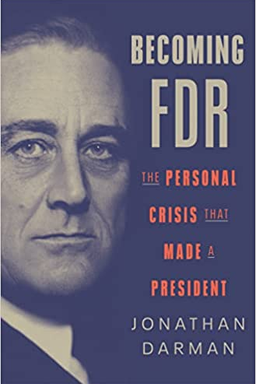
Becoming FDR cover

Becoming FDR

by Jonathan Darman

Becoming FDR unveils how Franklin D. Roosevelt''s battle with polio transformed him into a leader of empathy and resilience. With Eleanor Roosevelt''s unwavering support, FDR''s journey through personal adversity redefined leadership, guiding America through the Great Depression and World War II.

Reinventing Franklin: Performance, Adversity, and Renewal

How does a man shaped by privilege and image become the voice of a suffering nation? The book traces Franklin D. Roosevelt’s transformation—from an ambitious patrician who mastered performance to a paralyzed man who reinvented leadership through empathy, strategy, and narrative control. More than a biography, it’s a study in how personal crisis becomes political strength. You begin with Roosevelt’s pre‑polio career, see him collapse at Campobello, and follow his deliberate reconstruction—emotional, physical, and ideological—through Warm Springs, Eleanor’s rise, domestic reinvention, and the art of managing image and message.

From the stage to the sickroom

Before 1921 Franklin is a performer. He models himself on Theodore Roosevelt, believing vigor and visibility equal authority. At the 1920 San Francisco Convention he steals New York’s delegation standard, a theatrical act that wins a vice‑presidential nomination and confirms that spectacle can outweigh substance. Journalists celebrate his looks, style, and energy. Yet this dependence on appearance hides fragility: behind charm lies limited legislative accomplishment and occasional political naïveté. The author suggests that this 'politics of surface' will later collide with the reality of paralysis.

The shock of illness and confrontation with reality

In August 1921 at Campobello, Roosevelt’s body fails him. Fever gives way to paralysis; early misdiagnosis and misguided massage treatments worsen damage. Medical error and secrecy intertwine—family and aides fear public exposure as much as health loss. Louis Howe organizes evacuation by stretcher and train window to conceal the crisis from reporters. From that moment onward, physical debility becomes inseparable from political calculation. The episode dramatizes how private trauma becomes a test of public control.

Convalescence as strategy

Recovery is not just medical; it’s organizational. Howe, Delano, and Eleanor form the inner circle that keeps Roosevelt’s name alive while his body heals. Letters from Delano advise 'accept things as they are' yet cultivate inner will—a theme echoing Stoic philosophy and modern psychology alike. Franklin learns patience, depth, and listening. His time in bed turns into a school for reflection. If before he chased attention, now he studies timing, uses reading to develop substance, and hones voice and empathy. Illness strips him of movement but offers maturity.

Eleanor’s transformation and partnership

Eleanor’s own reinvention parallels Franklin’s. Betrayed by his affair with Lucy Mercer and freed by the crisis of polio, she builds a life of purpose—joining the League of Women Voters, organizing working women, and establishing Val‑Kill as a base for teaching and social reform. Politics becomes her therapy and her self‑assertion. By the mid‑1920s, she’s not an appendage to Franklin but an independent operator who mobilizes female networks, shapes policy debates, and inspects prisons and factories. This partnership—she brings empathy and firsthand observation; he brings synthesis and authority—creates the two‑headed modern presidency that will later steer the New Deal.

Warm Springs and the moral of usefulness

The move to Warm Springs, Georgia, transforms healing into mission. Initially seeking a cure, Roosevelt ends up creating a community of patients working together toward recovery. He insists on equality in the pool and on practical self‑help—everyone pulls, swims, and builds confidence. In converting the spa into a foundation, he replaces privilege with service. The 'spirit of Warm Springs'—the idea that dignity comes from participation, not pity—prefigures his New Deal: social programs should help people help themselves. Observing fellow patients regain self‑respect teaches him that collective recovery begins with restored usefulness. (It’s a clear historical link between rehabilitation therapy and later labor policies.)

The new language of leadership

Roosevelt’s later excellence in rhetoric and radio emerges from these experiences. Unable to stride onto stages, he learns to reach audiences through voice and story. By the 1932 campaign, his 'Forgotten Man' speeches and warm, conversational tone turn hardship into shared moral narrative. The mastery of medium—broadcast intimacy, simple imagery, personal reassurance—replaces muscular display as his chief instrument of persuasion. The roaring crowd that once depended on sight now depends on hearing, and he becomes the first modern, media‑savvy leader to make that transition successfully.

Politics as crafted appearance

Even as empathy deepens, Roosevelt never abandons control of image. He forbids photographs showing his braces, choreographs entrances, and turns his physical limitations into metaphors of courage. The choreography at the 1924 convention, the train‑car campaigns, and the stage‑managed family tableaux form a consistent strategy: conceal weakness, project fortitude. In this sense, his disability refines rather than negates the theatrical instincts he began with. The difference is purpose—showmanship now conveys moral seriousness, not vanity.

From rehabilitation to renewal of democracy

By the time he wins the 1932 nomination—secured through patient coalition‑building, delegate strategy, and last‑minute deals—FDR is both a changed man and a changed idea of leadership. His slow, deliberate recovery becomes the template for how he guides a broken nation: diagnose carefully, conceal panic, act decisively when ready. Across every page of the book, you see how personal adversity, disciplined self‑reinvention, and mastery of communication converge to produce a leader capable of giving an anxious people what he once had to build for himself—a reason to believe in recovery.


Ambition, Image, and Pre‑Polio Politics

In his early years, Franklin D. Roosevelt operates in the shadow of Theodore Roosevelt, treating politics as performance. Handsome, athletic, and charming, he learns that visibility often substitutes for substance. The book captures this phase vividly—parades, conventions, and the aesthetics of authority determine his fortunes far more than policy innovations. At the 1920 Democratic National Convention, he turns a dramatic gesture—snatching New York’s standard from Tammany guards—into national headlines. You learn that before polio, Franklin’s greatest currency is appearance itself.

Spectacle as political capital

You watch him understand that public life rewards theatricality. Conventions serve as live stages where charisma equals power. Yet this approach cuts both ways: while charm wins attention, it also invites mockery from insiders like Al Smith and Teddy’s relatives who call him a lightweight. His early failures expose limits—rocked by 1920’s defeat, he retreats to reflection rather than immediate resurgence. The author threads the warning: dependence on surface confidence makes crisis inevitable because authenticity hasn’t yet fused with image.

The lessons beneath the posture

Still, these years teach important craft: timing, rhythm, and the ability to embody ideals visually. Roosevelt’s ease with humor and gesture later translates into radio intimacy. Polio doesn’t erase his actor’s instinct; it matures it. You realize that every later stage move—the controlled photograph, the confident speech cadence—has roots in the pre‑polio theater of politics. He learns that what mattered was not just words but appearances—yet illness will eventually teach him how words themselves can generate new appearances in the public imagination.


The Crisis at Campobello

The 1921 attack of polio on Campobello Island marks the hinge of Roosevelt’s life. At thirty‑nine, he goes from athletic glow to limbs that no longer obey command. The narrative details doctors’ confusion and the family's despair—the massage that worsens paralysis, the misdiagnoses, and the secrecy surrounding the disease. Louis Howe organizes an ingenious evacuation by night boat to minimize exposure to reporters. This moment compresses three battles: for health, privacy, and political survival. FDR’s story here stands as both medical drama and crisis management case study.

Disease as revelation

Polio exposes weakness but also clarity. The author argues that misfortune stripped Roosevelt of pretension, leaving him the essential learner rather than the born actor. The experience reveals character under erasure of control—he endures humiliation (loss of bladder control, pain, immobility), yet accepts discipline. Howe and Eleanor learn logistics of secrecy; Sara Delano wages war against scandal. The episode demonstrates how even catastrophe becomes organized under Rooseveltian management.

The seed of a new political ethic

You begin to see values that later animate his presidency: humility, interdependence, and strategic patience. The Campobello ordeal transitions Roosevelt from singular ambition to collective dependence—a man who must trust doctors, aides, and family learns the cooperative instinct that will define the New Deal. Private adversity becomes rehearsal for public leadership: both require confronting paralysis—bodily or economic—with deliberate reinvention.


Convalescence, Eleanor, and Parallel Transformations

Recovery stretches across years and households. While Franklin learns fortitude, Eleanor learns freedom. She channels betrayal into activism—organizing with the League of Women Voters and partnering with reformers like Esther Lape and Elizabeth Read. In New York City, she cultivates a network of women who think rigorously and act strategically. The book entwines their stories: illness converts dependence into cooperation; marriage evolves into collaboration. Each learns to build through limitation.

Louis Howe’s architecture and inner circle

Louis Howe orchestrates Franklin’s controlled return, balancing visibility with secrecy. Photographs show an upbeat patient; doctors provide reassuring statements. Missy LeHand manages daily routine. Their townhouse becomes half‑office, half‑sickroom—a fusion of private care and political planning. Eleanor’s role expands to public surrogate. Together they construct what the author calls a 'domestic machine'—a team of loyalty, intellect, and affection supporting one immobile center.

Family reconstruction and Val‑Kill innovation

Sara Delano’s dominance contrasts with Eleanor’s new household experiments at Val‑Kill. Eleanor redefines family as chosen alliance—inviting Marion Dickerman and Nancy Cook into a cooperative life mixing home, workshop, and social laboratory. This female‑led enterprise foreshadows a modern concept of work‑life integration. Private architecture mirrors political experiment: flexible, inclusive, functional. In viewing these intertwined recoveries, you understand why the Roosevelts’ eventual partnership transcends marriage—it merges purpose.

Emotional balance as political foundation

By reconstructing life amid loss, both Roosevelts internalize empathy as governing strength. Eleanor’s courage to engage neglected communities equips Franklin with eyes in the field. Franklin’s patience grounds Eleanor’s idealism. Together they turn personal trial into a shared ethic: leadership as caregiving expanded to the body politic.


Warm Springs and the Spirit of Service

Warm Springs, Georgia, stands as the physical and moral heart of Roosevelt’s transformation. What begins as a personal therapy ends as a social mission. In the pools where polio patients regain motion, Roosevelt discovers principles that will guide his administrative philosophy. The book portrays Warm Springs as laboratory, school, and moral compass.

From cure to community

Initially, FDR arrives looking for healing. He stays to build infrastructure—a foundation, accessible cottages, and therapy programs. The wealthy guests recoil from the sight of wheelchairs; Franklin converts the resort into a democratic community of effort. Everyone contributes within capacity; everyone eats together. That change from resort to rehabilitation colony symbolizes his own transition from individual ambition to collective purpose.

Lessons in practical compassion

Roosevelt’s experiments with therapists like Alice Lou Plastridge and Dr. Michael Hoke show a belief in agency: recovery is movement plus confidence. Hoke’s remark—that a child makes victory by doing a task himself—becomes Roosevelt’s social creed. When he later develops public works programs, that same conviction drives him: relief must preserve dignity through participation. The buoyant water echoes in the Civilian Conservation Corps—both turn incapacity into capacity through structured, hopeful work.

Moral education and leadership training

Warm Springs re‑educates Roosevelt in humility and service. Surrounded by 'little giants of confidence,' he learns that leadership grows from shared struggle, not authority. The community spirit there translates directly into national policy design. The author calls it moral engineering: transforming sympathy into systems that enable independence. Warm Springs demonstrates, in microcosm, how Roosevelt’s empathy acquires institutional form.


Theater, Secrecy, and Managed Visibility

Roosevelt’s illness forces him to master a new art: selective visibility. With Howe’s help, he learns to choreograph every appearance. The same man who once sought cameras now dictates their angles. His prohibition—'No movies of me getting out of the machine, boys'—turns into informal law among journalists. This choreography yields one of the most successful image reconstructions in political history: the public sees confidence, not crutches.

Political theater as armor

At the 1924 Madison Square Garden convention he appears to nominate Al Smith. Every movement up the ramp costs pain but earns admiration. Reporters emphasize courage over infirmity. Four years later, during the gubernatorial campaign, he reverses insult into message—cracking jokes about being 'an unfortunate sick man.' The symbolism—fallen man who rose again—becomes political myth. By controlling what is seen and what is not, he converts vulnerability into narrative advantage.

Mechanics of concealment

Roosevelt’s aides perfect the optics: ramps instead of stairs, sturdy chairs instead of podium climbs, family beside him on train platforms to anchor balance. Doctor statements and articles about 'improving health at Warm Springs' serve as public updates, half truth and half performance. The fusion of concealment and inspiration ensures continuity—he remains viable despite paralysis. It also reveals America’s hunger for moral storytelling; the leader who overcomes physical immobility becomes symbolic antidote to national stagnation.

Performance as authenticity

The irony lies in sincerity: FDR’s performances work because they rest on genuine struggle. Every speech, even staged, draws energy from real endurance. The book argues that his disability becomes integral to his credibility; he speaks of hope because he survived hopelessness. Thus political theater ceases to be deception and becomes pedagogy—a visual sermon that teaches resilience to a watching nation.


Mastering Reform and the Language of Recovery

Between 1930 and 1933, Roosevelt translates the lessons of illness and experiment into governance. Two principles dominate: act only after disciplined listening, and communicate with clarity that transforms fear into resolve. His leadership combines patience, flexibility, and linguistic precision, turning crisis into opportunity.

Patience as political method

Convalescence taught him to advance inch by inch; politics now follows that rhythm. FDR listens to diverse advisers—the Brains Trust of Moley, Tugwell, and Berle—synthesizing ideas without rigid ideology. He refuses Hoover’s pre‑inaugural traps and acts only when his plan is his own. His maxim 'You must let me be myself' reveals belief that authentic conviction outranks haste. Yet that patience prepares decisive action—the instant inauguration arrives, he calls the bank holiday that calms panic within days.

The birth of a new political language

Radio becomes his new stage. In 1932’s Lucky Strike Hour he introduces 'the forgotten man' as moral anchor for recovery. The metaphor arises directly from Warm Springs—where dignity came from work, not pity. As president, the fireside chats continue this technique: explaining complex policy in familiar terms. His cadence—part confessional, part tutorial—makes vast audiences feel seen. He articulates national psychology as much as policy: identifying fear as the true adversary. The inaugural phrase 'the only thing we have to fear is fear itself' compresses decade‑long learning into one therapeutic sentence.

From recovery to renewal

By linking personal rehabilitation to national revival, Roosevelt forges a new kind of authority: empathetic, pragmatic, and pedagogical. His governance mirrors his therapy—measure, adapt, and communicate hope. The book closes by suggesting that FDR’s greatest innovation lies not in policy detail but in moral leadership—the power to make recovery imaginable because he lived it. His journey from Campobello to the fireside chats shows how private endurance shapes public renewal, proving that true leadership often begins with learning to move again, one careful step at a time.

Dig Deeper

Get personalized prompts to apply these lessons to your life and deepen your understanding.

Go Deeper

Get the Full Experience

Download Insight Books for AI-powered reflections, quizzes, and more.