
Idea 1
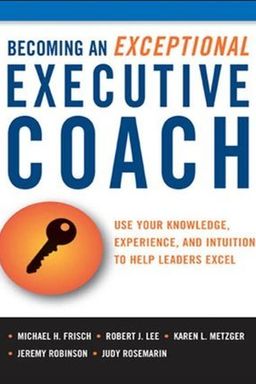
Becoming an Exceptional Executive Coach
Have you ever wondered what it truly takes to guide a leader toward transformation—not just giving advice, but sparking authentic growth? Becoming an Exceptional Executive Coach by Michael Frisch, Robert Lee, Karen Metzger, Jeremy Robinson, and Judy Rosemarin seeks to answer that question by showing you how executive coaching is both art and science. It isn’t simply about fixing performance or handing out strategies. It’s about cultivating deep, personal change inside organizational realities while developing your own mastery as a coach.
The authors argue that to be exceptional, you must move beyond replicating coaching techniques. You must design your own Personal Model of Coaching—a synthesis of who you are, what you know, and how you serve your clients. This model integrates self-awareness, professional experience, coaching competencies, and relationship-building into a coherent framework so that you operate with clarity, confidence, and flexibility rather than relying on rote methods.
Executive Coaching as a Whole-Person Practice
Executive coaching occupies a unique space between psychology, consulting, and leadership development. Coaches are not therapists or consultants, but facilitators of discovery who engage with executives one-on-one inside complex organizational ecosystems. This book stresses that coaching is a whole-person practice: your personality, emotional intelligence, and life experiences shape how you guide others. You help leaders align personal growth with organizational goals—developing their self-management, communication, and leadership impact.
The authors trace how executive coaching evolved from the 1980s onward, influenced by psychology, management theory, and organizational consulting. Today, it’s both internal and external—delivered by hired specialists or trained employees within organizations. They emphasize that while experience as an executive helps, true coaching success depends on competencies like self-management, empathy, insight, and optimism, which are developed through intentional reflection and practice.
The Core Argument: Design Your Personal Model
At the heart of the book lies the Personal Model concept. No two coaches should operate the same way. Your Personal Model forms the blueprint for your coaching identity. It blends six elements—three inputs and three outputs.
- Inputs: who you are (your characteristics and experiences), how you work inside organizations, and what coaching methods resonate with you.
- Outputs: your preferred approach to coaching, your plan to build a practice, and your personal development plan to keep growing.
Through this model, you learn to operate with intentionality. You craft your process, define your boundaries, and decide how you handle relationships, sponsor expectations, and ethical dilemmas. You guide clients from discovery to change to closure, while continuously refining your method through reflection and feedback.
Why These Ideas Matter
The authors argue that exceptional coaches not only help leaders grow—they grow alongside them. Coaching develops your self-awareness, patience, and capacity for empathy. It teaches you to balance action and reflection, advocacy and restraint, optimism and realism. And in the workplace, it can transform not just individual leaders but whole organizational cultures by modeling curiosity, respect, and accountability.
Ultimately, Becoming an Exceptional Executive Coach is both a manual and philosophical guide. It shows you how to build trust with clients, manage sponsors, interpret assessments, encourage self-reflection, and handle closure with grace. But more crucially, it’s a mirror—inviting you to investigate who you are as a helping professional and how that identity shapes the transformation you enable in others. If you embrace that journey, you’ll not just coach executives—you’ll empower human growth.