
Idea 1
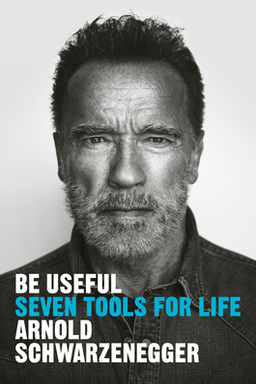
Be Useful: Arnold Schwarzenegger’s Life Blueprint for Purpose and Impact
What does it really mean to live a useful life? In Be Useful: Seven Tools for Life, Arnold Schwarzenegger turns decades of extraordinary experiences—from his days as a poor Austrian kid dreaming of America to becoming a global icon—into a pragmatic philosophy for anyone seeking meaning, direction, and resilience. His father once gave him one simple instruction: "Be useful". That advice, Schwarzenegger insists, became the organizing principle behind every success and comeback across his four distinct life acts: bodybuilder, actor, governor, and now, philanthropist and mentor.
In this book, Schwarzenegger argues that modern life is drowning in negativity, victimhood, and distraction. You can’t wait for luck, validation, or rescue—you must pick up your tools and build the life you envision. Through seven guiding principles, he shows you how to develop clarity of purpose, work relentlessly, adapt strategically, communicate your vision, listen and learn, and ultimately devote yourself to others. These aren’t abstract ideas; they’re methods forged in sweat, failure, and the gym-like repetition of habit formation.
From Rock Bottom to Redemption
Schwarzenegger anchors this philosophy in a brutally honest reflection on his lowest point: after leaving the California governor’s office in 2011, his personal life imploded. His family broke apart after the revelation of an affair, his career stalled, and his public image crumbled. Yet this collapse became a crucible, forcing him to reapply the very tools that had built his earlier lives. Instead of giving in to shame, he analyzed what went wrong, rebuilt his routines, and rediscovered his purpose—this time, not as a conqueror, but as a servant and teacher. That idea—reinventing usefulness after failure—forms the book’s emotional and moral spine.
Seven Tools for a Useful Life
Schwarzenegger organizes his lessons around seven “tools,” each a chapter of the book: Have a Clear Vision, Never Think Small, Work Your Ass Off, Sell, Sell, Sell, Shift Gears, Shut Your Mouth, Open Your Mind, and Break Your Mirrors. Together, these tools outline his blueprint for usefulness. Each one addresses a common modern paralysis—confusion, fear, laziness, cynicism, rigidity, arrogance, and self-obsession—and offers actionable steps to overcome it.
- Vision: Know exactly what you want your life to look like.
- Ambition: Dream audaciously and refuse small thinking.
- Effort: Outwork everyone, because effort compounds like interest.
- Persuasion: Sell your vision relentlessly and communicate effectively.
- Adaptability: Embrace change and turn obstacles into momentum.
- Learning: Listen deeply, stay curious, and learn from everyone.
- Service: Use your power and success to lift others and multiply good.
The arc of these tools mirrors his own evolution—from self-focused striving to world-focused contribution. In this sense, Be Useful is not only a success manual but a moral reckoning. It’s a manual for maturity, teaching that true purpose comes when ambition becomes generosity.
Why These Lessons Matter Now
Schwarzenegger writes against a backdrop of cynicism and mental exhaustion in society: anxiety, depression, outrage addiction, and aimlessness. He argues that we’ve forgotten the power of taking responsibility and using practicality as a psychological anchor. His antidote is usefulness—a mindset where self-worth stems from contribution, not comparison. In many ways, Be Useful mirrors Viktor Frankl’s message in Man’s Search for Meaning: Choose purpose over despair by giving yourself to something larger.
Schwarzenegger doesn’t deny hardship; he reframes it. Every pain, he says, is “proof of progress.” Every setback becomes training for a comeback. His examples are vivid: losing his first American bodybuilding competition taught him the discipline to refine his weaknesses; rejection in Hollywood forced him to become a brand, not just an actor; political defeat sharpened his empathy. Each phase required reincorporating the same principles under new circumstances—a lifelong mental gym.
A Conversation Between the Old and New Schwarzenegger
Unlike his autobiography Total Recall, which celebrated achievement, Be Useful engages with vulnerability. It’s a dialogue between the young man obsessed with becoming the best and the older man devoted to being of use. The youthful drive for dominance becomes the mature drive for relevance and service—a shift many leaders (from Nelson Mandela to Bill Gates) experience in later life. For Schwarzenegger, usefulness is how ambition graduates into wisdom.
Core Message
You cannot control where you start, but you can always choose to be useful. Use your vision to locate purpose; your effort to push through resistance; your curiosity to keep learning; and your compassion to give back. In doing so, you transform struggle into service—and usefulness into happiness.
By the end of the book, it’s clear that Be Useful is more than a motivational guide—it’s a call to moral responsibility. Usefulness, in his definition, bridges personal growth and public good. And that, Schwarzenegger insists, is how you build not just a successful life, but a meaningful one.