
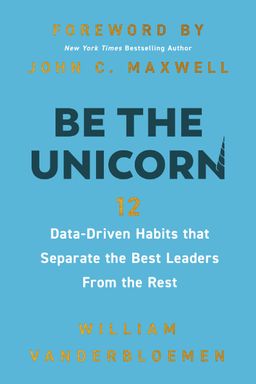
Be the Unicorn cover

Be the Unicorn

by William Vanderbloemen

Be the Unicorn offers a roadmap to personal and professional excellence, revealing 12 habits that distinguish top leaders. Learn to blend essential soft skills with strategic foresight and adaptability, ensuring your success in an AI-driven world.

Becoming a Modern Unicorn: Irreplaceable in a World of Abundance

What truly makes one person stand out when so many others have similar qualifications? In Be the Unicorn, William Vanderbloemen argues that you don’t need supernatural gifts, rare luck, or family connections to become indispensable—you need habits. Drawing on fifteen years of executive search and over thirty thousand top-level interviews, Vanderbloemen distills the twelve teachable traits that make people magnetic, productive, and irreplaceable in any organization. He calls these people “Unicorns”—rare individuals who consistently rise above the rest because they’ve learned to master traits that machines can’t replicate: authenticity, curiosity, empathy, and purpose.

Vanderbloemen’s central claim is that while natural talent matters, what truly distinguishes the best leaders are data-proven behaviors that anyone can learn. These twelve habits—ranging from being Fast and Authentic to Purpose Driven—are not mystical talents, but consistent patterns of thought and action that elevate performance, relationships, and leadership impact. Each can be intentionally developed with awareness and practice.

Why “Unicorns” Matter in the Modern Age

According to Vanderbloemen, the 21st century career landscape makes being a Unicorn more valuable—and more necessary—than ever. Global competition, AI automation, and multigenerational workplaces have commodified skills that once ensured success. But technology can’t replicate soft skills: empathy, curiosity, anticipation, and purpose. These human abilities now define career longevity, while technical competence alone is no longer enough.

As Vanderbloemen discovered during the pandemic lull in his company’s work, soft skills became the best predictors of resilience and long-term success. He realized that machines may outperform humans at calculation and efficiency, but will always struggle to imitate what he calls people chemistry—the ability to respond quickly, authentically, and meaningfully to others. His firm’s own data confirmed that when two candidates have equal technical skill, the one who “plays well with others” almost always wins the job.

The Twelve Traits of a Unicorn

These findings led Vanderbloemen to identify twelve recurring traits among top performers across industries:

  • The Fast – acting decisively and reducing response time.
  • The Authentic – building trust through transparency and integrity.
  • The Agile – adapting swiftly to change and challenges.
  • The Solver – focusing on solutions, not problems.
  • The Anticipator – seeing what’s coming and preparing for it.
  • The Prepared – doing the homework before opportunities arrive.
  • The Self-Aware – knowing strengths, weaknesses, and triggers.
  • The Curious – asking questions, exploring ideas, remaining teachable.
  • The Connected – nurturing relationships across boundaries.
  • The Likable – creating goodwill through empathy and warmth.
  • The Productive – making measurable results out of limited time.
  • The Purpose Driven – aligning daily actions with meaningful mission.

Each chapter interweaves research with storytelling—featuring case studies from figures like Blake Mycoskie (Toms), Warren Buffett, Ursula Burns, and Anthony Fauci—to demonstrate that brilliance alone doesn’t separate exceptional leaders from average ones. These modern “Unicorns” cultivate habits that turn potential into sustained influence.

Soft Skills as Strategic Advantage

At its heart, the book reclaims soft skills as power skills. Vanderbloemen insists that empathy, anticipation, and authenticity aren’t secondary virtues—they’re primary engines of success. Machines can process, but they can’t connect. As he notes, “Soft skills win.” Every search his firm conducted revealed that cultural fit and relational intelligence predict success far better than resume bullet points.

This redefinition of “talent” mirrors the thinking of experts like Daniel Goleman (Emotional Intelligence) and Angela Duckworth (Grit): consistent emotional maturity and self-awareness outpace raw intelligence. Vanderbloemen adds a faith-informed lens—valuing service, humility, and contribution as the true measures of leadership excellence.

Why This Journey Matters

Becoming a Unicorn isn’t about self-promotion—it’s about sustainability and meaning in a noisy, AI-driven world. Vanderbloemen challenges readers to develop a personal code: respond faster, act humbler, tell the truth, stay adaptable, and live purposefully. These qualities make you “irreplaceable” not because you’re perfect, but because you’re human in the best sense of the word.

As leadership guru John C. Maxwell writes in the foreword, the journey is “a manual for becoming unusually successful—as unusual as a mythical unicorn.” What makes Vanderbloemen’s approach fresh is the blend of hard data and heart-level insight. It’s a call to master teachable, everyday behaviors that elevate careers, deepen relationships, and future-proof your human value. In the chapters that follow, each trait reveals a new layer of what it means to lead, influence, and thrive as the kind of person everyone wants on their team—and no one can imagine replacing.


Speed Wins: Acting Fast Without Fear

In a distracted world of long email threads and delayed responses, Vanderbloemen opens with a simple truth: response time matters. The first habit of every Unicorn is speed—not reckless haste, but decisive movement. The data from his search firm revealed that candidates who responded to outreach within minutes were far more likely to be hired and rated highly by their colleagues. Being “Fast” is about responsiveness, discernment, and courage in the face of uncertainty.

Speed as a Competitive Edge

Vanderbloemen observes how entrepreneurs like Blake Mycoskie (Toms Shoes) and creators like Lin-Manuel Miranda embody speed in action. Mycoskie’s career leaps—from launching a laundry business to starting Toms—were driven by his quick decision-making and willingness to act while others hesitated. Likewise, Miranda’s lightning-fast creative improvisations on late-night shows mirror his ability to act on creative impulses without overthinking. The modern leader, Vanderbloemen notes, must emulate this rhythm of observation and immediate response.

The Neuroscience of Hesitation

Humans are biologically wired to delay. Vanderbloemen cites how our brain’s limbic system craves safety and comfort, often overriding the prefrontal cortex that governs initiative. This ancient survival mechanism kept our ancestors from getting eaten by saber-toothed tigers, but today it keeps us from replying to critical opportunities. The cost is measurable: a 2021 sales study showed leads responded to within five minutes were eight times more likely to convert than those reached later. In other words, waiting is losing.

Courageous, Not Careless

“Being fast doesn’t mean saying yes to everything,” Vanderbloemen warns. It means responding quickly with discernment. He quotes startup wisdom—“beware of distractions disguised as opportunities”—and teaches readers to separate “heck yes” impulses of emotion from well-aligned decisions of purpose. Fear is usually the bottleneck, so learning to distinguish fear from wisdom is essential.

Breaking Speed Barriers

Speed depends on two things: access and confidence. Keeping communication tools within reach and checking in regularly reduces lag; trusting yourself accelerates decisions. Vanderbloemen’s own hiring process includes a playful “Text Test”—sending late-night messages to candidates to gauge how quickly they respond. Those who engage warmly and promptly usually succeed long-term. Speed, he concludes, is not about frenzy but responsiveness rooted in self-trust.

“Quick response time in business and relationships is almost always beneficial. Learn to act now and refine later.”

Ultimately, being Fast means embodying energy and readiness—qualities that make you magnetic to leaders, clients, and collaborators. As Vanderbloemen’s mentor once told him when confronted by indecision, “If I can do something right away, it’s usually the best time to get it done.” In a world that rewards instant access and results, speed isn’t rashness—it’s relevancy.


Authenticity Beats Perfection

If speed opens doors, authenticity keeps them open. Vanderbloemen’s research shows that organizations rarely suffer from overly honest employees—but they consistently fail from hidden agendas and inauthentic posturing. The Authentic leader thrives by being real, grounded, and open to imperfection. Warren Buffett, Greta Thunberg, and everyday professionals who own their mistakes exemplify what makes authenticity magnetic.

Owning Mistakes and Building Trust

Buffett famously said: “It takes twenty years to build a reputation and five minutes to ruin it.” Vanderbloemen uses Buffett’s lifelong transparency as proof that people follow those who tell uncomfortable truths. He contrasts modern “faked perfection” seen in curated social media lives and billion-dollar start-up facades (WeWork, Theranos) with what actually endures—consistency between words and actions. Authenticity, unlike charisma, is reproducible because it relies on humility and honesty.

Vulnerability Builds Bridges

Through stories of leaders who openly acknowledge flaws—like a pastor candidate who admitted past moral struggles to his potential employer—Vanderbloemen shows vulnerability as a credibility multiplier. Transparency isn’t weakness; it’s proof of courage. Admitting “what went wrong and what I learned” transforms failure into relational capital. As one survey participant explained, admitting shortcomings “helps others feel safe to be authentic too.”

The Right Amount of Truth

Authenticity isn’t radical exposure. Vanderbloemen recalls a saying from his father’s law practice: “Always tell the truth; just don’t always be a-tellin’ it.” The goal is responsible disclosure—being open enough to build trust without oversharing for sympathy or spectacle. Leaders who can calibrate this balance demonstrate emotional maturity—and create teams where psychological safety thrives (a concept also reinforced by Google’s Project Aristotle).

Authenticity at Work

At Vanderbloemen Search Group, transparency is institutionalized. Office conversations happen in open spaces, and candidates who candidly disclose being fired often score higher than those who dodge the question. Authentic leaders model fallibility and invite learning. As one respondent put it: “People nod at your success but remember you for how you handled failure.”

In the end, authenticity beats perfection because it fosters endurance. People connect with humanity, not polish. As Vanderbloemen writes, “Being authentic is easier than keeping track of your lies.” In a world where filters dominate and vulnerability seems risky, realness has once again become a competitive advantage.


Agility: Thriving in Unpredictable Times

The pace of global change has never been faster—and will never be this slow again. That’s why Vanderbloemen calls Agility one of the make-or-break Unicorn traits. Agile people, like Lizzo or Ursula Burns, pivot gracefully, adapting to pressure without panic. Agility combines humility, curiosity, and flexibility; it resists rigidity by asking, “What if we tried another way?”

Adaptation as Advantage

During the COVID-19 pandemic, Vanderbloemen’s firm survived by launching a simplified service—Vanderbloemen Teams—after their core business stalled. This quick pivot shows how agility, not stability, defines survival. Similarly, Ursula Burns’ rise from intern to Xerox CEO exemplifies lifelong flexibility—she said yes to new roles long before she felt ready, proving that agility often appears as courage disguised as curiosity.

Diversity Fuels Agility

An agile organization is inherently diverse. People from different backgrounds introduce variety in perspectives, enabling faster innovation. Vanderbloemen argues that diversity, equity, and inclusion will soon be recognized as core components of agility, not just moral imperatives. Teams built on difference bend, not break, under pressure.

Cultivating Agility

Vanderbloemen tests for agility in interviews by changing locations last-minute or asking candidates what new skill or hobby they’re learning. Agile people exhibit learning orientation rather than fixed identity—they relish discomfort as growth. Surveyed leaders cited key lessons: focus on mission over pride, let go of perfection, and practice humility. The agile say, “It’s not about me being right; it’s about us moving forward.”

“Practice humility to ensure you aren’t tied to your pathway. If things need to change, your worth isn’t at risk.” —Dave H., surveyed leader

To practice agility yourself, commit to one new learning challenge—language, sport, or skill—and treat every setback as training. Agility isn’t about changing for the sake of change; it’s remaining fully yourself while flexibly responding to what’s real. As Vanderbloemen notes, “Speed without agility is chaos; agility gives speed direction.”


Solvers: Choose Solutions Over Complaints

Every workplace has two kinds of people: those fixated on problems and those devoted to solutions. Unicorns fall in the second group. Vanderbloemen defines Solvers as individuals who channel energy into positive action rather than venting frustration. They refuse to be victims. Their default mode is forward momentum—turning complaints into creativity.

From Problem-Side to Solution-Side Thinking

Vanderbloemen shares lessons from his mentor Jack Hart, a leader who “always lived on the solution side.” Even amid messy organizational splits, Jack earned universal goodwill by never taking sides or gossiping. At his funeral, opposing factions reunited—proof that being solution-oriented transcends conflict. In contrast, Vanderbloemen notes how human brains evolved with “negativity bias”—we bond by complaining. Break this instinct, and you elevate above average performers.

Solving is a Team Sport

While many dread group projects, Vanderbloemen emphasizes collaboration as the birthplace of innovation. Millennials, in particular, excel here because they value teamwork and feedback. The best Solvers use “we” language, not “I.” His recruiting team even counts how often candidates say “we” during interviews—a simple but reliable predictor of leadership maturity.

Practical Habits of Solvers

Solvers arrive at meetings with solutions ready, even imperfect ones. They reframe “problems” as “possibilities,” prefer learning over blaming, and break large issues into manageable pieces. They also know when not to intervene—some issues only require empathy, not fixing. Vanderbloemen quotes a respondent: “Whenever someone brings me a complaint, I ask if they need me to listen or help solve it.”

To become a Solver yourself, start small. Before you voice a complaint, add one proposed solution. Even a lighthearted one (“Let’s all go to the rodeo!”) trains your mind to pivot toward answers. Complaining bonds people temporarily; solving builds legacy. True leaders, Vanderbloemen writes, “never say ‘I’ when they could say ‘we.’”


Anticipation: Seeing What’s Next

Anticipation may seem mystical, but Vanderbloemen proves it’s a teachable skill. Anticipators don’t predict the future—they study patterns, prepare for possibilities, and read signals faster than others. Whether on a football field like Aaron Rodgers or in business like Salesforce founder Marc Benioff, anticipation means staying one or two steps ahead.

Thinking a Few Moves Ahead

Like chess masters or skilled fencers, Anticipators calculate responses before they’re needed. Vanderbloemen’s favorite assistant, Bethany, once translated an inbound email in Portuguese before he even realized it wasn’t Spanish—solving the problem before being asked. Anticipators create calm where others wait for instructions. In hiring, Vanderbloemen often asks candidates what new skill or history topic they’re studying; curiosity about past trends is often an indicator of forward vision.

Short-Term Vision, Long-Term Impact

During the pandemic, Vanderbloemen abandoned ten-year plans and focused on seeing “one or two feet ahead.” Quoting the Psalmist’s description of a lamp only bright enough for the next step, he teaches that vision isn’t clairvoyance; it’s mindfulness applied to progress. Leaders who can see two steps further than peers become indispensable.

Practicing Anticipation

Vanderbloemen recommends studying history, evaluating patterns in your family or work systems, and mentally rehearsing “if/then” scenarios. As one respondent said: “I’m great at being spontaneous when I’ve prepared to be spontaneous.” Anticipation isn’t arrogance—it’s readiness shaped by humility. It’s the mindset that saves time, avoids crises, and earns trust.

Ultimately, Anticipators embody quiet authority. They sense what’s coming—not through magic, but through pattern recognition and empathy. As Vanderbloemen notes, “You don’t have to outrun the bear; you just have to see it coming before the next guy.”


Purpose-Driven Performance

The twelfth and final habit ties them all together: Purpose. Without it, every other trait loses direction. Vanderbloemen concludes that the most productive, likable, and agile leaders share one unshakable quality: they know why they do what they do. Their motivation transcends money or recognition; it’s anchored in service and meaning.

Purpose Aligns and Sustains

Drawing on the heroic example of Reshma Saujani (founder of Girls Who Code) and the extraordinary Thai cave rescue team led by Narongsak Osatanakorn, Vanderbloemen illustrates how purpose unifies and propels people far beyond comfort zones. When purpose is clear—“save the boys,” “teach girls to code,” “help humans thrive”—energy multiplies. Purpose reduces burnout because it transforms duty into devotion.

Purpose in Practice

At Vanderbloemen’s firm, every meeting begins by revisiting the vision to align daily actions with the company’s mission. Employees take pay cuts to work there—but stay because the cause matters more than compensation. Research cited includes McKinsey’s post-pandemic findings: workers who see their purpose aligned with their employer’s show higher engagement, loyalty, and advocacy. Purpose drives persistence when external metrics fade.

Distilling and Living Your Why

To live purposefully, Vanderbloemen advises distilling your calling into a few words and drilling it through daily reflection. Many Unicorns surveyed repeat their purpose mantra each morning to center focus. Purpose clarifies priorities, improves decisions, and helps leaders navigate crises. As one respondent said, “If you can’t answer why, clearly, maybe you shouldn’t do it.”

For readers, Vanderbloemen’s challenge is personal: find alignment between your individual mission and your organization’s cause. When your work reflects your values, results follow naturally. As he concludes, “Find your why—and the rest will fall into place.”

Dig Deeper

Get personalized prompts to apply these lessons to your life and deepen your understanding.

Go Deeper

Get the Full Experience

Download Insight Books for AI-powered reflections, quizzes, and more.