
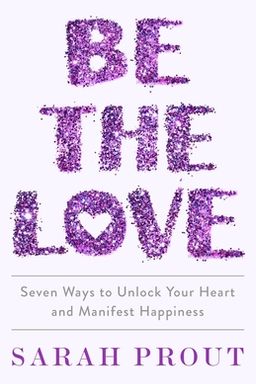
Be the Love cover

Be the Love

by Sarah Prout

Be the Love by Sarah Prout offers a transformative journey through seven powerful principles to manifest happiness. Learn to use intention, embrace change, and harness your inner strength to overcome life''s challenges and unlock your heart''s potential for joy and fulfillment.

Be the Love You Wish to Feel

What would happen if, instead of chasing love, success, or peace outside of yourself, you learned to generate those experiences from within? In Be the Love, Sarah Prout argues that emotional healing and personal transformation begin and end with love—the kind you cultivate inside your own heart. Through deeply personal stories of trauma, recovery, motherhood, and spirituality, she contends that every human being has the capacity to “be the love they wish to feel.” This is both a manifesto and a practical guide: love becomes a verb, something you express in every conscious choice, every word, and every breath.

Prout’s thesis rests on one transformative idea: you are not broken. No experience, no mistake, and no heartbreak diminishes your fundamental wholeness. Her book traces a healing journey built on what she calls the “Be the Love philosophy”—a method of emotional alchemy structured around three core actions: Feel, Heal, and Reveal. You feel by honoring your emotions instead of repressing them; you heal by making peace with what is and reclaiming personal responsibility; and you reveal by opening your heart to the limitless possibilities of love and intuition. Together, these steps turn pain into power and wounds into wisdom.

A Journey Through Love as Transformation

Prout’s narrative unfolds as both memoir and spiritual workshop. Her life, from childhood anxiety and body-image struggles to surviving a violent first marriage and rebuilding her life from welfare to entrepreneurship, serves as a lived example of emotional rebirth. Readers follow her through the cycle of betrayal, loss, reconciliation, and meaning-making guided by affirmations like “I am worthy,” “I am intuitive,” and “I am surrendered.” Each chapter offers journal prompts, affirmations, and practical “Collective Kindness Exercises” designed to channel healing energy outward as well as inward. Love, in her view, is contagious—it ripples through humanity when you consciously choose gentleness, compassion, and forgiveness.

Integrating Emotion, Energy, and Spiritual Practice

Prout blends psychology, metaphysics, and lived spirituality in approachable language. Drawing on New Thought authors such as Florence Scovel Shinn (Your Word Is Your Wand), she connects affirmations and intentional speech to quantum energy principles. Your words, thoughts, and emotions are vibrational signals that shape the experiences you attract. When you speak with love, you create love; when you dwell in fear or self-judgment, you manifest scarcity and pain. Through stories of everyday miracles—a hummingbird appearing after prayer, intuitive dreams predicting life events—Prout illustrates how awareness of energy transforms ordinary moments into sacred encounters.

Why This Work Matters

Ultimately, Be the Love is a call to awaken from victimhood and reclaim emotional sovereignty. Its message matters because it reframes healing not as fixing what’s broken, but as remembering what’s whole. In a culture obsessed with perfection, performance, and external validation, Prout reminds readers that love is not a finish line but a frequency you can inhabit right now. To “be the love you wish to feel” is to embody compassion even in crisis, speak truth with grace, and see yourself—and others—as divine works in progress. As she writes through tears, betrayal, laughter, and rebirth, Sarah Prout’s story becomes a living testament that every broken piece of life can shine golden with love, much like the Japanese art of Kintsukuroi where shattered pottery is repaired with gold. Her message: your cracks aren’t flaws—they’re where the light gets in.


Believing in Your Own Magic

The first step in Prout’s philosophy is learning to believe in your own magic—the inner power to shape your emotions and reality. Early in her life, Prout struggled with anxiety, eating disorders, and body shame born from constant comparison. From her seven-year-old self yearning to be chosen at school to her twenty-year-old self trapped in a cycle of violence and self-loathing, she traces how self-worth erodes when we hand our power over to others. The cure is radical self-responsibility: you stop blaming, start feeling, and choose to respond from love rather than fear.

The Magic of Emotional Ownership

Prout reveals that emotional empowerment begins with ownership. Each time you pause before reacting and create space between intention and response, you reclaim your magic. Instead of projecting pain outward (“You make me feel this way!”), you anchor it in awareness (“I feel hurt—what is this trying to teach me?”). This mindfulness shift aligns with thinkers like Brené Brown, who frames vulnerability as courage rather than weakness. For Prout, vulnerability is transformative—it turns ordinary pain into wisdom.

Shame into Compassion

One of her rawest confessions is admitting she’s been both abuser and abused. In a moment of rage, she pushed her husband Sean before realizing that no act of violence ever leads to healing—only more pain. Owning that truth allowed her to rebuild her emotional foundation on integrity and compassion. She reframed her rage through meditation and affirmations, transforming “I’m broken” into “I’m becoming.” Her mantra “There is no excuse for abuse” became a spiritual boundary that integrates psychology’s emphasis on accountability with metaphysical healing.

Self-Trust and Boundaries

Believing in your own magic also involves learning self-trust. Prout argues that when you betray boundaries—gossiping, breaking promises—you chip away at your integrity and block intuition. Setting boundaries (“I am trustworthy, reliable, and honest”) becomes a spiritual discipline. Like Don Miguel Ruiz’s The Four Agreements, she sees integrity as sacred: your word is your bond, your emotions are your compass, and your magic is real only when matched with accountability.

The chapter closes with a reminder that shame is never the endpoint; it’s the door to self-discovery. By reframing guilt as guidance and pain as initiation, Prout shows that no amount of imperfection excludes you from love. Believing in your magic means seeing yourself, not as a project to fix, but as a masterpiece continuously being revealed through compassion, curiosity, and courage.


You Are the Oracle

Sarah Prout insists that intuition isn’t a gift reserved for mystics—it’s an innate human faculty anyone can cultivate. Through vivid stories of prophetic dreams, moments of divine intervention, and uncanny synchronicities, she explores how intuition guides us when we learn to quiet external noise. Her dream of a cherubic boy speaking to her years before her son’s birth, and a warning voice saving her from stepping into traffic, show that intuitive insight bridges the seen and unseen worlds.

Listening Beyond the Noise

Modern life, she argues, bombards our senses with fear and distraction—media agendas, social comparison, spiritual bypassing. To hear your inner oracle, you must unplug. Limit screens, breathe in nature, and turn from information to transformation. She suggests journaling intuitive hunches and dreams, just as mythologist Joseph Campbell advised tracking symbols to recognize personal archetypes. For Prout, intuition thrives in spacious silence.

From Fear to Discernment

Intuition isn’t blind faith; it’s discernment in action. She warns against spiritual bypassing—the illusion of enlightenment without emotional honesty. Whether it’s gurus promising instant healing or fortune-tellers exploiting insecurity, the path of truth demands humility. As she discovered in an aura reading that foretold her eventual viral video reaching sixty million viewers, genuine intuition feels grounded, not grandiose. It resonates as peace, not egoic excitement.

Signs, Synchronicities, and Serendipity

Prout recounts a cascade of synchronicities—dreams predicting pregnancy, a hummingbird blessing her prayer, coincidental meetings across continents—that illustrate energy’s interconnectedness. She interprets these events not as superstition but as “winks” from the Universe. When you detach from control and trust timing, signs appear to affirm alignment. The hummingbird, symbolizing joy and resilience, becomes her recurring reminder to return from head to heart.

Prout’s message echoes Deepak Chopra’s concept of synchrodestiny: that hidden connections reveal we’re never alone. The oracle within you is compassion embodied—it speaks softly, asking only that you pause, breathe, and believe that life is conspiring for your good.


Venturing Outside Your Comfort Zone

Growth, Prout insists, begins at the edge of discomfort. “Magic happens when you feel scared but do it anyway.” Through raw stories of divorce, poverty, and public speaking fears, she traces the emotional terrain of stepping into uncertainty. Leaving her abusive marriage and facing the world as a single mother with forty cents for food, she realized fear signals not danger—but transformation calling your name.

The Courage to Change

From pouring cold water on her intoxicated husband in desperation to standing center stage in Bali under the terror of a closing throat, Prout reframes fear as initiation. Each time she confronted panic—the “ring of fire” around the throat before her first international keynote—she learned that bravery is walking toward freedom even when your legs shake. Her mantra “Be prepared and you won’t be scared” echoes Stoic philosophy’s lesson that preparation transforms fear into courage.

Failure as Sacred Practice

She describes bombing a speech at boot camp, crying before a crowd, and still showing up for the next round. That experience taught her that failure, accepted with grace, becomes feedback. Whether facing bankruptcy or performance anxiety, embracing mistakes refines wisdom. This resembles Carol Dweck’s growth mindset theory: success isn’t a result—it’s resilience practiced daily.

Small Acts of Bravery

Prout encourages lowering emotional stakes—run one more mile, say yes to the invitation, record the video even when you’re scared. Micro-courage builds macro-confidence. And sometimes stepping outside comfort means choosing presence: plunging feet into cold water to regain calm, dancing barefoot in rain, or simply admitting “I’m afraid.” Each small act expands your comfort zone until fear transforms into faith.

Her teaching mirrors Pema Chödrön’s When Things Fall Apart: discomfort isn’t punishment—it’s the portal to awakening. When you embrace the unknown, you rediscover your strength, courage, and wisdom—and realize you’ve been ready all along.


You Are Not Broken

At the emotional heart of Prout’s work lies one tender truth: you are not broken. Life’s shattered moments—miscarriages, debt, betrayal—aren’t evidence of failure but invitations to heal. Through vivid metaphors like a zipperless wedding dress stitched back together by family, she shows how brokenness can reveal deeper beauty. Pain, when met with compassion, becomes power.

Turning Pain into Power

When Prout faced poverty, scraping mold off bread to feed her children, she decided that rock bottom was her rebirth. She applied inner alchemy—transforming fear into gratitude, hardship into strength. Each chapter reiterates this: pain cycles like seasons, but winter always becomes spring. Her mantra “Feel, heal, reveal” guides the journey from victimhood to sovereignty.

Mistakes as Teachers

Through stories of stolen cigarettes, teenage rebellion, and heartbreak, Prout highlights how foolish choices stem from seeking belonging. Every misstep accumulates wisdom. Regret isn’t a prison; it’s data for growth. The practice of self-reflection aligns with Jungian shadow work—acknowledging darkness to reclaim light.

Compassion Over Judgment

Prout critiques spiritual spaces that shame “negative emotions.” Feeling sadness or anger doesn’t lower your vibration—it releases resistance. She invokes Japan’s art of Kintsukuroi, repairing broken pottery with gold, as the ultimate metaphor: when you mend your soul’s cracks with compassion, you increase its value. Brokenness becomes brilliance.

Her declaration “I see you” captures the essence of being human. Whether kneeling beside miscarriages or facing childhood trauma, seeing yourself fully—without shame—unlocks resilience. When you accept that wholeness coexists with imperfection, you discover the profound truth: being human means being beautifully whole even when you feel split apart.


The Law of Letting Go

Letting go, Prout teaches, is the ultimate act of faith—a surrender to divine timing and trust in life’s resets. Whether it’s releasing toxic patterns, possessions, or people, every form of attachment blocks new energy. Her experiences of bulimia in Sweden, moving away from her son, and nearly collapsing from panic reveal the cost of clinging. She came to see that non-surrender manifests as illness; flow manifests as healing.

Resistance vs. Flow

Energy exists only as resistance or flow. When you fight reality—micromanaging, controlling—you generate stuckness. When you release control and “act as if” dreams have already manifested, life aligns effortlessly. Her rituals of writing affirmations fifty-five times reflect ancient manifestation principles found in Florence Scovel Shinn’s The Game of Life: active faith summons divine order.

Decluttering the Soul and Space

Physical clutter mirrors emotional congestion. One client who replaced her ex-husband’s coffee mugs with new ones soon manifested her soulmate. As Prout explains, clearing space signals readiness. Letting go isn’t loss—it’s spiritual recycling. By releasing karmic debris and ancestral limitation, you invite abundance to fill the void.

Surrendering Identity and Control

Even labels—mother, daughter, immigrant, teacher—can become cages. Prout’s healing moments come when she stops arguing with reality and welcomes uncertainty. Following her intuition to move countries, or face medical vulnerability, she learns that surrender doesn’t mean giving up—it means giving over. Like Eckhart Tolle’s concept of acceptance in The Power of Now, Prout’s surrender is spacious, creative, and calm.

To let go is to say: “I trust life more than my fear.” That belief clears the path for miracles. The law of letting go transforms attachment into liberation, pain into wisdom, and endings into beginnings.


Your Word Is Your Wand

Words, Prout reminds us, are spells. They vibrate through reality, magnetizing what you speak into existence. Borrowing Florence Scovel Shinn’s 1928 phrase, she shows how language shapes energy fields. Every complaint, every affirmation, every apology ripples through the universe with creative power. Your words literally cast your emotional frequency—the wand is your tongue.

The Weight of Words

Through her own painful lessons—telling her mother she wished she’d been “given up for adoption,” or weaponizing words in conflict—Prout illustrates how speech wounds as deeply as weapons. Verbal cruelty corrodes self-esteem; healing begins with conscious communication. “I’m sorry,” she writes, are the two most transformative words—a surrender of ego and a declaration of love.

Affirmations as Alchemy

Affirmations, when spoken with emotion, rewrite inner programming. But she warns against subtle sabotage: saying “I am debt-free” still vibrates with “debt.” Instead, affirm abundance: “I am financially free.” Like Louise Hay’s mirror work or Shinn’s prosperity prayers, effective affirmations require clarity, specificity, and gratitude. Words, when chosen with love, generate miracles.

Speaking Truth into Healing

Her story of speaking onstage while healing from surgery—wearing bandages and chanting “I am healed”—proves that language transforms biology. When her wound literally closed through consistent affirmation, she realized that every syllable carries intention. Healing begins with speech aligned to faith.

Prout concludes that integrity—keeping promises, honoring vows, speaking kindly—is the cornerstone of emotional evolution. The words “I see you,” “I love you,” and “Thank you” aren’t platitudes; they are portals of human connection. When spoken consciously, your words become light that reshapes reality. Your voice, she says, is divine technology—use it to build, never to break.


Everything Is Energy

The culmination of Prout’s philosophy rests on one luminous insight: everything in existence—your thoughts, emotions, relationships—is pure energy vibrating at the frequency of love. To be the love is to align with this vibration. From her near-death experience during childbirth to daily miracles involving numbers and hummingbirds, Prout reveals how awareness of energetic connection awakens faith and joy.

Love as the Universal Frequency

She writes that the Universe, Source, or God isn’t distant—it’s the energy of love pulsating through every cell. When you feel grounded and peaceful, especially after breakdowns, you’ve tapped into “pure reality.” These moments of unconditional acceptance bridge the divide between human struggle and divine order. Like in the teachings of Rumi, love is both the medium and message of creation.

Energy Containers and Memories

A crocheted blanket from her father, her son’s worn toy bear, her grandmother’s home—all hold energy of love. Objects become repositories of emotion. Recognizing these energetic imprints teaches you that everything you touch co-creates memory. Gratitude and imagination infuse life with sanctity.

Visualizing Reality and Guiding Energy

Visualization, practiced since childhood, becomes her creative tool for directing energy. She manifested her first design contract at fourteen and later, through visualization, called forth her future husband and career. The secret isn’t obsession—it’s emotional resonance. Feel the joy of your vision, then release it. The Universe responds not to words but to the frequency behind them.

Prout’s near-death episode after giving birth to Lulu—floating above her body, seeing colors of chakras, hearing her loved ones’ names—affirms that consciousness transcends form. The love that animates life never dies; it simply changes state. To live as love is to participate consciously in that divine energy. As she writes, “Be the love and you remember who you are.”

Dig Deeper

Get personalized prompts to apply these lessons to your life and deepen your understanding.

Go Deeper

Get the Full Experience

Download Insight Books for AI-powered reflections, quizzes, and more.