
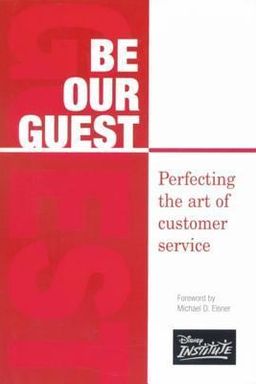
Be Our Guest cover

Be Our Guest

by Walt Disney Company

Be Our Guest reveals Disney''s exceptional customer service principles, illustrating how meticulous attention to guest experience and strategic service integration have propelled Disney to a global business powerhouse. Learn Disney''s secrets to enchant guests and cultivate lasting loyalty.

Creating Practical Magic Through Quality Service

Have you ever wondered why some brands seem to create experiences that feel magical—while others merely transact business? Be Our Guest by Disney Institute and Theodore Kinni answers that question by revealing the business philosophy behind Disney's legendary ability to enchant people. The book argues that Disney's true magic is not mystical at all—it's practical magic created by designing every detail of service to exceed expectations. The authors contend that when you combine creativity, purpose, attention to detail, and genuine care for people, magic emerges naturally.

Disney’s approach rests on a simple but demanding idea: high-quality service means exceeding your guests’ expectations at every touchpoint. This is not an accident—it’s the result of careful planning, deep understanding of customers (whom Disney calls “guests”), and seamless alignment of people, environment, and processes. What Walt Disney began with animation and Disneyland has evolved into a professional development model that thousands of organizations use: The Disney Quality Service Compass.

The Core Premise: Practical Magic

To outsiders, Disney’s magic looks spontaneous. To insiders, it’s meticulously engineered. Walt Disney called it “the show” — a combination of creativity and discipline where cast members (employees) make every interaction feel special. From a child’s hotel room where cookies wait beside a Winnie the Pooh doll, to a crew member helping a lost guest find their way, these moments of delight are small acts of service that compound into the legendary “Disney experience.”

The book insists that this kind of magic can exist in any organization. You don’t need a castle or a cartoon mouse. What you need is a consistent framework that keeps your people focused on your common purpose and empowers them to deliver exceptional experiences. That’s what Disney calls its Quality Service Compass.

The Disney Approach to Quality Service

The compass organizes Disney’s entire service philosophy around four main points: Guestology (understanding your customers), Quality Standards (how you measure actions against your purpose), Delivery Systems (your people, setting, and processes), and Integration (combining them into a seamless experience). At its center lies a single goal: exceeding guest expectations. That goal drives every decision—from how far apart the trash cans are placed (27 feet, because that’s how far a person will carry waste before discarding it) to how cast members greet visitors using two fingers instead of one to ensure cultural respect.

In the corporate world, such obsessive attention to detail might sound excessive. Yet Disney’s results prove the opposite. Their parks’ 70% repeat-visitor rate is not magic—it’s mastery of service design.

Why This Matters to You

The lessons in this book are applicable whether you lead a hospital, a software company, or a school. Every organization, Disney argues, is in the experience business. In the modern economy (what B. Joseph Pine II and James Gilmore call the Experience Economy), customers are not just buying products or services—they’re buying memories. This shift demands a new mindset: your job is not merely to satisfy, but to enchant. You must see your work as a form of “show business,” where every interaction becomes part of the story you deliver.

As you move through the book, you learn how Walt Disney built systems to train, empower, and inspire his people. You’ll see how the language Disney uses (“cast,” “stage,” “show”) reinforces cultural expectations. You’ll learn about attention to detail in every physical and emotional design choice—what Imagineers call “bumping the lamp,” the extra effort that makes invisible perfection visible. You’ll explore how organizations can integrate technology, storytelling, and service to make experiences seamless.

The Broader Context

The authors situate Disney’s ideas among management thinkers like Tom Peters and Jim Collins, who studied “excellent companies” and “visionary organizations.” Disney’s longevity, they argue, stems from its enduring core purpose: creating happiness. Every business decision is measured against that guiding principle. A similar ethos can define your business—whether your purpose is healing patients, educating students, or creating technology that makes life easier.

Ultimately, Be Our Guest is not about theme parks. It’s about turning work into art—building an organization where service becomes storytelling, employees become performers, and the experience becomes unforgettable. The promise of Disney’s method is simple but profound: if you design your systems around people’s emotions, not just their transactions, your business can generate its own brand of magic every day.


Guestology: Knowing Your Customer Intimately

Disney’s first point on its Quality Service Compass—Guestology—is the art and science of understanding your customer. Walt Disney didn’t use the word “customer-centricity,” but he lived it daily. He would walk through Disneyland, talk to visitors, and listen to what they loved or disliked. He wasn’t entertaining critics; he was learning directly from the public. “We’re not trying to entertain the critics,” Walt said. “I’ll take my chances with the public.”

Two Dimensions: Demographics and Psychographics

Guestology relies on two interconnected forms of information: demographics and psychographics. Demographics tell you who your guests are—where they come from, how much they spend, and what groups you’re missing. Psychographics, however, reveal what’s inside their minds: their emotions, needs, stereotypes, and desires. Together, they produce what Disney calls the Guestology Compass.

At Walt Disney World, this research isn’t theoretical: cast members conduct face-to-face surveys, review comment cards, track utilization patterns, and even analyze which rides are most popular by time of day. Mystery shoppers test stores, and every email from a guest becomes data for improving service. By continually refreshing this information, Disney ensures it’s adapting to guests’ changing lifestyles and expectations.

Creating a Guest Profile

Through guestology, Disney forms detailed profiles of its guests. For example, a BMW customer might need a car (a basic need) but want prestige and performance (an emotional want). At Disney parks, guests may need a vacation but want joy and memorable family moments. Identifying these layers lets a company design experiences that speak to those deeper motivations. Disney asks: what emotions do guests carry when they arrive, and what emotions will they leave with?

A guiding question:

How will your customers feel during, not just after, your service? The goal is happiness first—and it is measurable through their emotional response.

The Role of a Common Purpose

Guestology feeds into Disney’s common purpose: “We create happiness by providing the finest in entertainment for people of all ages, everywhere.” This simple mission helps align decisions, training, and actions. If something doesn’t contribute to happiness, it doesn’t belong in the business. Collins and Porras, in Built to Last, called this kind of purpose a “core ideology”—a guiding star that companies pursue forever. It defines what Disney stands for and what it will never do (you’ll never see a Disney credit card or jet plane).

As Walt once said, “You don’t build it for yourself. You know what people want, and you build it for them.” Guestology teaches you to see through your customer’s eyes, anticipate how they’ll feel, and design around those emotions. That’s the first ingredient of Disney’s practical magic—and it’s one every organization can adopt.


Quality Standards: Safety, Courtesy, Show, Efficiency

Once you understand your guests, you need principles to deliver consistently great experiences. For Disney, those principles are its Quality Standards: Safety, Courtesy, Show, and Efficiency. These aren’t slogans—they’re operational criteria used to make daily decisions. Every cast member at Disney learns to prioritize them in this strict order.

Safety Comes First

Safety is non-negotiable. As Imagineer Bruce Johnson explained, designers must plan for impossible odds—one in millions of rides could fail, and even that’s too frequent. By making safety a top standard, Disney builds reassurance into every piece of the experience, from ride mechanics to the child-height peephole on hotel doors.

Courtesy Builds Connection

Courtesy at Disney means treating every guest as a VIP—a “very important, very individual person.” Cast members learn universal behaviors like greeting with a smile and addressing people respectfully. Even small gestures matter: at Disney, pointing with one finger is forbidden because it’s rude in many cultures. Instead, employees use two fingers or an open hand. These details communicate respect, embodying a global hospitality language.

Show Creates Immersion

“Disneyland is a show,” Walt said, and every cast member is part of the performance. Show means maintaining seamless storytelling across space, sound, and behavior. Marty Sklar, former Chairman of Walt Disney Imagineering, once recalled Walt scolding someone for driving a car near Frontierland: “What are you doing with a car here in 1860?” Every detail—from costumes to trash cans—must support the illusion of the “living movie.”

Efficiency Keeps the Magic Flowing

Efficiency means guests enjoy the most from their visit with minimal friction. Disney designs everything—from transportation systems like the Monorail and Magical Express to crowd movement—to maximize convenience. Each process is measured for flow and speed. Efficiency doesn’t just increase profits; it amplifies guest happiness by removing stress points.

Together, these four standards act like filters for decision-making. When they conflict, priority is clear: safety comes before courtesy, which comes before show, which comes before efficiency. This structured hierarchy resolves dilemmas instantly—like stopping a ride for a guest with disabilities, even if it delays others. By clearly defining and prioritizing these standards, Disney transforms everyday operations into systems of trust.


Cast: Turning Employees Into Storytellers

At Disney, employees aren’t workers—they’re cast members performing in a show that guests experience. This philosophy transforms ordinary customer service into a performance art rooted in culture, training, and storytelling. Disney’s founders built this concept from the ground up, starting with the first Disney University for employee education.

Making First Impressions Count

A new Disney cast member’s first experience is not a dull HR orientation—it’s an emotional onboarding called Traditions. Taught by veteran employees, it immerses newcomers into Disney’s heritage, mission, and behaviors. From the moment they walk through the whimsical Casting Center, designed by architect Robert A.M. Stern, new hires are surrounded by symbolic details—door handles modeled after Alice in Wonderland, murals of beloved characters, and the promise that “the show begins here.”

Training for the Show

Disney training begins with the principle: “We don’t put people in Disney—we put Disney in people.” The Traditions program teaches not just policies but behaviors that deliver the company’s standards, such as smiling, eye contact, and the “Good Show/Bad Show” method, which helps employees see how their actions affect guests. Cast members learn performance cues like posture, tone, and expression—small details that turn service into theater.

Creating Local Performance Cultures

Each Disney location develops its own performance culture linked to its theme. The Polynesian Resort, for example, built its service around the Hawaiian value of hoʻokipa, meaning unconditional hospitality. Cast members there adopted values like aloha, integrity, and kina‘ole (flawless service), connecting Disney’s universal goals to local culture. Guest satisfaction soared, proving the power of shared mission-driven values.

The lesson is clear: when employees understand their role within a story, their work becomes meaningful. Disney’s cast members don’t just sell tickets or food—they create moments that make people believe in magic. Training for narrative-driven service inspires pride, consistency, and humanity—a crucial formula any business can adopt.


Setting: Designing Spaces That Speak

The second service-delivery system is physical and sensory: your setting. Disney treats its environment as the stage of its show. Every landmark, sidewalk texture, color palette, and scent tells part of the story. As Walt said, “I don’t want the public to see the world they live in while they’re in the park. I want them to feel they’re in another world.”

Everything Speaks

At Disney, “everything speaks.” Every design detail—from trash cans to pavement—is chosen intentionally. When guests move from one land to another, even the texture under their feet changes. Music, lighting, and smells signal transitions between fantasy worlds. These invisible cues tell guests where they are and how to feel.

Appealing to All Five Senses

Disney’s Imagineers design for sight, sound, smell, touch, and taste. Popcorn smells greet you at park entrances to evoke nostalgia. Music syncs perfectly with parades along Main Street. Textures, like water splashes at Catastrophe Canyon, engage touch, while themed foods extend the story to taste. Each sense reinforces emotional immersion.

Onstage vs. Backstage

Behind every magical scene lies a backstage built to stay invisible. Utility corridors called Utilidors at Walt Disney World keep maintenance and logistics out of sight. Cast members can move efficiently without breaking the illusion. This principle isn’t just for theme parks—organizations everywhere can separate onstage (customer-facing) and backstage (internal) spaces to preserve customer focus.

Disney’s approach is summed up by former Imagineer John Hench: “It just takes one contradiction, one out-of-place stimulus, to negate an experience.” The company’s success formula is “attention to infinite detail.” When your environment reflects your promise, customers trust you. Every corner of space speaks for your brand—make sure it says something worth hearing.


Process: Engineering Seamless Experiences

While cast and setting create emotional magic, processes make that magic reliable. Walt Disney saw process as the engine of consistency—whether in animation or park operations. He called continual improvement “plussing”: enhancing a product or service endlessly until perfection approaches.

Streamlining the Guest Experience

Disney studies every step guests take—literally. Lines are optimized, wait times are analyzed, and systems like FASTPASS give visitors control over their schedule. The company treats bottlenecks (“combustion points”) as opportunities for innovation. Even a lost-car problem was solved by recording parking-lot fill times, helping guests rediscover vehicles by recalling their arrival hour.

Communication and Service Attention

Processes also ensure employees interact effectively with guests. Every cast member learns that “When does the three o’clock parade start?” is never just a question—it’s an invitation to listen and help. Disney maintains vast internal communication systems (newsletter Eyes & Ears, bulletins, and “homerooms”) to keep staff informed across thousands of roles.

Moreover, Disney builds specialized processes for guests with unique needs: multilingual materials for Brazilian visitors, Kidcot activity stations for children, and access systems for people with disabilities. These attention processes turn potential frustrations into moments of care.

Continuous Improvement

The Disney Institute teaches “debugging”—strengthening and refining processes to prevent failure. Whether fixing ticketing systems or recalling products compassionately (as Volkswagen did after learning from Disney’s approach), the lesson is clear: treat errors as opportunities for better design. Perfection isn’t static; it’s an endless pursuit.

Disney’s processes embody efficiency, empathy, and adaptability. Every organization has combustion points—places where friction turns service sour. What matters is how quickly you turn them back into smooth experiences. For Disney, process is the invisible engine under the magic carpet.


Integration: Aligning Systems for Lasting Magic

The final point on the Disney Quality Service Compass is integration—the act of combining all delivery systems into one seamless experience. This is the moment when cast, setting, and process unite under consistent purpose and standards. Walt Disney mastered this long before management theorists did, turning a cartoon studio into a living empire of storytelling.

The Integration Matrix

Disney uses a tool called the Integration Matrix, a grid mapping how each quality standard (Safety, Courtesy, Show, Efficiency) interacts with each delivery system (Cast, Setting, Process). It helps managers ensure that no part of service contradicts another. For example, safety is delivered through cast training, fireproof settings, and efficient emergency processes.

Integration also defines “headliners” — natural pairings like Cast + Courtesy, Setting + Show, and Process + Efficiency. These become anchors for excellence, while secondary pairings (“landmarks”) offer unexpected opportunities to surpass expectations.

Case Study: Hong Kong Disneyland’s Star Guest Program

When Hong Kong Disneyland noticed local guests were uncomfortable with Western-style exuberance, leaders redesigned service using integration. They launched the Star Guest Program, where visitors could wear badges and receive gentle personalized attention, while recognition cards allowed them to thank cast members in culturally acceptable ways. The program boosted satisfaction by over 10% and morale dramatically, showing integration’s power to adapt culture without losing core standards.

Implementing Integration Tools

Disney Imagineers use storyboards—visual maps adapted from animation—to plan services end to end. This practice helps visualize the guest journey, anticipate emotional peaks, and debug experiences before launch. Integration also ensures every new idea aligns with the triad of high-touch (personal connection), high-show (memorable presentation), and high-tech (efficiency and precision).

Integration transforms scattered excellence into a symphony of consistency. For you, this means aligning your people, environment, and processes behind a single mission. When each part of your business reinforces the others, customers don’t just notice quality—they feel it. That’s when service stops being a task and starts becoming magic.

Dig Deeper

Get personalized prompts to apply these lessons to your life and deepen your understanding.

Go Deeper

Get the Full Experience

Download Insight Books for AI-powered reflections, quizzes, and more.