
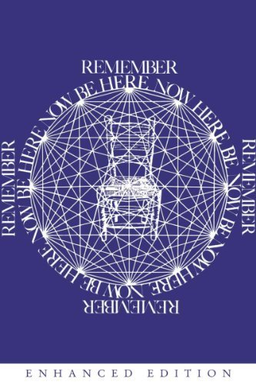
Be Here Now cover

Be Here Now

by Ram Dass

Be Here Now is a captivating exploration of spiritual awakening, chronicling Ram Dass''s transformation from a successful psychologist to a revered spiritual teacher. With timeless wisdom and practical guidance, this book inspires readers to transcend the ego, embrace the present, and achieve profound inner peace. Ideal for anyone on a spiritual journey, it offers simple techniques to cultivate awareness and compassion.

From Harvard Ego to Sacred Presence: The Journey of Ram Dass

What does it mean to truly awaken—to step beyond the rush of achievement, knowledge, and personal identity to experience reality as pure being? In Be Here Now, Ram Dass (formerly Dr. Richard Alpert of Harvard University) invites you to confront this question through his radical transformation from an ambitious, materially successful psychologist into a humble seeker of divine consciousness.

Ram Dass argues that the spiritual path isn’t somewhere far away—it’s right here, in this very moment. His book contends that awareness and freedom are realized when the mind stops clinging to what’s next and instead rests in the present: the here and now. But to arrive at that awareness, Ram Dass shows you the whole arc of transformation—beginning with the collapse of his academic ego, through the mind-expanding power of psychedelics, and culminating in his surrender to unconditional love through his teacher, Maharaj-ji (Neem Karoli Baba).

The Three Stages of Awakening

Ram Dass describes his life’s evolution in three stages: the social science stage, the psychedelic stage, and the yogic stage. Each functioned as a layer peeled away to reveal a deeper truth. In the social science stage, as Dr. Alpert, he lectured at Harvard and lived the archetype of success: wealth, status, and intellect. Yet behind his confident persona hid deep anxiety and a restless yearning for meaning. The theories he taught on human motivation and psychoanalysis failed to cure his own dissatisfaction.

The psychedelic stage began with his collaboration with Timothy Leary in the early 1960s. Together, they explored how substances like psilocybin and LSD could expand consciousness. For Ram Dass, his first journey with psilocybin was revelatory—a visionary shattering of identity. Watching his body dissolve and his persona vanish, he encountered an awareness untouched by change or death. This, he realized, was what philosophers and mystics had always called the soul. Yet, as he points out, no matter how high he went, he always came down. Psychedelics opened the door but couldn’t teach him how to stay inside.

Arriving in India: The Yogic Stage

By the time he reached India in 1967, Alpert had exhausted the Western pursuit of both science and substances. Then, through a fateful series of meetings, he encountered a 23-year-old American named Bhagwan Dass, whose radiant simplicity introduced him to a new kind of presence. Through Bhagwan Dass, Alpert met Neem Karoli Baba—Maharaj-ji—who immediately pierced his mind and captured his soul. When Maharaj-ji revealed detailed knowledge of Alpert’s deceased mother’s illness—a fact he could not possibly know—it broke Alpert’s intellectual resistance. In that instant, he wept with recognition. His scientific self died, and he was reborn as Baba Ram Dass—“Servant of God.”

Maharaj-ji’s teaching was simple: “Love everyone, serve everyone, and remember God.” These words, more than any philosophy, embodied what Ram Dass calls becoming a conscious being. To “be here now” is to let go of attachment to past and future, to transcend identities and desires, and to rest in the luminous awareness of the eternal present.

Why This Matters Today

In a world dominated by distraction and self-definition, Be Here Now feels prophetic. Ram Dass bridges East and West, scientific rationalism and spiritual surrender. His journey mirrors our own conflict between intellect and intuition, achievement and contentment. He insists that your spiritual potential doesn’t depend on escaping society but on transforming your consciousness within it.

The ideas explored in this book—non-attachment, the illusion of the ego, the unity of all beings, and the practice of mindfulness long before it became mainstream—resonate with Buddhist and Hindu traditions (echoing teachings found in the Bhagavad Gita, Tao Te Ching, and later echoed by Eckhart Tolle’s The Power of Now).

This summary explores the key lessons of Ram Dass’s journey. You’ll first encounter the story of his breakdown of success and rise into awakening. Then, we’ll explore the transformative role of psychedelics and their limitations, the meaning of true surrender and service, and finally, how practices like yoga, mantra, and compassion become tools for living a sacred life. More than a chronicle of personal change, Be Here Now is a manual for conscious being—an invitation to trade control for awareness, judgment for love, and the restless mind for the silent heart.


Success and the Illusion of Knowledge

Before he became Ram Dass, Richard Alpert lived the American dream—professor at Harvard, multiple departments, wealthy, sexually active, and constantly affirmed by status. Yet, he reveals that this success only deepened his emptiness. His intelligence made him an expert at ideas, but not at living. He could explain Freud, Jung, and Skinner, yet was riddled with anxiety, plagued by nervous stomach issues before lectures, and lost in an endless pursuit of approval.

He writes with brutal honesty that his world was “a hustle”—a game of intellect and ego masquerading as science. In his therapy sessions, he realized that analytical frameworks could describe the human condition but not transform it. When his own psychoanalyst pronounced him “too sick to leave analysis,” Alpert took it as the final parody: the blind diagnosing the blind.

Achievement as a Cage

Alpert’s narrative challenges our culture’s equation of achievement with consciousness. He observes that academic life rewarded abstraction but not awareness. Whether lecturing on “Human Motivation” or “Child Development,” he saw that even brilliant psychologists went home as neurotic as before. Knowledge, detached from being, could not bring freedom. For Alpert, success only became another addiction—a “game I played very well.”

His story echoes the spiritual crises faced by mystics like Siddhartha (from Hermann Hesse’s novel) and the Buddha himself: both immersed in wealth and wisdom until they saw their limits. As in those tales, disillusionment becomes Alpert’s doorway. He begins to perceive that something essential lies beyond reason—something the mind cannot measure.

When Self-Knowledge Isn’t Enough

What bothered Alpert most was that psychology’s methods never touched his own suffering. After years of academic dominance, his life was filled with loneliness, overeating, and possessions—cars, antiques, and airplanes meant to fill his inner void. Each acquisition only affirmed his separateness, the illusion of “I.” Ironically, his search for self-understanding was what bound him most to the ego.

“The whole thing was too empty. It was not honest enough.” —Ram Dass

This confession marks the first crack in the world of form—a scholarly equivalent to the “dark night of the soul.” As he sits among Harvard elites, Alpert recognizes they are not wise beings, only intelligent ones. They study consciousness but do not live it. Their students mirror their emptiness. Nothing “real” happens.

The lesson: knowledge without transformation leaves you divided—head full of theories, heart full of fear. As Alpert notes, “We were psychologists from nine to five and neurotics from five to nine.”

The Seed of Surrender

This dissatisfaction births a new longing—not for more answers, but for peace. Like many before him, he begins to sense that the solution isn’t in acquiring but in releasing. When Timothy Leary appears in his life—literally down the hall in a converted office closet—it feels like synchrony. Both are intellectual revolutionaries ready to leap beyond thought itself. The seed of what later becomes “Be Here Now” has been planted.

In a culture worshipping productivity, Alpert’s fall from Harvard is sacrilegious and liberating. It shows that awakening often begins where ambition ends. As he later wrote, you cannot “be here now” if you are forever striving to become someone tomorrow.


Psychedelics and the Search for the Infinite

The turning point came on a snowy night in Newton, Massachusetts, when Alpert swallowed 10 milligrams of psilocybin with Timothy Leary. What followed shattered his identity. In what he called a “psychedelic birth,” he watched his body vanish, his doctorate dissolve, and his name fade away. Beneath everything he thought he was, one awareness remained—calm, eternal, and untouched. It knew, simply, “I am.”

This was not hallucination; it was homecoming. Alpert glimpsed a consciousness beyond birth and death—the Self described in the Upanishads and later explored through Buddhist meditation. For the first time, he felt liberation not as theory but as direct experience. Yet three days later, he was back at the chalkboard, terror creeping in. He’d tasted transcendence and lost it. The psychedelic revelation became both gift and torment.

From Science to Inner Alchemy

Working with Leary, Alpert sought to map consciousness itself. At Harvard, they ran psilocybin experiments with students, theologians, and even prisoners. Data showed that one’s expectations and surroundings—“set and setting”—determined the nature of the trip. In nurturing conditions, subjects reported profound love and unity; in fearful contexts, paranoia and dread. Psychedelics magnified the mind’s content but didn’t transcend it. They were mirrors, not gateways.

Further experimentation confirmed another truth: no matter how high you go, you come down. After thousands of trips, Alpert grew weary of touching heaven and falling back to earth. He saw that drugs could blow open the doors of perception, but only spiritual discipline could keep them open. As he put it, “You can enter the kingdom of heaven, but you can’t stay.”

The Descent: Coming Down Again

Longing for permanence, Alpert increased dosage and frequency. In one infamous experiment, he and several colleagues ingested LSD every four hours for three weeks, consuming nearly 2400 micrograms a day. They hovered in kaleidoscopic consciousness but inevitably returned to ordinary awareness. Depression followed. The elation was fleeting; the void, eternal.

“After hundreds of times, we realized it wasn’t enough.” —Ram Dass

Disillusionment deepened as the media turned Leary and Alpert into countercultural icons. Their dismissal from Harvard, branded as heresy, became legend. Yet for Alpert, fame only sharpened his inner hunger. His experiments had proven that consciousness could expand, but not how to make it stay expanded. Traditional mystics, he noted, had mastered this art for millennia—without drugs.

What remained was an aching question: Who were these beings that stayed high without substances? What secret made saints radiant even in suffering? The answer lay east of Harvard, in a land where the self wasn’t a hypothesis but an illusion to be dissolved.


The Pilgrimage East and the Surrender to Grace

Desperate for an answer, Alpert left America in 1967 with a bottle of LSD and a millionaire friend. Their plan was naïve: to meet the holy men of India and give them psychedelics to see if they could explain what it really was. But by the time they reached Nepal, Alpert was in despair again—his experiments had yielded nothing. The “trip across the East” was becoming as empty as the one across Harvard.

The Meeting with Bhagwan Dass

One day in the Blue Tibetan Café in Kathmandu, a tall, blond, barefoot American walked in—Bhagwan Dass, a 23-year-old who had wandered India for years as a holy man. Something in his presence—tranquil, unhurried, luminous—struck Alpert. Here was someone who seemed to know. Against all logic, he followed him into the Indian countryside, barefoot, in thin cotton, enduring hunger and dysentery. Bhagwan Dass taught him to “be here now.” Not to dwell on the past or fantasize about the future, but to rest in the eternal moment. He trained Alpert in mantras, asanas, and silence. It was a slow death of the Western mind.

Bhagwan Dass also prepared him for the meeting that would define his life—with Neem Karoli Baba. At first Alpert resisted the idea of seeing a guru. But Bhagwan Dass insisted and brought him to the small Himalayan village of Kainchi, where Maharaj-ji awaited under a tree.

Encounter with the Guru

When Maharaj-ji first laid eyes on him, he smiled and said nothing. Later, unexpectedly, he turned to Alpert and said, “You were thinking of your mother last night. She died of spleen.” The words struck like lightning. It was true. She had died months earlier in America, and no one in India could have known. Alpert’s rational mind shattered. Then he looked into Maharaj-ji’s eyes—and saw infinite compassion. Tears poured down. “It felt like I was home,” he wrote.

“It was not that I loved him. It was that I was love.” —Ram Dass

The next day, Maharaj-ji asked for the LSD. Alpert watched in awe as the saint consumed over 900 micrograms—without any effect. The message was clear: the infinite cannot be attained through chemicals. The key Ram Dass had sought externally was already within. This revelation is echoed by many mystics (Terence McKenna later called it “the difference between a drug trip and a wisdom path”).

Becoming Ram Dass

Maharaj-ji transformed Alpert not through lectures but through being. Around the guru, Ram Dass felt unconditional acceptance so profound that shame and fear dissolved. As he put it, “He knew everything about me, and he loved me anyway.” This love became the new psychedelic, one that never faded. The term Ram Dass, meaning “servant of God,” symbolized his complete surrender to that divine flow. Maharaj-ji’s message was disarmingly simple: Serve others, remember God, and tell the truth.

This chapter of his life marks the pivot from seeking to being—from a man chasing enlightenment to one embodying it. Having come to India with LSD, he left with mantra and love. The man who once asked holy men to explain consciousness now sat silently before one, watching the sun rise in his own heart.


Love, Service, and the Revolution of Presence

Ram Dass’s teachings crystalized into one central idea: awakening is not escape—it’s presence. After India, he returned to the West to share what he learned, but not as a preacher or guru. Rather, as a fellow traveler helping others remember what they already knew. “Be Here Now” became his mantra, meaning: drop past and future, dissolve judgment, and meet this moment as sacred.

The Practice of Being Here

Being here now means more than mindfulness. It’s an entire way of existing. When your child spills milk, or when traffic stops, it’s still the dance of the divine. Ram Dass compared it to surfing: either you ride the wave joyfully or you fight it and drown in resistance. This echoes Zen teachings (as in Suzuki Roshi’s Zen Mind, Beginner’s Mind): everyday life is the monastery, each action a prayer.

Service as Spiritual Work

Influenced by Maharaj-ji’s command to “serve everyone,” Ram Dass founded charities like the Hanuman Foundation, the Seva Foundation, and programs helping prisoners and the dying. He called these “karma yoga in action”—service without attachment. To serve without expectation purifies the heart. When asked what enlightenment looks like, he answered: “Feed everyone, wipe the tears where you can, and keep loving.”

Service, for Ram Dass, became meditation in motion. You could clean toilets or teach classes; both were sacred if done with awareness and love. “God can empty garbage,” he joked, symbolizing his view that no act is beneath the divine. This teaching complements that of Mother Teresa and the Bhagavad Gita, both of which insist that devotion expresses itself through ordinary work done selflessly.

The Revolution of the Heart

Ram Dass’s later work merged psychology with spirituality. He argued that awakening doesn’t mean rejecting personality—it means seeing through it. You can be a parent, a banker, a lover, and still be awake if your heart is open. As he aged, his famous phrase evolved into: “We’re all just walking each other home.” The present became not a location, but a vibration of compassion.

In contrast to the self-focused quest of the 1960s, Ram Dass’s revolution was relational. To love without condition, serve without self, and rest without agenda—that is enlightenment. Be here now is less command than invitation: Wake up, right where you are, and see it’s all God disguised as everything.


Integrating the Paths: Yoga, Mantra, and Everyday Practice

After his return to the U.S., Ram Dass turned Be Here Now into both a book and a living manual. Its “Cookbook for a Sacred Life” section translates Eastern practices into daily Western routines. Every act—sleeping, eating, working—becomes a mirror for consciousness. The aim isn’t to escape daily life but to sanctify it.

The Four Yogas

Ram Dass translates traditional yogic disciplines into accessible paths for Westerners. Karma yoga (selfless service) purifies the heart through action. Bhakti yoga (devotion) transforms emotion into love for the divine. Raja yoga (meditation) trains the mind to stillness. Finally, Jnana yoga (wisdom) cuts through illusion by asking, “Who am I?” Ram Dass insists that your path is the one that most naturally opens your heart. “You do your yoga in whatever form you find yourself performing.”

His term for the modern synthesis was “yoga of the West”—where psychotherapy meets prayer, and self-help meets surrender. He compared it to jazz: a mix of structure and improvisation guided by awareness. (Similarly, Alan Watts argued that spiritual freedom is a dance between form and flow.)

Mantra and the Mind

For the restless Western intellect, Ram Dass offers mantra—a sacred phrase repeated to still mental chatter. His favorite was Ram, the name of divinity given by Maharaj-ji. “The point,” he wrote, “is not to make the mind quiet, but to realize you are not the mind.” As one repeats the name, awareness detaches from thought, revealing what lies behind it: radiant being. Mantra becomes a lifeline between your personal self and the universal Self.

He also adapts other daily disciplines—early rising, silence, mindful eating—as experiments in awakening. Each, practiced sincerely, becomes a “yoga of the ordinary.” Even brushing your teeth can be a meditation when done as an offering to the divine.

Loving Awareness as the Unifying Path

Ram Dass’s later teaching distilled all yogas into one: loving awareness. Whether through mantra, service, or stillness, the goal remains the same—recognizing love as the essence of all existence. It’s the same insight that A Course in Miracles and the Bhagavad Gita echo: everything is either love or a call for love. To see this truth is to live awake.

Through these practices, Ram Dass shows that enlightenment is not reserved for mystics. It can be practiced in traffic, in marriage, or at work. The difference lies not in what you do but in how present you are while doing it.


Living and Dying in the Presence of God

Ram Dass’s later writings, especially Be Love Now, extend the teachings of Be Here Now into the final frontier: dying consciously. Having survived a near-fatal stroke in 1997, he came to see death as the final teaching of presence. “You must live before you can die,” he said, “but you must die before you can live.”

Death as Returning Home

For Ram Dass, dying is not annihilation but return—the dropping of form so the soul can rest again in the One. Drawing on The Tibetan Book of the Dead and Hindu philosophy, he describes consciousness as continuous beyond the body. Death becomes another moment to “be here now.” When you stop clinging to the body or fear of loss, awareness dissolves into light. “The minute you hear the word eternity, you are already there,” he said.

Serving the Dying

Through the Hanuman Foundation’s Dying Project, Ram Dass and colleagues worked with the terminally ill to help them face death as awakening. He recounts helping patients repeat mantras as they passed, guiding them to see death not as failure but as fulfillment. The act of being fully present with a dying person was, he said, “the highest yoga of love.”

This teaching parallels Buddhist hospice principles and mirrors Elisabeth Kübler-Ross’s stages of acceptance, but adds a distinctly spiritual view: death as reunion with God. “Love and death are the same mystery,” he taught, “one pulls the veil off the other.”

The Final Lesson

By the end of his life, confined to a wheelchair, Ram Dass radiated peace. He called his paralysis “grace through suffering.” His practice distilled to one breath: “I am loving awareness.” Through illness and aging, he demonstrated that presence isn’t circumstantial—it’s the ground of being itself.

His death in 2019 wasn’t an ending but the completing of a circle, fulfilling Maharaj-ji’s teaching that “the guru is always in your heart.” For Ram Dass, that heart included everyone. His life reminds you that enlightenment isn’t achieved in caves or colleges but in the tender, fleeting miracle of this breath, this moment, this now.

Dig Deeper

Get personalized prompts to apply these lessons to your life and deepen your understanding.

Go Deeper

Get the Full Experience

Download Insight Books for AI-powered reflections, quizzes, and more.