
Idea 1
The Clash Between Chinese and Western Parenting
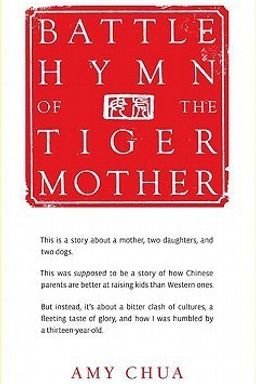
What does it really mean to be a good parent? Should you nurture gently and celebrate your child's individuality, or push them relentlessly to excel and build resilience through hardship? In Battle Hymn of the Tiger Mother, Yale Law professor Amy Chua takes readers deep into a cultural collision—between the demanding, achievement-based expectations of traditional Chinese parenting and the permissive, self-esteem-focused style of Western upbringing. Her story is both an intimate memoir and a provocative argument: she insists that children thrive when they are held to extraordinarily high standards, even against their will, but later realizes that success can come at a steep emotional cost.
Chua frames her experiences through the lens of her two daughters—Sophia, the disciplined firstborn, and Lulu, the fierce rebel. She recounts battles over piano and violin practice, schoolwork, and obedience. At first, Chua sees herself as the archetypal 'Chinese mother' who refuses mediocrity and demands perfection, ensuring her children become elite musicians and scholars. However, as her younger daughter's defiance mounts, Chua faces an unexpected confrontation that forces her to question everything she believes about success, love, and respect. The result is a riveting story of both conviction and humility.
Cultural Ideologies About Parenting
At its heart, the book contrasts two civilizations of parenting mindsets. Chinese tradition values discipline, deference, and mastery. Parents see their children’s success as a reflection of their own virtue, and they show love through rigorous expectations. Western parents, meanwhile, prioritize autonomy, emotional health, and creativity. In one memorable passage, Chua notes that Westerners encourage 'learning to be fun,' whereas Chinese parents emphasize learning for mastery and pride. Her detailed lists—such as the things her daughters were never allowed to do—highlight just how strict her approach was: no sleepovers, no school plays, and certainly no grades under an A.
Chua grounds this ideological split in research: studies show Chinese parents spend exponentially more time drilling academics, while Western children spend more time in sports and entertainment. Yet what fascinates readers is not the data but Chua’s raw self-awareness. She admits she calls her daughter 'garbage' for disrespect—an act she justifies through cultural difference—and then examines the Western reaction of horror. Throughout the book, her voice is defensive, witty, and self-critical at once, oscillating between certainty and doubt.
The Human Story Beneath the Controversy
Behind the cultural debate lies a personal journey. Sophia’s docile perfection and Lulu’s fiery resistance become microcosms of East versus West, authority versus independence. Each battle at the piano or violin feels symbolic: when Lulu refuses to practice and even smashes her music score to pieces, Chua sees not mere disobedience but moral decline, a threat to family honor. Yet later, when Lulu triumphs on stage after a week of warlike rehearsal, Chua experiences the conflicted joy of victory through coercion—and begins to ask whether excellence achieved through fear is worth the price.
Her portrayal evolves, shaped by her husband's Jewish-American sensibility and her own immigrant family history. Jed represents the Western foil—caring, lenient, skeptical of authoritarian methods. Their intermarriage creates micro-cultural tension within their home. Through stories of her parents’ immigrant sacrifices and her fear of 'generational decline,' Chua reveals how trauma and gratitude drive her intensity. She believes the luxury of comfort leads to weakness, an idea central to her belief that hardship is the best gift a parent can give.
Why This Conflict Matters
Chua’s book is more than a memoir—it’s a mirror for anyone torn between wanting children to be happy and wanting them to be strong. By the end, she renounces blind rigidity but defends her intention: she wanted her daughters to discover their own capabilities. The narrative crescendos in Moscow’s Red Square, where Lulu shatters a glass in rebellion. In that moment, Chua realizes she cannot control love through mastery, and she finally lets Lulu quit the violin. Her humility marks the resolution: neither Chinese nor Western parenting is right alone—the balance lies somewhere in between.
In this sweeping exploration of family, ambition, and identity, Chua doesn’t tell you how to parent; she forces you to question what success truly means. Is achievement greater than joy? Is discipline greater than freedom? And, like her daughters, you may leave this story with your own version of rebellion and reconciliation—a more nuanced understanding of how culture shapes the way we love our children.