
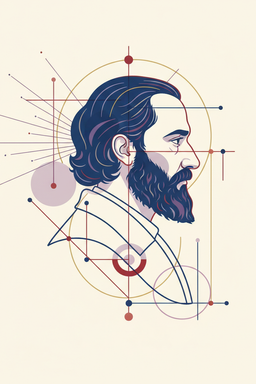
Baruch Spinoza cover

Baruch Spinoza

by Baruch Spinoza

Baruch Spinoza was a 17th-century Dutch philosopher who sought to reinvent religion, moving away from superstition and divine intervention towards a more impersonal, scientific, and consoling approach. He challenged traditional religious beliefs and instead viewed God as an impersonal force indistinguishable from nature and reason. Though excommunicated from the Jewish community, Spinoza advocated for understanding the universe to know God and achieve happiness.

Spinoza’s Vision of God, Nature, and Human Freedom

Have you ever wondered whether the universe cares about you—whether your prayers, your hopes, or even your mistakes are noticed by something divine? Baruch Spinoza, the 17th-century Dutch philosopher, posed this question in the heart of religious Amsterdam, and his answer changed philosophy forever. He argued that the idea of a personal, intervening God was a comforting illusion. Instead, he proposed that God and Nature are one and the same. There is no supernatural being outside the cosmos; everything that exists, including you, your mind, and the stars, is part of a single infinite substance: God—or what Spinoza called Deus sive Natura (“God or Nature”).

In his great work, Ethics (published posthumously in 1677), Spinoza reinvented the concept of the divine and laid the foundation for what’s now called pantheism—the belief that God is identical with the universe. His philosophy blends rigorous reasoning, influenced by mathematics and geometry, with spiritual consolation. He rejected superstition, miracles, divine punishment, and the afterlife, yet sought to restore awe and reverence through understanding the vast, rational order of existence.

From the Faith of the Synagogue to Rational Reverence

Spinoza was born in 1632 to Portuguese Jewish refugees who had fled Catholic persecution. Raised in the orthodox Jewish quarter of Amsterdam, he was immersed in traditional study at the yeshiva. But early in life, his rational curiosity pushed him toward dangerous territory. He began to doubt the literal truth of Scripture and the idea that God could act like a king or judge. “Although I have been educated from boyhood in the accepted beliefs concerning Scripture,” he wrote cautiously, “I have felt bound in the end to embrace other views.”

His conclusions were revolutionary: there is no divine person hearing prayers, performing miracles, or rewarding believers. The Bible, he insisted, was written by ordinary people. Religion, in his eyes, had become a machine of fear, superstition, and false hope. For this defiance, in 1656, the rabbis excommunicated him with the strongest curses imaginable. But Spinoza’s intellectual exile became the space where he developed one of the most empowering visions of human freedom ever written.

God as the Infinite Substance of Reality

At the center of Spinoza’s philosophy lies a breathtaking claim: Everything that exists is part of God. He denied that God is an external creator and instead saw God as the totality of existence. “Whatever is, is in God,” he wrote, “and nothing can exist or be conceived without God.” This isn’t a mystical metaphor—it’s a bold metaphysical statement: God is not outside time or nature but identical with it. Every rock, tree, and emotion expresses some aspect of God’s infinite substance. You, too, are a mode of God.

This perspective dissolves human exceptionalism. There’s no ‘chosen people,’ no divine justice balancing punishments and rewards. Instead, what we call “evil” or “misfortune” is simply our limited perception of causes we don’t yet understand. The universe doesn’t serve us—it simply is. Our task, then, is not to protest its indifference but to understand its necessity.

The Purpose of Understanding: Accepting the Eternal Order

For Spinoza, wisdom lies in understanding rather than resisting how things are. This echoes Stoic philosophy, especially thinkers like Seneca and Epictetus, who taught that happiness comes from aligning ourselves with nature’s order. Spinoza admired Seneca’s vivid image of humans as dogs on a leash: the more the dog pulls against the direction of necessity, the tighter the leash becomes. Freedom, paradoxically, comes through acceptance.

In the same spirit, Spinoza rejected prayer as a naive attempt to influence the laws of reality. To “pray” for something to change is to misunderstand both God and nature. As he wrote, “Whosoever loves God cannot strive that God should love him in return.” Genuine love of God means rejoicing in the universe’s order, even when it doesn’t seem to favor us.

Sub Specie Aeternitatis: The View From Eternity

Spinoza believed we can see life in two ways. The first is from our narrow, time-bound perspective—our ego’s concerns and daily struggles. He called this sub specie durationis, “under the aspect of time.” The second, higher way is sub specie aeternitatis, “under the aspect of eternity.” When we reason deeply—when we grasp why things must be as they are—we rise above petty passions and briefly perceive the eternal structure of existence. This, for Spinoza, is salvation: not in heaven, but in comprehension.

To live “under the aspect of eternity” means recognizing that everything is woven into one infinite reality. The deaths we mourn, the losses we fear, the hopes we chase—all are threads in the same eternal fabric. Understanding this brings a calm “complacency of spirit” that Spinoza called acquiescentia: peace through knowing the nature of necessity.

Reason Without Ritual: The Challenge of Replacing Religion

Despite its depth, Spinoza’s philosophy struggled to win hearts. His vision lacked the emotional warmth, community, and ritual that draw people to churches, synagogues, and mosques. Religion, he underestimated, isn’t just about doctrine—it’s a feast of songs, stories, and belonging. As later thinkers noted (such as Nietzsche and Durkheim), humans crave meaning not just conceptually but emotionally and socially. Spinoza offered divine truth, but in the cool geometry of reason, not the uplifting haze of incense and melody.

Still, Spinoza’s God offers a unique consolation. If everything is part of God—or Nature—then nothing falls outside the circle of meaning. Even suffering and death are expressions of the divine order. You do not need to beg the universe to care: you are already within it, an expression of its eternal unfolding. Happiness, for Spinoza, isn’t a gift granted by God—it’s the joy of understanding that your life, however small, participates in the infinite.


God and Nature as One Reality

Spinoza’s most radical claim is simple but world-changing: God and Nature are the same thing. This concept, known as pantheism, treats all existence as a single, unified substance. Everything that exists—stars, trees, human emotions, even thoughts—is merely one of God’s infinite expressions. There’s no creator standing outside of creation. Instead, the divine pulse runs through all things equally. God, for Spinoza, is not a craftsman or king; God is the very being of reality itself.

Rejecting the Personal God

Traditional religion personalizes God—He loves, commands, rewards, and punishes. Spinoza called this a projection of human imagination. To imagine God as thinking or feeling is to shrink infinity into our image. Instead, he insisted, “Whatever is, is in God, and nothing can exist or be conceived without God.” God is not separate from the universe; God is the universe. In your daily life, this means that when you study natural laws or understand how the mind works, you are, in a profound sense, contemplating God.

(Note: Einstein later echoed Spinoza’s view, saying, “I believe in Spinoza’s God who reveals himself in the orderly harmony of what exists, not in a God who concerns himself with fates and actions of men.”)

Understanding Instead of Praying

If God is nature itself, prayer becomes unnecessary. Spinoza saw traditional prayer as a misunderstanding of reality—a way of asking the universe to change its eternal laws for our benefit. Instead, he urges us to stop asking and start understanding. When you grasp how things work—why storms come or why heartbreak happens—you align your thoughts with the mind of God. That’s the only kind of worship that makes sense in his worldview.

The Consolation of Necessity

It may sound cold, but for Spinoza, this view is deeply consoling. By realizing everything unfolds by necessity, you stop feeling singled out by tragedy. There’s peace in understanding that the universe isn’t cruel or indifferent—it's simply rational. Just as gravity doesn’t hate you when you fall, the universe doesn’t punish you when things fail. To feel this fully is to attain a serene acceptance, the foundation of freedom in Spinoza’s Ethics.


Human Freedom and the Power of Understanding

Freedom, in Spinoza’s philosophy, doesn’t mean doing whatever you want. It means understanding why you want what you want—and how your desires fit within nature’s web of causes. You gain freedom not by escaping necessity, but by comprehending it. Spinoza called this the path toward an “eternal joy of the mind.”

The Illusion of Free Will

You might think you freely choose your actions, but Spinoza argues that every choice arises from prior causes—your biology, upbringing, environment. In this view, free will is an illusion, like a stone believing it’s choosing to fall. However, understanding these causes liberates you. Once you see the necessity behind each impulse or fear, you’re no longer enslaved by them. You act not from blind emotion but from understanding.

Freedom Through Knowledge

For Spinoza, knowledge has moral power. The more you understand how emotions work—how jealousy arises, why sadness lingers—the less they dominate you. This resembles the Stoic belief that wisdom is the cure for suffering. Understanding doesn’t erase emotion, but it transforms it. You replace fear with insight, guilt with acceptance, and anger with compassion.

Acquiescentia: Peace of Spirit

When you understand that everything unfolds through God—or Nature—you reach what Spinoza called acquiescentia in se ipso, a “complacency of spirit.” It’s not complacency in the modern sense of laziness but serene acceptance. You cease demanding that life conform to your hopes. Instead, you feel gratitude simply for being a part of the infinite whole. True freedom, Spinoza believed, is this calm joy born of understanding necessity.


The Stoic Influence and the Life Aligned with Necessity

Spinoza’s ethics are infused with the spirit of Stoicism—the ancient Greek philosophy of enduring life’s hardships with reason and virtue. Like Seneca and Marcus Aurelius, he believed that happiness arises from harmony with nature’s laws. You cannot control what happens, only your understanding of it. This idea shapes every corner of Spinoza’s system.

The Dog and the Leash

Spinoza loved Seneca’s metaphor of the dog on a leash. Imagine life as a leash held by Necessity—fate, in other words. You can dig in your heels, resist, and choke yourself. Or you can walk with the leash, flowing with what’s inevitable. The Stoic dog is free because he moves willingly with what he cannot resist. For Spinoza, this attitude defines wisdom: seeing where destiny leads and walking there willingly.

The Wisdom of Preparation

Spinoza argued that preparation is power. The wise person studies the forces shaping life—psychological, political, natural—so they won’t be surprised or strangled by them. The more clearly you perceive these patterns, the more peacefully you live. Ignorance makes you reactive; understanding makes you calm. Every effort to understand the world is, for Spinoza, an act of liberation.


Seeing Life Under the Aspect of Eternity

Spinoza’s idea of living sub specie aeternitatis, “under the aspect of eternity,” might be his most poetic teaching. He invites you to view life not through the narrow lens of immediate pleasure or pain but from the vast perspective of the eternal. Imagine you could see your life, and all lives, as part of an infinite order—then even suffering would appear differently.

Beyond the Ego’s Horizon

Most of us live “under the aspect of time”—worried about deadlines, desires, and losses. Spinoza calls this partial and egoistic. The rational mind, however, can glimpse eternity. When you understand why events must happen as they do, you transcend the chaos of time and experience peace. This isn’t mystical detachment but a rational serenity born of understanding necessity.

Participating in the Eternal

Spinoza insists that reason gives humans a spark of eternity. Through clear, rational knowledge, you momentarily participate in the divine perspective itself. You become, in a sense, immortal—not by living forever, but by perceiving the timeless beauty of truth. In this way, philosophy becomes a spiritual practice: a path to joy through understanding, not theology or ritual.


The Emotional Limits of Spinoza’s Revolution

Despite the grandeur of his ideas, Spinoza’s rationalist approach struggled to replace religion in people’s hearts. He underestimated how much faith depends not on logic, but on emotion, ritual, and community. His philosophy provides intellectual consolation but little comfort to the human need for belonging, beauty, and shared experience.

Why Philosophy Alone Fails to Move the Masses

Spinoza assumed that clear reasoning could reform belief. Yet people remain drawn to religion not just for its teachings, but for its sensory and emotional richness. The choir’s harmony, the candles’ glow, the synagogue’s architecture—all these feed the spirit in ways equations cannot. Rational pantheism lacks this texture. It explains the world but doesn’t make it feel sacred.

A Lesson for Modern Rationalists

This oversight, the book suggests, is what kept Spinoza’s Ethics marginal. It remains deeply admired by philosophers but never embraced by communities. If reason is ever to replace dogma, it must address the full human being—heart, senses, and body—not just the mind. Spinoza’s failure reminds us that intellectual revolutions need rituals as much as truths.

And yet, even as his ideas were ignored, they endured. Hegel, Wittgenstein, and Einstein all revered him for offering a divinity that lies not above us but within reality itself. For those who seek meaning without superstition, Spinoza’s vision remains a map to serenity in a godless cosmos.

Dig Deeper

Get personalized prompts to apply these lessons to your life and deepen your understanding.

Go Deeper

Get the Full Experience

Download Insight Books for AI-powered reflections, quizzes, and more.