
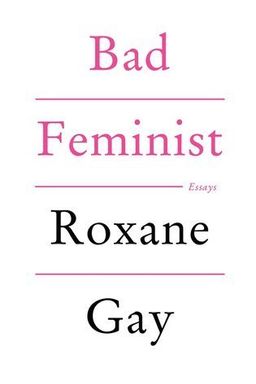
Bad Feminist cover

Bad Feminist

by Roxane Gay

Roxane Gay''s ''Bad Feminist'' is a thought-provoking collection of essays that delves into race, gender, and feminism in America. By challenging traditional narratives and media portrayals, Gay advocates for a more inclusive, intersectional feminism, urging readers to embrace their unique perspectives and voices.

Learning to Live as a Bad Feminist

What if the point of feminism is not perfection but participation? In Bad Feminist, Roxane Gay dismantles the myth that you must embody flawless politics to qualify as a feminist. Instead, she argues for a lived, flexible feminism that acknowledges contradiction—what she calls being a "bad feminist"—while still fiercely pursuing justice and equality. Gay’s collection of essays moves across race, gender, sexuality, popular culture, privilege, and representation, turning her own contradictions into a method of inquiry. You discover that feminism is not a purity contest but a practice of courage, self-examination, and repair.

A feminism built on imperfection

Gay invites you to embrace feminism with full awareness of your flaws and cultural contradictions. You might love misogynistic pop lyrics or reality television that degrades women, yet still fight for reproductive rights and equal pay. For Gay, the acknowledgment of contradiction deepens commitment rather than weakens it. She rejects what she calls Capital-F Feminism—the rigid, exclusionary model centered around white, affluent, heterosexual women—and instead insists on plural feminisms that make room for color, class, queerness, and imperfection.

Intersectionality as reality

As a black woman, daughter of Haitian immigrants, and survivor, Gay places intersectionality at feminism’s center. She admits once disavowing the label from fear of being seen as angry or sexless. That confession becomes a mirror for readers who have felt alienated by narrow versions of feminism. She urges you not to abandon the movement because it has failed to represent you perfectly; instead, you must reshape it. Feminism that ignores race, sexuality, or class, she says, is only partial justice.

Pop culture as both problem and compass

Throughout the book Gay uses cultural artifacts—songs like Robin Thicke’s “Blurred Lines,” television shows like Girls and The Real Housewives, and novels such as Fifty Shades of Grey—to trace how sexism, racism, and classism shape everyday pleasure. She confesses to enjoying problematic media and uses that enjoyment as analysis rather than guilt. Pop culture both reflects and sustains social attitudes; by reading it critically, you learn how oppression seeps into humor, language, policy, and art. Gay’s antidote is literacy: to name what is wrong even as you consume it.

From privilege to responsibility

A recurring theme is accountability. Gay insists recognizing privilege is not an accusation but an ethical responsibility. Privilege, she says, is a “peculiar benefit”—something you might possess in one realm (class, nationality, education) even while marginalized in another (race, gender). Understanding privilege is how you transform awareness into action: teaching, mentoring, redistributing access. But she resists competitive victimhood, what she calls the “Privilege Olympics.” Instead of tallying grievances, she asks you to act on empathy.

Language, bodies, and the politics of seeing

The essays on rape culture, body shame, and representation show how language constructs visibility. Reporting that euphemizes rape or television that objectifies fat bodies both distort reality. Gay argues that naming violence accurately is a moral act and that treating bodies with empathy rather than spectacle is cultural repair. Whether she critiques a tabloid treatment of Rihanna after abuse, or a weight-loss show like The Biggest Loser, she teaches you to replace voyeurism with awareness. Every act of seeing, she implies, is a political choice.

Why imperfection still moves the world

Gay closes her book reminding you that feminism is fragile because it is human—it operates in bedrooms, classrooms, offices, and gossip columns. Being a bad feminist means loving culture while refusing to let it go unexamined. You can watch television, sing along, fail at theory, and still demand better for women. Gay offers a radical permission: participation matters more than purity. In the end, Bad Feminist is not only a defense of contradiction but an ethical blueprint for how to live alertly, helping you translate awareness into daily, imperfect, necessary action.


Privilege and the Practice of Accountability

Privilege, Roxane Gay argues, is not a moral flaw but a condition you must learn to see clearly. Drawing on her own story—a middle-class Haitian-American girl raised with private school comforts—she distinguishes between awareness and shame. Privilege intersects with identity; it shifts depending on race, gender, sexuality, and wealth. Her key lesson: once you recognize your peculiar benefits, you are responsible for what you do with them.

Acknowledgment without paralysis

Privilege, in Gay’s terms, becomes paralyzing only when you treat it as guilt instead of a tool. She warns against performative apology and the so-called “privilege police” who weaponize awareness for moral superiority. Genuine reflection transforms privilege into leverage: you use your advantages—education, networks, security—to expand access for others. She models this through her teaching in Detroit, where she realized how unacknowledged privilege blinded her to educational inequities. Teaching, not confession, becomes her corrective.

Rejecting the Privilege Olympics

Many progressive spaces devolve into a hierarchy of suffering. Gay calls this the “Privilege Olympics,” a competition that measures legitimacy through pain. The result, she notes, is stalemate: no empathy, no progress. She shifts the focus from comparative hardship to collective obligation. The goal is to see multiple truths—the ways you benefit and the ways you are disadvantaged—without letting either silence you. Privilege recognition is not the endpoint but the entry to moral work.

Gay’s compact rule

“If you are privileged in any dimension, you owe something to others; the alternative is complacency.”

From awareness to ethical action

Gay’s concept of privilege aligns with feminist ethics of care (echoing writers like bell hooks). If you know your comfort is built on others’ precarity, use that knowledge to intervene—mentor, donate, advocate. She sees privilege not as contamination but potential energy. Every time you choose to engage instead of retreat, you convert awareness into justice. Her insistence reframes power: you may never be free of contradiction, but you can control what you do with the parts of the world that listen when you speak.


Race, Representation, and Who Gets Seen

Representation, for Roxane Gay, is both visibility and imagination. Popular culture defines not just who you see but who you can become. Across television, literature, and film, she traces how whiteness silently dominates the frame while people of color negotiate caricature or absence. You learn that diversity on screen is not enough; depth is what matters.

From BET to Girls: a limited mirror

Gay’s examples are sharp. She critiques BET for recycling stereotypes and Lena Dunham’s Girls for erasing blackness from its supposedly modern New York. Even shows that attempt inclusion distribute roles narrowly: the loyal friend, the ambitious professional, the tragic hero. Gay celebrates exceptions—Girlfriends, Shonda Rhimes’s ensembles—that broaden the emotional range for black women. Yet she cautions that the problem runs deeper than casting; it’s narrative perspective. Whose interior life counts as universal?

Film, pain, and the economy of black stories

Gay extends her critique to film: The Help, Django Unchained, and even 12 Years a Slave reflect Hollywood’s appetite for black suffering and white redemption. She praises Fruitvale Station and Ryan Coogler’s direction for restoring ordinary intimacy—showing Oscar Grant as son, lover, father before victim. The pattern she exposes asks you to question why black pain sells awards and black joy struggles for funding. Authentic representation means granting black characters the right to be foolish, joyous, and ordinary.

Imagination as activism

Representation, Gay argues, isn’t charity—it’s infrastructure. When young viewers never see themselves as main characters or creators, the horizon of possibility shrinks. You influence culture by the media you consume and demand. Her invitation is direct: refuse erasure, seek complexity, and support voices telling more than one kind of black story. Representation, she reminds, is the right to full humanity, not the token presence of color in a white script.


Bodies, Fatness, and Owning the Physical Self

Gay’s essays on body image confront how culture weaponizes fatness against women, turning size into spectacle. She blends memoir—her time at fat camp, the trauma behind her weight—with critique of literature and television that misrepresent large bodies. Her core argument: the body records history, and society’s obsession with shrinking women’s bodies mirrors its discomfort with their power.

The shame machine

At fat camp, Gay learned humiliation disguised as health: weigh-ins, punishment workouts, beauty hierarchies. These institutions, she says, teach compliance, not wellness. When she reads Diana Spechler’s Skinny, she finds the same aestheticized pity—thin people imagining fatness as moral failure. She admits even she googled the author’s photo, realizing how deeply she’d internalized the demand for authenticity through body type. That realization reframes empathy as discipline: the duty to resist voyeurism.

Spectacle disguised as inspiration

Television like The Biggest Loser or Extreme Makeover: Weight Loss Edition converts bodily shame into spectacle. Contestants cry, faint, or vomit for the camera so audiences can feel moral relief. Gay describes this genre as “fat-shaming porn.” The redemption narrative—lose weight, find worth—erases structural issues like healthcare, genetics, and trauma. It sells transformation as entertainment and teaches viewers to equate thinness with virtue.

An ethics of embodiment

Gay’s counterpoint is empathy. If you write or portray fatness, base it in lived experience or deep research. If you live in your body publicly, know that dignity itself resists shame. Her essays insist that representation of bodies—fat, black, female—must restore complexity: hunger, pleasure, grief, resilience. She ends not with self-love clichés but with demand for fairness. To see fatness accurately, you must see it as life, not lesson.


Rape Culture, Humor, and the Politics of Language

Few writers handle the subject of sexual violence with the precision and moral insistence of Roxane Gay. In essays ranging from the Cleveland, Texas rape case to Daniel Tosh’s rape joke controversy, she traces how language, humor, and media shape a culture that trivializes assault. Her plea is consistent: stop softening brutality and start restoring the victim’s humanity.

Media euphemism and moral distortion

Gay dissects headlines that emphasize “town shock” over a victim’s pain and scripts that turn rape into television fodder. She notes how entertainment and journalism often replace the word 'rape' with terms like 'sexual encounter' or 'sex scandal.' That linguistic softening clouds moral clarity. Real understanding, she argues, requires unflinching accuracy—naming violence as violence.

Comedy, complicity, and consent

Discussing Daniel Tosh, Gay examines how one comedian’s cruelty granted permission for misogyny. Humor, she explains, is never neutral—it trains empathy. When audiences laugh at rape jokes, they absorb permission patterns that spill into real interactions. Comedy can challenge taboos, but it becomes ethical only when it punches up at power, not down at trauma. Gay reframes laughter as a moral response: silence or protest also speak.

Writing trauma responsibly

As a novelist who has written scenes of rape, Gay wrestles with representation’s ethics. She looks to Margaret Atwood’s “Rape Fantasies” and theorists like Laura Tanner to weigh how fiction can portray harm without exploiting it. Writers, she insists, must preserve material consequence—the body, the aftermath, the survivor’s personhood. This awareness also extends to classrooms and blogs where trigger warnings appear. They are gestures of care, not censorship. In Gay’s calculus, the moral act is not to erase danger but to approach it with attention, empathy, and truth.


Love, Control, and the Romance Myth

From Cinderella to Fifty Shades of Grey, Gay tracks how romantic storytelling trains women to confuse control with devotion. She calls out the persistence of the prince narrative—male redemption through female submission—and asks what it means when those tropes dominate bestseller lists. Her reading of Fifty Shades becomes a case study in cultural appetite: the fantasy of surrender disguised as empowerment.

The old fairy-tale exchange

In classical fairy tales, women often earn love through suffering. Gay sees Christian Grey’s domination of Anastasia Steele as a set of modern chains: background checks, contracts, isolation. The luxury aesthetic—private jets, silk sheets—masks emotional imprisonment. She calls it “a prison in luxury.” Literature recycles conditioning: love as compliance, protection as ownership.

Misreading kink, missing consent

Gay distinguishes between authentic BDSM—which is based on negotiated consent—and the version popularized by the trilogy, which pathologizes desire as a wound to be healed. This misrepresentation damages collective literacy around consent. For readers new to sexual exploration, the confusion between dominance play and abuse perpetuates myths about what power means in intimacy. Gay’s position aligns with feminist sex writers who promote consent education as liberation, not danger.

Teaching choice over fantasy

Her message extends beyond genre fiction: every cultural narrative teaches relational expectations. When stories reward submission, they normalize inequality. Gay doesn’t call for censorship of pleasure; she asks for literacy about it. You can enjoy erotic fiction but should still ask: what is this story teaching me to want? Romantic fantasies shape real negotiations of love and agency. To rewrite those fantasies is to rehearse a freer script.


Feminism’s Inclusive Future

Gay closes Bad Feminist by re-centering feminism as a living, inclusive practice rather than a doctrinal purity test. Her own identity—a black, queer-aware, pop-culture-loving academic—embodies the contradictions she refuses to apologize for. She argues that you can fail, enjoy, and still fight. That permission rehumanizes the movement.

Beyond essentialism

She rejects essentialist feminism that dictates what women must wear, watch, or believe to count as feminists. Drawing on Judith Butler’s idea of gender as performance, she shows how femininity itself is a script rewritten daily. Similarly, feminism must remain open to revision, shaped by practical care rather than ideological purity. Gay calls it a “humane feminism”—one that protects difference instead of policing it.

Intersectional accountability

Gay critiques the corporate feminism of figures like Sheryl Sandberg, which presumes privilege as the default. She asks for feminism that includes waitresses, single mothers, queer youth, and disabled women—those living beyond boardrooms. Intersectionality here is not theory but daily fairness. Feminism’s credibility, Gay insists, depends on whether it can serve those who need it most.

Living the contradiction

To be a “bad feminist” is Gay’s teaching in miniature: admit all your contradictions, but do not let them excuse inaction. You can love pop music, make mistakes, question solidarity, and still push for structural change. Feminism fails only when it stops trying. She ends not with triumph but with a call to persistence: stay uncomfortable, stay honest, and let imperfection be your proof of engagement.

Dig Deeper

Get personalized prompts to apply these lessons to your life and deepen your understanding.

Go Deeper

Get the Full Experience

Download Insight Books for AI-powered reflections, quizzes, and more.