
Idea 1
The Hidden Architecture of U.S.–Cuban Relations
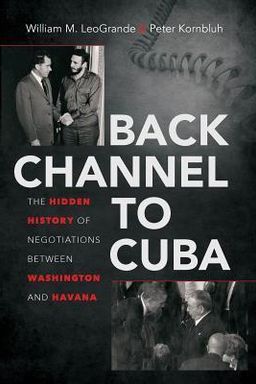
If you want to understand how two hostile neighbors communicate, you must think in terms of hidden structures rather than public gestures. This book reveals that the United States and Cuba have long relied on back-channel diplomacy—private, deniable contact through intermediaries, journalists, businessmen, and third countries—to manage crises and test rapprochement, even when official relations were frozen. Whether under Eisenhower’s cautious patience, Kennedy’s secret overtures, or Carter’s formal normalization bids, the pattern remains: when you cannot talk publicly, you find someone to talk for you.
The repeating cycle of estrangement and engagement
From the 1950s to today, U.S.–Cuban relations follow a pendulum rhythm—moments of cautious contact followed by rupture. Eisenhower began with measured engagement through Ambassador Philip Bonsal, but agrarian reform and Cold War fears pushed Washington toward covert action. Kennedy inherited a covert apparatus yet still tested private diplomacy through James Donovan and Richard Goodwin. Johnson, haunted by the Kennedy assassination’s political shadow, preserved quiet lines through Lisa Howard and William Attwood. Nixon and Ford, via Kissinger, nearly achieved normalization before Cuban troops in Angola derailed talks. Carter institutionalized contact through formal interest sections, while Reagan and Bush reversed course. Each period replays the same puzzle: diplomacy survives underground even when ideology forbids it.
Why back channels flourish
Public diplomacy collapses under domestic and international constraints. Presidents fear exile backlash in Florida, Congressional censure, or appearing weak before Moscow. Back channels let them experiment without exposure. As one aide quipped, these are the plumbing of diplomacy: they allow hidden pressure tests, helping leaders gauge intentions without paying visible political costs. James Donovan’s aid packages for Bay of Pigs prisoners evolved into political trust with Fidel Castro; Lisa Howard’s media status let her blend journalism and diplomacy; Frank Mankiewicz and Kirby Jones used Kissinger’s note to Castro to reopen high-level dialogue in 1974. These intermediaries demonstrate how secrecy can be a precondition for progress.
The geopolitical trap
Each rapprochement effort runs into bigger cycles of global politics. The Missile Crisis reminds both sides that confrontation risks annihilation, pushing them to negotiate indirectly. By the 1970s, détente logic—extending the thaw with China and the USSR—encouraged Kissinger’s Caribbean exploration, only to be undone by Cuban intervention in Angola. Under Carter, the Angolan and later Ethiopian deployments again froze dialogue. The 1980s Reagan revival recycled Cold War polarization, but post–Cold War crises like the 1994 Balsero exodus or the 1998 counterterrorism incident (the Cuban Five) kept cooperation necessary but fraught. The lesson: bilateral progress depends on third arenas—Africa, migration, domestic politics—often beyond the negotiators’ control.
Domestic politics as veto power
Inside Washington, institutions and electoral calculations repeatedly trump diplomacy. Brzezinski’s rivalry with Vance in the 1970s divided Carter’s Cuba approach. Later, Senator Robert Menendez’s threats of filibuster limited reforms under Obama. The Cuban-American lobby became both gatekeeper and mirror of exile identity, turning policy into a moral litmus test. Meanwhile, changing demographics—new generations of Cuban Americans favoring travel and trade—slowly eroded the old orthodoxy, but not quickly enough to free presidents from political fear. (Note: similar domestic dynamics shaped America’s China and Vietnam openings, yet Cuba’s proximity amplified the political costs.)
From coercion to coexistence
Across administrations, coercive tools—embargo, propaganda, subversion—mix uneasily with humanitarian gestures—prisoner releases, migration accords, disaster cooperation. The book argues that genuine progress comes when pragmatic cooperation overrides ideological rigidity: Coast Guard exchanges, hurricane relief, and oil-spill coordination show that shared risks force collaboration where politics blunts it. The 1994 migration accords (with García Márquez and Salinas as intermediaries) exemplify this realism, forging enduring rules where moral appeals had failed. Yet even such progress remains vulnerable to symbolic shocks: the 1996 Brothers to the Rescue shoot-down, the Alan Gross arrest, or high-visibility diplomatic theatrics like Cason’s provocations in Havana can erase years of careful trust-building overnight.
The core argument
Throughout its narrative, the book teaches that U.S.–Cuban relations survive less through ideology than through adaptive improvisation. Leaders, constrained by domestic pressure and global events, design shadow systems—informal messengers, parallel negotiations, humanitarian fronts—to keep dialogue alive. You see an ongoing pattern: secrecy replaces summitry; intermediaries substitute for ambassadors; pragmatic issues (fisheries, migration, disaster relief) become laboratories for trust. Every thaw, from Donovan’s prisoner exchanges to Obama’s humanitarian contacts, rests on those same invisible architectures. If you want to change the relationship, you must understand—and sometimes rebuild—the underground channels through which it truly breathes.