
Idea 1
Awe as the Emotion That Expands You
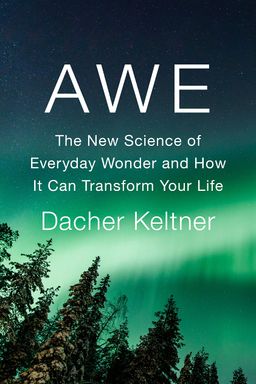
Awe is not a fleeting reaction to beauty or grandeur—it is an evolutionary force that changes how you see yourself, others, and the world. In his work on awe, Dacher Keltner defines the emotion as the feeling that arises when you encounter something vast that transcends your understanding and forces you to expand your mental models. This definition, co-developed with Jonathan Haidt, forms the scaffold for the entire journey of this book. It explains why you can feel awe before a towering tree, a heroic act, a piece of music, or an insight that rearranges your worldview. Each experience combines vastness and accommodation: the world feels larger, and you stretch to fit inside it.
The Eight Wonders of Life: Everyday Portals to Awe
From a dataset of 2,600 awe narratives across 26 countries, Keltner and collaborators distilled awe into eight major sources. These are: moral beauty (acts of courage and compassion), collective effervescence (shared rhythmic movement), nature, music, visual design, spirituality, life and death, and epiphany (insightful realization). Roughly five percent of awe experiences fall outside these domains, but the eight account for most of human encounters with wonder.
These domains are practical tools: they show how awe appears not just in the extraordinary but in the everyday. Diaries and lab experiments reveal that people experience awe two to three times a week—in sunsets, moral acts, or shared rituals. You do not need a pilgrimage or mountaintop; you only need mindful attention to what moves you.
Awe and the Wider Emotional Map
Keltner’s lab studies using emotional mappings of GIFs show awe’s position near admiration and beauty, not fear or horror. It often coexists with sadness yet feels expansive rather than threatening. The signature bodily pattern—eyes widened, breath slowed, the involuntary “whoa”—marks the start of an open, integrative mind state. Physiologically, awe directs your attention away from threat and toward connection.
Why Awe Matters
The book argues that awe is the emotion most responsible for moral elevation, scientific curiosity, and social cooperation. Its evolution likely supported survival: early humans who bonded through shared wonder at storms, animals, and rituals became more cohesive groups. Modern evidence shows awe enhances generosity, patience, and intellectual humility—traits societies urgently need. (William James, Charles Darwin, and Émile Durkheim all viewed awe as both spiritual and social glue.)
In this synthesis, you’ll see awe through every lens: its body language, neurological circuits, moral triggers, artistic and musical expressions, spiritual growth, and ecological healing. Each chapter reveals how awe shrinks the ego, builds community, repairs moral fabric, and unlocks systems thinking. Whether you approach through nature walks, music, or art, awe offers a reliable, evidence-based doorway to connection and meaning.
Core principle
Awe = encounter with vastness + accommodation. But, more deeply, awe = pathway to connection and transformation. Study it, invite it, embody it—and you expand the boundaries of who you think you are.
As you progress through these ideas, you’ll discover awe’s role in dissolving the self, healing through nature, transforming morality, synchronizing communities, animating music and art, deepening spiritual life, and teaching systems understanding. Each is a chapter in awe’s wider story—the emotion that makes humanity possible.