
Idea 1
Wake To Your Own Life
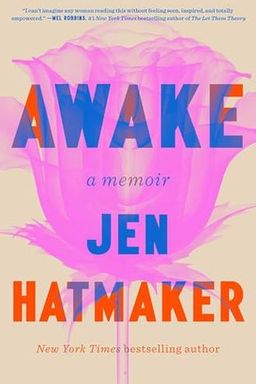
When life detonates at 2:30 a.m., what will you reach for: denial, fury, or the fierce decision to become your own safe place? In Awake, Jen Hatmaker argues that the way through betrayal, faith fracture, and midlife collapse is not tougher striving or tidier beliefs but a radical awakening to your own truth, your own body, and your own agency. She contends that you can rebuild a beautiful, honest life—one plank, one breath, one boundary at a time—but to do it, you must learn to trust what your body knows, dismantle scripts that kept you small, and let a devoted community row you to shore while you find your feet.
This is not a shiny “bounce back” tale. It begins with an ending: Hatmaker waking to whisper-texted words—“I just can’t quit you”—sent by her husband to someone else as he lay next to her in their bed. In the hours that follow, she follows a trail of lies, ejects him from their home, and summons her family before sunrise. From that rupture, the book charts an often hilarious, often gutting, always unvarnished path through grief, codependency recovery, embodied healing, career and faith reckonings, mothering five kids through collapse, and ultimately an audacious re-entry into joy, friendship, and love.
What This Book Argues
Hatmaker’s core claim is twofold. First: truth—whole truth without “hidden corners”—is the doorway to freedom, even when it ends the story you’ve been telling (her phrase “hidden corners” names the places we stash inconvenient realities so our narratives can survive). Second: your body is a trustworthy guide. While she’d long been taught that “the heart is deceitful” (Jeremiah 17:9), the author learns—through somatic grief, breathwork, ceremony, and medical support—that her nervous system, intuition, and sensations are reliable instruments pointing toward safety, danger, and desire. Where earlier religious scripts demanded self-betrayal in the name of holiness, this memoir insists your undivided self is the holiest ground of all. (For comparison, see Hillary McBride’s The Wisdom of Your Body and Resmaa Menakem’s My Grandmother’s Hands for trauma-informed body wisdom.)
How the Story Unfolds
You’ll watch the author move from shock to scaffolding: sisters sleeping on either side of her for six weeks, two best friends’ husbands sitting outside her house while she hears “the whole truth,” a friend smudging her home with prayer and sage, and Andrew the Navy man offering a lighthouse metaphor on a stifling Texas night: one light, then a few, then the shoreline. You’ll see her rebuild a demolished front porch—literally—plank by plank with women wielding saws, then receive a custom porch swing signed by her friends. She’ll learn money from scratch with Steve the planner, buy her own matte black 1975 Bronco, and put up a 28-seat backyard table under twinkle lights because a friend dreamed “you’ll fill it.”
Concurrently, she interrogates purity culture and patriarchy—dead-rose object lessons, girls policed for shorts at Falls Creek, boys shamed into learning porn at church camp, an eighth-grade teacher who groomed her best friend—and names how these systems harm everyone, including the men they pretend to center. She revisits her public break with white evangelicalism over racism and LGBTQ+ affirmation in 2016, the cost of being “canceled,” and what remains: a surprising, tender friendship with a relaxed Jesus who meets her on porches and in kitchens more easily than in sanctuaries.
Why This Matters for You
If you’ve ever minimized red flags, managed other people’s feelings at your own expense, or confused niceness with love, Hatmaker’s story is a mirror and a map. She names codependent patterns—ignoring, explaining, workaholism, image management—then shows how to detach with love: pause, breathe, right-size the story, and return responsibility to its owner (drawing from Melody Beattie’s Codependent No More and Brené Brown’s sober counsel). She demonstrates how grief moves through your body when permission finally arrives (her first full-body wail happens in a parked car under a neighbor’s pecan tree during an 11-minute meditation called “For Grief”). And she models ordinary mothering in catastrophe—Starbucks gift cards every Monday from a fellow adoptive mom, kids detailing her car for Mother’s Day, a first “Christmas” in October—to prove that fun is medicine, and joy is not canceled.
What You’ll Learn in This Summary
You’ll first explore the hard pivot from curated story to whole truth and how to name what’s real without burning yourself down. You’ll then walk through codependency recovery and embodied practices that steady a nervous system on fire. We’ll examine how dismantling harmful religious scripts frees both women and men, and how a wide, weird, faithful community can carry you until you can carry yourself. Finally, you’ll see what agency looks like in practice—financial literacy, travel alone to Bar Harbor for “Me Camp,” a bestselling cookbook born in grief, and new romance that begins, fittingly, at a Broadway show. The arc lands not on perfection but presence: a woman awake in her own life, whispering to herself at 2:30 a.m., “I just can’t quit you.”
North Star
“The one who will never quit me is me.” Awakening, in Hatmaker’s hands, is the practice of becoming your own safest person—so others are free only to love you, not rescue, complete, or control you.