
Idea 1
A Living Science of the Spirit
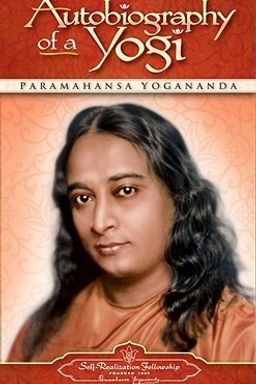
How do science, devotion, and everyday ethics combine to produce liberation? In Autobiography of a Yogi, Paramahansa Yogananda tells the story of his life's spiritual quest and, through it, presents a unified vision of religion as an applied science of the soul. He argues that spiritual realization is not a mystical accident but the exact outcome of disciplined practice that harmonizes body, mind, and spirit. If you read carefully, what emerges is more than memoir—it’s a textbook of inner transformation wrapped in living testimony.
Across his journey—from his Bengali childhood through encounters with saints, the rigorous training under his guru Sri Yukteswar, the revelation of Kriya Yoga, and his mission in the West—Yogananda explores whether divine experience can coexist with modern reason. He answers yes: true spirituality refines and unites human faculties rather than rejecting them.
From family soil to cosmic light
The story begins in Gorakhpur, India, with a father of severe moral integrity and a mother devoted to divine ideals. From this marriage of intellect and love, the young Mukunda Ghosh (Yogananda) internalizes two impulses—rational discipline and sacred emotion. His early visions, such as seeing luminous forms or healing through Lahiri Mahasaya’s picture, foreshadow the book’s theme: the world is permeated by living spiritual presence. The stories of materializing amulets and spontaneous healings serve as both dramatic foreshadowings and invitations to observe that mind and matter are linked by subtler laws.
The science behind miracles
Yogananda insists that saintly feats—bilocation, levitation, healing—are not denials of nature but extensions of it. Saints, like scientists, experiment with fundamental energies, manipulating what he calls lifetrons (life atoms). The Tiger Swami’s superhuman strength, Gandha Baba’s perfumes, and Trailanga Swami’s feats become case studies in the controlled use of life force. Yet the author warns: power divorced from morality degrades; miracles must serve liberation, not pride. Spiritual law is ethical law operating at invisible frequencies.
Guru and discipline
The turning point comes when Yogananda meets Sri Yukteswar, who transforms mystic longing into ordered discipline. Under his master’s tutelage, daily life becomes the lab of enlightenment—precise tasks, humility, and humor replace vague ecstasies. The famous episode where Yukteswar brings Yogananda down from cosmic consciousness with the instruction to “sweep the balcony” reveals the essence of practical yoga: balance the infinite with immediate duty. For readers, it’s a lesson in how transcendence must be absorbed into functioning, ethical action.
Kriya Yoga as inner technology
At the heart of the narrative lies Kriya Yoga—a psychophysiological method for accelerating evolution by circulating energy along the spine through conscious breath. The lineage Babaji → Lahiri Mahasaya → Sri Yukteswar → Yogananda represents an unbroken current of tested method rather than dogma. Yogananda places Kriya within a scientific frame: the technique optimizes oxygenation and redirects energy to awaken perception. His metaphor that “half a minute of Kriya equals a year of natural soul evolution” is poetic shorthand for its accelerating impact on consciousness.
(Parenthetical note: For readers of modern psychology, this parallels mindfulness and bioenergetic models but adds a cosmological context and a living transmission structure.)
East meets West
Yogananda’s 1920 journey to Boston signified more than travel; it symbolized the marriage of Eastern introspection and Western practicality. His creation of the Self-Realization Fellowship expressed his conviction that universal truths must take institutional form to survive. Through schools like Ranchi and centers in California, he transforms spiritual discipline into public education. His partnerships with figures such as Luther Burbank and Gandhi illustrate that spiritual science applies equally to plant evolution and social reform.
Light, death, and continuity
The later chapters expand the map of existence: you learn of the three bodies (physical, astral, causal) and the continuity of consciousness after death. Masters like Sri Yukteswar communicate from astral planes such as Hiranyaloka to show that resurrection is transformation, not fantasy. Matter, he explains, is concentrated light; maya is the cosmic movie projected by consciousness. Understanding this dissolves the fear of death, replacing it with awareness that life is continuously refracted light in varying degrees of density.
The enduring message
The book ultimately urges you to treat spirituality as an experimental science of self-mastery. Miracles prove laws beyond current measurement, not violations of reason. The guru–disciple bond epitomizes learning by resonance rather than theory. And the stories—from a mother’s materialized amulet to Yogananda’s own cosmic vision—demonstrate a single principle: by disciplined control of energy and consciousness, you can know the divine directly. That knowing turns philosophy into lived freedom, and tradition into a living science of the Spirit.