
Idea 1
Life With Autism, Lived Out Loud
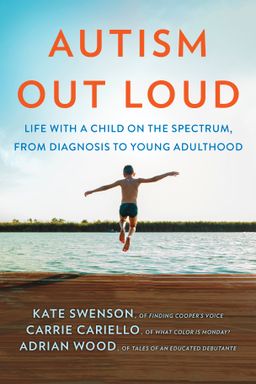
What if the life you planned for your child never arrives—and the life you get is raw, beautiful, louder than you imagined, and asks more of you than you thought you had? In Autism Out Loud, Kate Swenson, Carrie Cariello, and Adrian Wood argue that parenting a child on the autism spectrum is not about fixing a child; it’s about rebuilding family life, systems, expectations, and community so the child (and the family) can thrive. They contend that hard feelings—grief, fear, anger, isolation—are not detours from this work; they are part of the path. But to walk it well, you need language, stories, tools, and people.
Across three interwoven memoirs—Kate with Cooper (severe, nonverbal autism), Carrie with Jack (autism plus severe anxiety and OCD), and Adrian with Amos (autism with evolving communication and a late genetic finding)—you watch diagnoses land, marriages strain and recalibrate, siblings become protectors, and school systems stretch to serve. You also see what changes when mothers tell the truth, medicate anxiety, separate autism from comorbid conditions, and build community from scratch. The book is both candid memoir and field manual, answering questions parents actually ask: How do I handle diagnosis day? What do I tell my other kids? Where do I find help that actually helps? What happens in middle school, at 18, after high school?
What This Book Says—Plainly
The core argument is simple and radical: your child does not change the moment a professional says "autism"—but you will. You will grieve the life you imagined, and then you will write a new one. To do that, the authors insist you distinguish autism from its often-hidden traveling companions (anxiety, OCD, ADHD, sleep disorders), because unaddressed anxiety can masquerade as "just autism" and hijack the whole household. They illustrate how medication can liberate a child’s true personality rather than dull it (a point many families find counterintuitive until they witness it).
They also argue that autism is a family diagnosis. Siblings bear invisible weights (what the book calls "leapfrogging" when younger children surpass their autistic brother), marriages buckle under sleep loss and constant hypervigilance, and caregivers risk becoming invisible to themselves. You are encouraged to name these realities without shame—and then build scaffolding: routines, school partnerships, respite, a text thread at 4:00 a.m., Miracle League baseball, even a six-foot fence won by stubborn advocacy (Kate’s early fight that set a precedent for other families).
What You'll Learn in This Summary
First, you’ll move from diagnosis to acceptance without skipping the hard middle: denial, anger, bargaining, and the "box of darkness" (Kate’s phrase) you have to open to find the gifts inside. You’ll see how to talk to neighbors and six-year-olds about autism in plain language, how to spot anxiety hiding in plain sight, and why meltdowns and tantrums aren’t the same (echoing Ross Greene’s framing in The Explosive Child). Next, you’ll meet the autism family system—marriage, siblings, grandparents—and learn to separate motherhood from caregiving so you can stay human for the long run (think Atul Gawande’s Being Mortal, but for neurodiversity and independence).
Then we’ll walk through school: how IEP tables work in real life, what inclusion can look like in a small rural district (Adrian), and what an out-of-district placement means (Carrie). You’ll gather scripts for teachers (presume competence, mind your language around kids who hear everything) and a test for your own nervous system (Kate still checks for bruises because vulnerability to abuse is real). Finally, we’ll redefine success and the future: guardianship at 18, designing supported college programs, the bittersweet art of "untethering" (Carrie’s "We to I" hand visual), and why success might be stocking grocery shelves, holding a bat on a Miracle League field, or sending your first text—"Hiii, Mawwwm."
Why This Matters—Beyond One Family
Autism now touches millions of families, yet much of the public conversation still clusters at the high-functioning end, the TV-friendly savant. This book pulls the curtain back on profound autism and the comorbidities that dominate daily life. It teaches what Andrew Solomon (Far From the Tree) calls building “horizontal identities”—communities of people like you when the world you were born into can’t guide you. It also shows how storytelling shifts culture: a neighbor’s driveway sundae party becomes a neighborhood primer on autism; a Facebook group morphs into retreats, Miracle League rosters, and a dad pitching to kids who flap and grin.
The Promise
“The parts that have changed us the most are usually the ones that make us want to be the most helpful to others.” The promise of Autism Out Loud is that telling the truth about the hard parts multiplies the good parts—because someone else hears you, and answers back.
Read this summary to gather words, models, and courage. Whether you’re a parent, teacher, grandparent, or neighbor, you’ll learn how to stand closer to families like these—how to listen longer, assume competence, and offer the bottle of water at the ball field without making a speech. Most of all, you’ll learn to see the child in front of you as a whole person: the sum of their good and hard parts, unapologetically themselves.